

AI for real estate business development is changing how you reach new clients, analyze market trends, and shape a stronger brand presence. As you look for ways to stand out from the crowd, AI-driven tools can help you automate repetitive tasks, save time, and focus on activities that matter most—like building trust with your clients. If you have ever wondered how technology could help you find quality leads faster or offer tailored property recommendations, you are in the right place. This is your blueprint for leveraging AI in your real estate practice to stay competitive, streamline processes, and ultimately grow your business in a sustainable way.
Understand AI for real estate success
Before you jump into AI-powered strategies, it helps to see AI as a partner in your daily routine rather than a futuristic concept. Artificial intelligence can sort through massive amounts of data so you can quickly identify trends, spot opportunities, and respond to emerging market shifts.
AI tools can, for instance, analyze local demographics to help you understand what types of properties certain buyers are most likely to be interested in. These same tools might also scan market data to predict property values over time, giving your clients more confidence in your recommendations. By tapping into insights that might be hidden in spreadsheets or contractor reports, you can make informed decisions without drowning in data.
You do not have to be a tech guru to benefit from these tools. Most AI applications come with user-friendly dashboards and resources that guide you step by step. You simply feed in data—like property information, target neighborhoods, or past client interactions—and the AI handles the heavy lifting. This efficiency means you spend less time on routine tasks and more time adding a personal touch to your real estate services.
Leverage AI for lead generation
Finding high-quality leads can be one of the biggest challenges in real estate. AI tools help you cut through the noise by highlighting the most promising prospects based on past interactions, search behavior, and demographic data. Rather than casting a wide net across every platform, you can focus on people or businesses that are already showing signs of interest, improving your odds of closing the deal.
Here is how AI strengthens your lead generation:
- Predictive analytics: AI can study consumer behaviors online—like which listings they click on or how many times they browse certain neighborhoods—and score those leads. The higher the score, the more likely they are to convert.
- Automated follow-ups: Many AI-driven platforms can send an introductory email, schedule a call, or nudge potential clients who have not responded to your initial outreach. This means no lead goes unnoticed or neglected.
- Customized marketing: AI can group prospective clients by interests, location, price range, or property type. By sending tailored messages to each segment, your marketing feels more relevant, and your open and response rates often go up.
Capturing attention is crucial, but holding it is the real test. With AI, you can stay in touch with leads in a meaningful way, offering them insights they might not find elsewhere. When you pair this with your personal expertise, you are well on your way to building relationships that translate into closed deals.
Personalize your client outreach
You know every client has specific goals. Some are first-time buyers, some are seasoned investors, and others might be families searching for their dream home. Generic mailers and messages will not resonate the way personalized ones will. This is where AI shines.
By analyzing your clients’past interactions—what listings they clicked, how often they engage with your emails, or which social media posts they liked—AI gives you a complete picture of their preferences. You can then tailor content, property recommendations, and follow-ups based on what you know matters most to them. Think of it as going from a one-size-fits-all approach to a hand-tailored experience.
Here are a few ways to personalize your outreach:
- Customized property lists. AI can match clients to listings that fit their price range, location requirements, and style preferences. It updates in real time, so your recommendations stay accurate.
- Targeted newsletters. Instead of a general newsletter loaded with random listings, send segmented newsletters that focus on homes in the area your clients already favor.
- Timely follow-ups. AI can remind you when it is the best time to reach out. Maybe you notice your client only opens emails on Thursdays, or they tend to respond to text messages faster than phone calls.
Think of personalization as more than just adding a client’s name to an email greeting. Every detail—from the type of home they love to their communication style—helps you form a bond that makes them feel understood. When clients see how attentive you are, you earn their trust and become the go-to agent they refer to their family and friends.
Make Smarter Rental Investments & Boost Profits
 Use AI to Assess Opportunities
Compare Cap Rates & Cash Flows
Optimize Rental Income
Use AI to Assess Opportunities
Compare Cap Rates & Cash Flows
Optimize Rental Income
RentalOptimizer.com
Automate market analysis effectively
Market analysis used to be a tedious process involving spreadsheets, phone calls, and manual research. Today, AI for real estate business development can streamline those tasks and give you real-time snapshots of market conditions. This means faster decisions and a competitive edge.
Tools with advanced algorithms can look at factors like recent sales data, neighborhood demographics, and even local amenities such as schools, parks, and restaurants. Some AI instruments also interpret economic indicators like employment rates or interest rates, predicting how these might impact buyer confidence or property values. By cross-referencing public records, property tax data, and local real estate trends, AI helps you package insights to your clients in a way that is easy to grasp.
When you integrate automated market analysis into your workflow:
- You save time. Let AI handle the basic calculations and the sorting of data so you can focus on client relationships.
- You minimize errors. Manual research can lead to overlooked properties or outdated information. AI keeps track of data updates for you.
- You build credibility. Presenting data-driven forecasts and visualizations positions you as a knowledgeable resource in your field.
Even if you do not consider yourself a data person, exploring how AI can simplify market analysis is worth your time. When you can quickly pull up comps, price trends, and forecasts, you offer immediate value to your clients, who are often looking for timely guidance in a fast-paced market.
Empower your business with Rental Optimizer
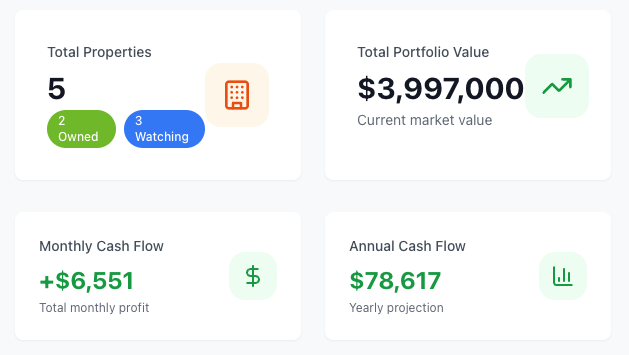
If you want to take AI-driven analytics a step further, you can tap into specialized platforms like Rental Optimizer. By visiting Rental Optimizer, you will find an application that offers unique AI-powered insights and analysis for real estate professionals. Whether you manage rentals or help clients expand their investment portfolios, this tool can give you data-driven recommendations to optimize your properties’profit potential.
One of Rental Optimizer’s standout features is its ability to generate branded PDF reports that real estate agents can share with clients. This helps you present professional, cohesive information that underscores your expertise. Clients can see rental forecasts, occupancy projections, and property comparisons at a glance, which gives them immediate clarity about their options.
Here is what you gain with Rental Optimizer:
- Rental income projection. See expected cash flow and potential returns on investment based on local rental market conditions.
- Property performance comparisons. Weigh one property against another, factoring in estimated maintenance costs, property taxes, and neighborhood desirability.
- Customizable reports. Add your branding to PDF downloads to further cement your professional image in the eyes of your clients.
- Time savings. Let the AI crunch the numbers in seconds so you can devote your energy to high-level strategies and client conversations.
Rental Optimizer can become a major differentiator in your toolbox. If you routinely share data-rich insights on social media, prospective buyers and renters start to see you as a reliable source of valuable information. This, in turn, grows your audience and trust factor over time.
Build a winning social media strategy
A robust social media presence lets you showcase your grasp of the market to a wide audience. With AI, you can analyze and schedule your posts for better reach, maintain continuous engagement, and focus on the platforms where you see the most returns. The key is to blend factual data with content that reveals your personality, so prospects see both your expertise and your accessibility.
Consider posting about the power of rentals—especially if you operate in a region where rental demand is surging. AI can help identify popular topics in real estate discussions, so you can create timely posts that resonate with your audience. You can also test different content formats, like short videos on home tips or Q&A sessions about local market trends, then use AI to see which versions lead to the most likes, shares, or direct messages.
Think about using these social media strategies:
- Schedule with AI. Platforms with AI-based scheduling features pick the ideal times to post based on your followers’ online habits.
- Stay consistent. Regular posting helps you stay visible. AI scheduling keeps you on track even during your busiest seasons.
- Use video marketing. Real estate is visual, so short clips of property walk-throughs, neighborhood tours, or renovation tips can grab attention quickly.
- Engage in direct conversation. Personal replies, quick follow-ups, and authentic interactions foster trust. Automated chatbots can handle FAQs, but try to jump in personally for more complex questions.
As you post more frequently, you gather data on what resonates and what does not. Let AI interpret that information for you, so you can fine-tune your approach and invest your energies in the most effective social media channels.
Integrate AI smoothly
Adopting AI does not have to mean turning your whole office upside down. A gradual rollout can help you and your team learn and adapt without interruptions to daily operations. You want to ensure the technology you pick aligns with your current workflows and can accommodate future growth.
Here are a few tips to help transition into AI effectively:
- Start small. Begin with a single tool or feature—maybe lead scoring or automated emails—before investing in more advanced analytics.
- Train your team. Share tutorials and host quick training sessions. Encourage team members to ask questions and explore the tools at their own pace.
- Integrate with existing systems. Look for AI solutions that sync with your current CRM or property management software. This avoids data silos and double entry.
- Build in time for adjustments. AI can amplify your results, but there may be learning curves or small glitches. Expect to tweak your approach as you gather feedback.
The result is a streamlined adoption process that feels natural rather than rushed. By bringing your team along for the ride, you foster an environment where AI is not just a fancy add-on but a core element of your business strategy.
Measure success and next steps
After introducing AI into your workflows, it is essential to check on your progress. If you do not measure key performance indicators (KPIs), it becomes tricky to know whether your new tools are actually driving outcomes. KPIs might include your lead conversion rate, the average closing ratio, how quickly your listings move off the market, or even the open rates for your email campaigns.
Analyze your data at regular intervals—weekly or monthly—to see the changes. Did you generate more leads? Are those leads more qualified? Are you closing deals faster? Make notes of any consistent improvements or areas where you are still struggling. Then adjust your AI strategies accordingly. For example, if you notice an uptick in leads from a specific demographic, you might target more of your marketing budget to that group.
Think of your next steps as an iterative process:
- Refine your AI tools. Update your AI settings or input new data as you gather fresh insights about your local market.
- Expand your scope. If you are seeing success in lead generation, explore additional AI features such as advanced market reports or chatbots to handle incoming inquiries.
- Share your success. Post about your wins on social media, highlighting how your AI-driven approach benefited real people. Success stories can draw in even more clients.
- Continue learning. AI evolves quickly, so make it a habit to read up on new releases, attend web events, or talk with peers about recent innovations.
Taking a mindful, goal-oriented approach ensures AI remains an asset that supports your business, rather than something you tried once and left behind.
Final thoughts
Embracing AI for real estate business development is about more than just adopting a trend. By combining AI’s data-driven power with your unique market expertise, you can build stronger relationships, close more deals, and stand out as a knowledgeable professional. Whether you are generating more accurate leads, personalizing outreach, or offering in-depth rental analysis with tools like Rental Optimizer, you are future-proofing your business in a fast-paced industry.
Start small by integrating an AI feature that tackles a pressing need in your business right now. Over time, scale up and explore additional capabilities that align with the direction you want your real estate practice to grow. When paired with authenticity and a solid understanding of client needs, AI can genuinely become the game changer you have been looking for. Here is to a future where your expertise, combined with technology, paves the way for steady growth and success.
Make Smarter Rental Investments & Boost Profits
Use AI to Assess Opportunities
Compare Cap Rates & Cash Flows
Optimize Rental Income
RentalOptimizer.com