
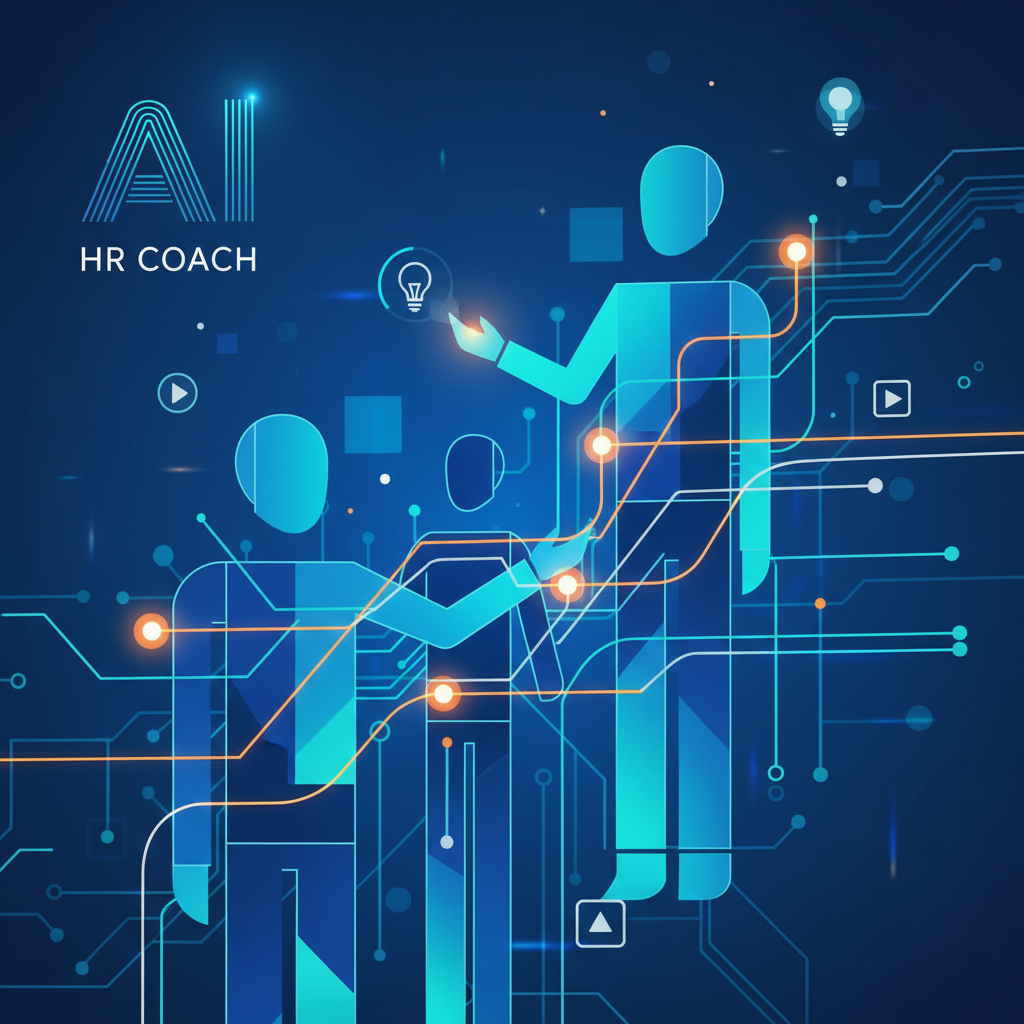
Why AI coaching software for HR is exploding now
If you run leadership or management development, you are under pressure to deliver more impact with fewer hours and tighter budgets. AI coaching software for HR has surged because it tackles exactly that problem. It helps you scale personalized coaching, make training feel relevant, and capture real behavior change instead of just course completions.
Instead of one workshop a quarter, your people can get targeted nudges, practice scenarios, and reflection prompts every week. Instead of generic e‑learning, they can receive coaching aligned with their goals, role, and performance data. Used well, AI coaching becomes a force multiplier for your existing training and development programs, not a replacement for human coaches.
What AI coaching actually looks like in practice
AI coaching is not a chatbot parachuted into your LMS. It is a set of capabilities that wrap around your existing programs and daily workflows.
You can expect AI coaching tools to help with:
- Translating leadership frameworks into day to day micro behaviors
- Turning 360 data or manager feedback into tailored action plans
- Delivering short practice scenarios and “what would you do?” drills
- Sending just in time nudges before key moments like 1:1s or presentations
In practice, that might mean a new manager finishes a feedback skills module, then their AI coach checks in a few days later: “You have 1:1s today. Which feedback conversation feels most important? Let us plan how you will open it.” Over time, that support compounds into new habits that stick.
Key benefits for your training and development programs
When you plug AI coaching into your leadership curriculum, several benefits show up quickly.
Continuous reinforcement, not one‑off events
Most training fades within weeks if it is not reinforced. AI coaching tools keep concepts alive between workshops with short, contextual practice.
You can set up sequences where, after a live session on coaching skills, each participant gets weekly prompts to reflect on a real conversation they had, choose what they would do differently, and commit to a specific tweak. That repetition is what turns “nice ideas” into muscle memory.
Personalized paths at scale
You know that your high potentials, new supervisors, and senior leaders do not need the same development. AI coaching software can tailor the focus for each person based on:
- Role and level
- Skill assessment results
- 360 or engagement survey data
- Manager priorities
Instead of pushing everyone through the same modules, you can let the AI coach prioritize content and practice aligned to each person’s gaps and goals.
Stronger transfer to on the job behavior
The real value of your programs is not in attendance rates, it is in better decisions and better leadership moments. AI coaching closes the gap between “what we covered in class” and “what I did in my team meeting this morning.”
You can connect the coach to everyday tools like calendars or task boards so it can prompt people before key events. For example, a leader about to run a performance review might get a checklist reminder on setting expectations, asking open questions, and agreeing on next steps.
Richer data for HR and L&D decisions
Traditional training analytics stop at completions and satisfaction scores. AI coaching tools add another layer. You can see which skills people are practicing, which scenarios they find hardest, and how their self‑ratings evolve over time.
This kind of pattern helps you refine curricula and focus your human coaching resources where they add the most value. It also pairs well with your broader ai-driven employee training strategy, so your learning ecosystem stays coherent instead of fragmented.
Be a Better Leader. Get Coaching 24/7.
 Tackle your business challenges
Motivate and develop your team
Use AI for better business results
Tackle your business challenges
Motivate and develop your team
Use AI for better business results
SmartCoach365.com
Must have features in AI coaching software for HR
Once you start comparing platforms, feature lists can blur together quickly. It helps to be clear on what really matters for training and development.
Coaching engine that mirrors real leadership conversations
You want a system that goes beyond generic chat. Look for:
- Scenario based dialogues that mirror difficult leadership moments
- Open questions that prompt reflection, not just quiz answers
- The ability to rehearse conversations and get targeted suggestions
- Follow up prompts that reference earlier commitments
If the demo feels like “FAQ search with personality,” it will not drive the behavior change you need.
Integration with your existing training stack
AI coaching works best when it wraps around what you already use, not when it lives in a separate silo. At minimum, check that it can:
- Pull in your own leadership models, competencies, and values
- Connect to your LMS or LXP so it knows who completed what
- Surface coaching prompts in tools people already use, like email or chat
When the coaching shows up in the flow of work, adoption climbs and your content investment pays off faster.
Adaptive learning and personalization
Your managers will tune out if the coach keeps circling back to skills they have already mastered. Strong platforms use adaptive logic to:
- Shorten or skip areas where someone performs well
- Spend more time on topics they consistently struggle with
- Adjust content to their function or region where relevant
Over weeks and months, this creates a genuinely personal development path without your team hand curating every step.
Manager visibility and involvement
AI coaching should not isolate employees from their managers. Instead, it should invite managers into the process in a structured way, for example by:
- Suggesting talking points for 1:1s based on coaching themes
- Offering light touch progress dashboards
- Providing mini guides on how to support specific behaviors
This keeps development aligned with team goals and prevents AI coaching from becoming a parallel, disconnected activity.
Evaluating vendors without getting lost in the hype
Marketing copy around AI can be hard to sift. A simple, practical evaluation approach keeps you focused on what matters.
Start from your use cases, not features
Before you compare platforms, list the concrete problems you want to solve. For instance:
- New managers struggle with giving tough feedback
- Senior leaders are not cascading strategy clearly
- High potentials need stretch support between programs
Then ask each vendor to show you exactly how their AI coach handles those situations. If they cannot demo your use cases in realistic detail, the fit is not strong enough.
Check content and coaching quality
Ask to experience a full coaching journey, not just a single interaction. Notice:
- Does the coach remember earlier answers and commitments?
- Are questions specific enough to feel relevant to your world?
- Do suggestions feel like what a good human coach might offer?
If it feels generic or superficial, learners will drop off quickly.
Probe data privacy and governance
Since AI coaching can touch sensitive topics, you need clear answers on:
- How data is stored and for how long
- What is visible to HR, managers, and the vendor
- How anonymization or aggregation is handled for reporting
Getting this right upfront saves you from adoption blockers with legal, security, or employee groups later.
Why SmartCoach365 points to the future of leadership coaching
One AI powered coaching platform that reflects where leadership development is heading is SmartCoach365. It is built specifically to extend and reinforce your management and leadership programs, not to replace them.
Always on coaching between your formal programs
With SmartCoach365, you can give every leader a personal AI coach that:
- Checks in after workshops to translate insights into concrete actions
- Offers realistic practice conversations on topics like feedback or delegation
- Sends timely nudges tied to their calendar events and priorities
This keeps your leadership frameworks alive all year, instead of spiking around big events.
Deep alignment with your leadership model
SmartCoach365 lets you embed your own competency frameworks, values, and program content into the coaching experience. That way:
- The language your people see in coaching matches the language in your programs
- Scenarios reflect your culture and typical challenges
- Data coming back from the coach maps neatly to the skills you track
That alignment is where you start to see AI coaching shift from “interesting add‑on” to “core part of how we build leaders here.”
Used well, AI coaching becomes the connective tissue between your leadership philosophy, your formal programs, and the real conversations managers have every week.
A best practice blueprint for modern L&D
The SmartCoach365 approach illustrates several best practices you can apply, whichever vendor you choose:
- Treat AI coaching as part of the design from day one, not an afterthought
- Use it to support real work, not just recall of course content
- Feed its insights back into how you refine your programs each quarter
This cycle is where AI coaching stops being a pilot and becomes a strategic capability for HR and L&D.
How to roll out AI coaching with minimal friction
Even strong tools fail if the rollout is clumsy. A simple, staged plan helps you show value quickly while building support.
1. Pick one high impact pilot group
Start with a group where behavior change really matters and where you have a defined program already. Typical good candidates:
- New manager cohorts
- High potential talent pools
- Leaders in a critical function facing big change
Define 2 to 3 clear success metrics upfront, such as manager confidence scores, quality of 1:1s, or specific survey items.
2. Design “moments that matter” journeys
Work with your vendor to map a short journey around key leadership moments, for example:
- Before a difficult feedback conversation
- After a team meeting
- Ahead of a performance review cycle
Make sure the AI coach is present before, during, and after these moments with short, specific support. This is where participants will feel the value quickly.
3. Prepare managers and stakeholders
Brief managers on what the AI coach will and will not do. Clarify:
- It is there to support their people, not to monitor them
- They will see light touch themes and progress, not private details
- How they can use coaching insights to enrich 1:1s
When managers are confident, employees are far more willing to try something new.
4. Collect stories and data early
During the pilot, capture:
- Quantitative signals like usage, completion of coaching sequences, and behavior indicators
- Short stories and quotes about how the coach helped in real situations
This mix of numbers and narratives will help you make the case to expand AI coaching across your development portfolio.
Bringing it all together
AI coaching software for HR gives you a realistic way to provide every manager and leader with personalized, ongoing development, without multiplying your budget. The strongest tools complement your existing programs, reinforce your leadership frameworks, and plug neatly into an ai-driven employee training strategy.
If you anchor your selection on real use cases, coaching quality, and alignment with your culture, you can move beyond hype and into measurable impact. Platforms like SmartCoach365 show what is possible when AI coaching is designed as an integral part of leadership development, not an isolated novelty.
Your next step is simple. Choose one leadership population, define one or two critical behaviors you want to shift, and evaluate AI coaching tools against that narrow, concrete goal. From there, you can expand with confidence, knowing AI is actively lifting the quality and consistency of leadership across your organization.
Be a Better Leader. Get Coaching 24/7.
Tackle your business challenges
Motivate and develop your team
Use AI for better business results
SmartCoach365.com