
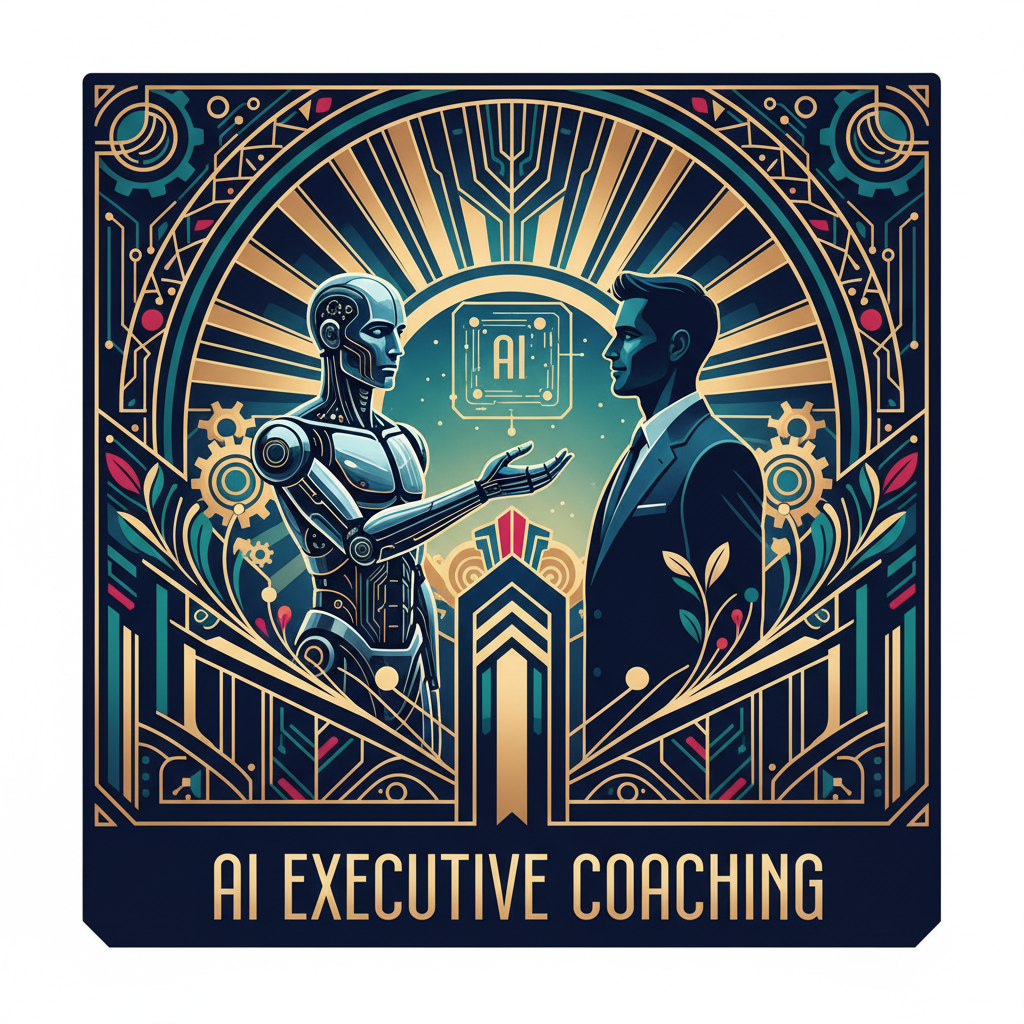
Understanding ai executive coaching trends
If you’re keeping an eye on how to sharpen your leadership edge, you’ve likely noticed something stirring in the world of professional development: ai executive coaching trends are accelerating in a big way. Traditional executive coaching has always been about personalized guidance, accountability, and goal setting. Now, advanced technology is entering the picture, offering real-time analytics, instant feedback, and data-driven insights that stand to revolutionize how you grow as a leader. You might be thinking that AI-powered tools are too futuristic or reserved for tech-savvy executives, but the reality is that this shift is already accessible to anyone looking for progressive methods of self-improvement.
In fact, AI coaching is positioned to foster heightened self-awareness by tracking your patterns in decision-making, communication, and emotional intelligence. These tools rely on algorithms that monitor inputs such as your speech or writing style, then combine that information with industry-specific insights. The result is feedback tailored to specific leadership goals—be it refining your negotiation tactics or enhancing team morale. Imagine having a personal, round-the-clock coaching assistant that can give you pointers, highlight your blind spots, and help direct your next move, all without waiting for the next face-to-face session.
Exploring why this matters
You may already do some level of reflection or self-assessment, but AI coaching adds depth. Many leaders get stuck in the grind of day-to-day operational tasks and never pause to assess how they connect with their teams or how their communication style lands. Standard leadership reviews might happen annually—far too infrequent to catch the subtleties of your interpersonal approach. By contrast, AI executive coaching is frequently updated, gathering feedback in real time.
If you incorporate these trends wisely, you can tap into data-driven self-reflection consistently, not just during quarterly or yearly reviews. In doing so, you’ll spot undercurrents in your leadership style that might be building up friction or inefficiencies. For instance, maybe your email tone is overly directive during stressful periods, or your meeting habits make direct reports hesitant to speak up. AI’s analytical tools have the potential to flag those exact issues. By surfacing such patterns, they fast-track the correction process, making you a more adaptable and empathetic leader in the moment, not just in theory.
Be a Better Leader. Get Coaching 24/7.
 Tackle your business challenges
Motivate and develop your team
Use AI for better business results
Tackle your business challenges
Motivate and develop your team
Use AI for better business results
SmartCoach365.com
Recognizing the benefits for your leadership
Some still question whether AI coaching can replicate the warmth and intuition of a human advisor. While there’s value in direct human interaction, AI’s real strength lies in its capacity for continuous, measurable feedback. Rather than replacing interpersonal connection, it can enhance your overall leadership journey. With the right system, you’ll benefit from a blend of advanced data analytics, around-the-clock availability, and personalized goal tracking.
One major advantage is the objectivity AI brings to your leadership assessment. Often, managers and executives receive feedback from people within their sphere of influence. Team members might be reluctant to highlight painful truths, or you might be inclined to interpret subtle criticism as unimportant. Having AI in the mix means you can gain unbiased observations on your behavior, performance metrics, or even communication style. The ultimate result is a sharper, data-driven roadmap for transforming how you lead.
Leveraging advanced tech with SmartCoach365
You might wonder how you can start experimenting with these new coaching options. One platform worth checking out is SmartCoach365 (https://smartcoach365.com), an AI-driven leadership coaching app that combines real-time insights with guided action steps. Whether you’re trying to guide a remote team, expand your strategic thinking, or master conflict resolution, the app’s machine learning algorithms tailor suggestions to your specific leadership context.
With SmartCoach365, you aren’t locked into rigid milestone charts or generic modules. Instead, the system’s algorithms interpret your progress data daily, pivoting the strategy whenever needed. Think of it as having a digital leadership guru in your pocket, ready to propose a fresh angle when your usual playbook starts to feel stale. The platform can keep track of how consistently you’re working toward goals, remind you of tasks you might have overlooked, and gently nudge you to schedule much-needed downtime. It’s adaptive, and that adaptability becomes a powerful asset when you’re juggling high-stakes decisions across multiple teams.
Navigating concerns about AI coaching
If you’re understandably cautious, you’re not alone. Questions about data privacy, the impersonal nature of AI, and outcomes that might lack human nuance do arise. Striking the right balance between technological convenience and empathetic human touch is critical. Privacy is a core consideration: with AI collecting input on your speech patterns, communication logs, or scheduling habits, you need robust assurances that your information remains secure and confidential.
The good news is that ethical AI platforms are built with privacy measures from the ground up. Reputable companies that do executive coaching via AI often use encryption, anonymized datasets, and explicit consent policies for data handling. It’s also worth looking for products that maintain a “human-in-the-loop,” meaning a real coach or leadership expert periodically reviews data to ensure everything remains beneficial and context-appropriate. This hybrid approach can offer the best of both worlds—machine efficiency backed by genuine human empathy.
Merging AI with human coaching
No matter how you slice it, people crave connection. Traditional coaching relationships are rooted in trust, shared experiences, and the aha moments that occur in a real conversation. AI might light up your phone with relevant feedback at any hour, yet there’s still something incomparable about exchanging ideas with a mentor who has walked a similar path. That’s why many leadership development programs now advocate coupling AI tools with live coaching sessions.
By merging AI feedback with human expertise, you can foster a deeper level of self-discovery. In a practical sense, your AI system could monitor ongoing behaviors, flag you when you need a course correction, and provide a plan for building new competencies. Then, in a scheduled one-on-one, a coach helps you emotionally process that data and implement strategies that fit your leadership style. You gain real-time updates without losing the genuine human exchange that fosters growth on a personal level.
Tapping into proactive leadership
Moving forward, the wave of AI coaching suggests a proactive mindset is critical. Instead of waiting until your next leadership review or an annual feedback cycle, you can take charge daily. This level of proactivity transforms your style from reactive to anticipatory. For instance, if your feedback consistently shows that you talk over direct reports in meetings, you can quickly adjust your approach. You don’t have to let months of bad habits accumulate only to discover, too late, that morale has suffered.
Additionally, proactive leadership often translates into a more motivated team. When employees see you leveraging cutting-edge tools to refine your style and truly listening to automated insights, they become more open to innovation themselves. Your example signals a culture of curiosity and continual improvement, making them more likely to explore systems or software that boost everyone’s productivity. In short, using AI for your coaching sets the stage for broader organizational growth.
Preparing for the future of AI coaching
As these ai executive coaching trends mature, you can anticipate even more granular feedback loops. The next wave of technology might integrate wearable devices, tracking and analyzing stress levels, posture, and vocal tone during crucial interactions. You might receive insights that your stress spikes during performance evaluations or that your posture unconsciously communicates dominance rather than collaboration. Such data, if used ethically and with consent, could help you address issues many leaders never even realize they have.
Expect also to see more cross-disciplinary approaches, where AI coaches pull from fields like psychology, linguistics, and behavioral economics to fine-tune your leadership repertoire. But remember, technology can only take you so far if you’re not ready to internalize the lessons. Getting the most out of AI coaching demands openness to change, a willingness to question your current habits, and the humility to accept feedback from an impartial digital helper.
Integrating AI into your broader growth plan
AI executive coaching tends to be most impactful when it’s part of a broader strategy. Leadership development isn’t a single pivot. It’s a collection of practices—like emotional intelligence building, strategic thinking courses, and targeted reading—that all funnel into a stronger executive presence. If you’re curious about the bigger picture, check out ai and leadership development. This resource looks at how technology intersects with modern leadership frameworks to create fresh opportunities for growth.
Think of AI’s role as a booster, amplifying the results you’d normally get from coaching or self-study. The best results occur when you seamlessly integrate daily reflections, experiment with new modes of communication, and regularly consult both AI-generated metrics and the wisdom of a human coach. Over time, that fusion can lead to sharper decision-making, stronger people management, and the confidence to handle unpredictable business conditions with poise.
Shifting mindsets and building momentum
Mindset is often half the battle. If you view AI coaching with suspicion or treat it merely as a fancy gadget, you won’t see transformative benefits. However, if you adopt a growth mindset—one that recognizes your leadership potential is fluid, not fixed—you’ll unlock the real power behind these tools. By consistently implementing AI suggestions, you train your mind to seek incremental improvements. Even small changes, like adjusting how you phrase an email, can add up to major performance gains over time.
Leaders who embrace this kind of forward-thinking approach often become trailblazers in their organizations. By being open to new technology, you set an example of adaptability. This attitude resonates down the chain of command, encouraging employees to keep pushing boundaries and trying fresh approaches to problem-solving. The result is often a more dynamic culture, where innovation thrives and employees feel empowered to contribute creative ideas.
Building resilience through AI insights
Executive leadership rarely follows a tidy or predictable script. Surprises happen, crises arise, and conditions shift quickly. In these moments, AI coaching can act like a stabilizing force that reminds you of your prior successes and patterns. It doesn’t judge or become overwhelmed by complexity, so it can offer steady suggestions while the storm of daily challenges rages on.
Moreover, the data you gather over time becomes a rich archive of your adaptability. By selectively reviewing past benchmarks, you can see where you’ve made significant strides, which strategies flopped, and how you responded under intense pressure. This historical context turns into a valuable resource for navigating future hurdles. Consider it a living, breathing journal that quantifies your progress, pinpoints your weaknesses, and celebrates your wins.
Envisioning AI as your growth partner
At its core, AI coaching is about creating a tailored, ever-evolving path to better leadership. Still, you get to decide how much you lean on the technology. Some prefer light guidance that complements traditional coaching. Others go all-in, integrating AI everywhere from their weekly scheduling to their approach to conflict resolution. Regardless of the depth you choose, an AI partner can encourage you to think, plan, and act in ways you might never have considered on your own.
Ultimately, the best coaching setups are those that align with your personal values and organizational context. Maybe you’re in a fast-paced startup environment where real-time analytics can give you an edge. Or perhaps you head a global team, and you need round-the-clock support that easily crosses time zones. Whatever your leadership story, AI’s flexibility can help you turn introspection into practical steps, bridging the gap between good intentions and genuine transformation.
Practical steps to start your AI coaching journey
If you’re ready to explore these ai executive coaching trends for real, here are some immediate actions you can take:
- Research AI coaching tools and platforms that match your leadership needs. Start with SmartCoach365 (https://smartcoach365.com) for personalized, data-driven sessions.
- Establish clear goals, whether you want to boost communication skills, become more strategic with team management, or better handle pressure.
- Schedule regular time slots to review AI-generated metrics, reflect on feedback, and plan next steps.
- Combine AI insights with traditional coaching or mentor relationships to strike the optimal balance of data-driven guidance and personal empathy.
- Monitor organizational culture as you grow. Encourage direct reports and colleagues to share feedback, so you can cross-reference AI suggestions with real-life input.
By blending AI’s continuous feedback with your determination to grow, you’ll find a new frontier in leadership development that keeps pace with the ever-evolving demands of the modern workplace. Embrace the trend, invest your time and focus, and watch as your leadership skills soar to new heights.
Be a Better Leader. Get Coaching 24/7.
Tackle your business challenges
Motivate and develop your team
Use AI for better business results
SmartCoach365.com