

AI real estate investment software can radically change the way you analyze and manage your property portfolio. Instead of guesswork or outdated spreadsheets, you can rely on advanced algorithms and extensive data to find profitable opportunities faster. With so many tools on the market, however, it can be easy to overlook key features or miss potential pitfalls. Here is how to avoid costly mistakes and get the most out of these powerful solutions.
Understand AI real estate investment software
Before you dive into specific platforms, take stock of what AI real estate investment software actually does. At its core, it uses machine learning models to process huge sets of real estate data—property values, current rental rates, market trends, demographic information, and more. The AI then identifies patterns you might miss if you were only crunching numbers manually.
The biggest advantage here is efficiency. You can analyze multiple properties at once, weigh risk factors across different neighborhoods, and see predicted returns without shuffling through endless spreadsheets. When you know what kind of data is being used and how it’s interpreted, you’ll feel more confident about the insights generated by AI.
Key points to remember
- AI models learn from past and current datasets to forecast future property performance.
- More data isn’t always better—quality and relevance matter.
- Understanding how software interprets the data helps you spot anomalies.
Audit data quality and sources
Even the best AI models deliver poor results if the data feeding them is inaccurate or irrelevant. That’s why paying attention to the software’s data sources is vital. You should ask: Which public records, real estate listings, or rental indexes does the tool pull from? Are the data sets regularly updated?
You might also want to know if the software partners with industry experts to refine its data. In real estate, market conditions change quickly. The tool you choose should reflect current realities rather than rely on outdated compilations that paint an inaccurate picture of a property’s potential.
Questions to ask providers
- How often is your data refreshed or updated?
- Which third-party data sources do you use?
- Do you cross-check for discrepancies or errors?
Evaluate property value forecasting
One of the most powerful features of AI real estate investment software is its ability to predict property values over specific timeframes, such as three, five, or even 10 years. This forecasting can save you from acquiring properties with limited appreciation potential. Still, predictions are never a guarantee. They rely on market assumptions and statistical models that can’t account for every unforeseen event.
Rather than treat predictions as absolute truth, view them as a dependable compass that guides your decision-making. That compass should point you in the right direction but also encourage you to do some critical thinking. If the numbers look too good to be true, consider verifying them through local market reports or consulting a professional assessor for a reality check. You’ll minimize the risk of relying on skewed or overly optimistic projections.
Make Smarter Rental Investments & Boost Profits
 Use AI to Assess Opportunities
Compare Cap Rates & Cash Flows
Optimize Rental Income
Use AI to Assess Opportunities
Compare Cap Rates & Cash Flows
Optimize Rental Income
RentalOptimizer.com
Tips for verifying estimates
- Compare AI-generated valuations with actual sales prices of similar properties in the same area.
- Look at both short-term and long-term forecasts to account for market fluctuations.
- Keep an eye on local economic factors that might affect values, such as job growth or infrastructure projects.
Focus on user-friendly interfaces
All the robust analytics in the world won’t help if you can’t use the software efficiently. Look for an intuitive interface that guides you step by step, whether you’re uploading property data, reading heat maps of market trends, or comparing ROI scenarios.
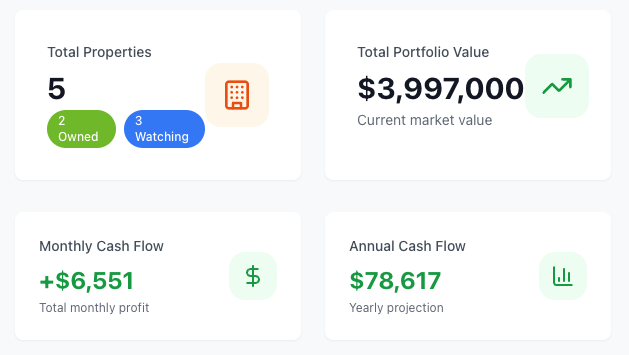
Many AI-powered solutions offer dashboards that highlight critical metrics, from rental yield to vacancy rates. You might see color-coded property risk scores, graphs of projected revenue, or interactive neighborhood overviews. These visual cues simplify complex data and remove guesswork. If you find a platform that combines sophisticated analysis with easy navigation, you’ll save time and reduce training costs for you and your team.
Features that improve usability
- Customizable dashboards for different user roles, like property managers or analysts.
- Interactive charts that let you zoom in on specific data points.
- Mobile-friendly design so you can review properties on the go.
Check integration and compatibility
Chances are you already rely on several tools to handle your real estate ventures—accounting software, property management systems, or customer relationship management platforms. The best AI real estate investment software doesn’t force you to abandon these tools. It integrates smoothly, allowing you to transfer data easily and maintain consistency across your entire workflow.
For example, you could import monthly rental income from your current property management software, then sync that information with the AI tool’s predictive analytics. This synergy saves time and reduces the risk of data-entry errors. If a platform can export reports directly to your accounting system, even better. You’ll have a streamlined process from deal analysis to financial reporting.
Checklist for seamless integration
- Confirm the software supports commonly used file formats like CSV or XLS.
- Look for API access that enables deeper connections between systems.
- Ask about plug-ins if you use a highly specialized real estate platform.
Consider security and data privacy
As you explore advanced features, don’t forget about critical security measures. AI solutions rely on large volumes of property and personal data, which can make them prime targets for data breaches. You should feel confident that the platform encrypts sensitive information and follows best practices for cybersecurity.
In addition, check if the software complies with relevant regulations, especially if you operate in multiple regions. If your tool doesn’t prioritize privacy, you put both your and your clients’ confidential information at risk. Reputable providers will have clear data-handling policies and robust systems designed to keep your information safe.
Red flags to watch out for
- Vague or nonexistent privacy policies.
- Outdated encryption standards.
- Lack of transparency regarding data storage locations.
Learn from real-world examples
When evaluating AI real estate investment software, real-world case studies can be a game-changer. You want to see how the platform performs outside of lab conditions, dealing with the complexities of actual property markets.
One emerging example is the AI-powered rental investment analysis software Rental Optimizer (https://rentaloptimizer.com). Rental Optimizer monitors real-time rental trends, occupancy rates, and future growth patterns in multiple cities. By feeding this data into machine learning models, it highlights opportunities for reliable returns and flags properties at high risk of underperformance. It’s part of a new wave of AI applications that focus specifically on rental properties—an approach that can be particularly helpful if you manage multiple rentals or plan to expand your rental portfolio.
How this solution stands out
- Combines predictive analytics with robust property tracking tools.
- Provides clear reports on market changes so you can adjust rents or forecast future demand.
- Offers an intuitive interface that makes large-scale data analysis more approachable.
Avoid hidden costs and fees
In addition to purchase or subscription fees, your software might come with extra costs for add-on features, data licensing, or premium support. Sometimes, you might pay more to access historical data for deeper analysis. Other times, marketing modules or customer service tiers could inflate your total expenses. Familiarize yourself with the full pricing structure before you sign up so there are no unpleasant surprises.
You should also check if the platform charges based on the number of assets you manage. Some AI solutions charge per property, which can become costly if your portfolio grows. Others offer tiered plans that might better suit your expansion goals. By understanding these fees upfront, you can make a more informed decision and reduce unplanned expenses later on.
Items to clarify about pricing
- Whether the base subscription includes all core AI features.
- Costs for additional data sets or specialized modules.
- Scalability of pricing tiers as your portfolio expands.
Implement a trial or pilot phase
Before fully committing, see if the software offers a free trial or a pilot phase. This hands-on experience helps you gauge how the platform fits into your existing workflow. You can test how well it integrates with your other tools, gather feedback from team members, and document any issues with data accuracy or system speed. The trial period will also reveal if the user interface meets your everyday needs.
If no free trial is available, you might check for a short-term paid subscription or a discounted pilot program. During this phase, aim to evaluate a diverse set of properties, from smaller single-family homes to multi-unit complexes, so you can see how the software handles different scenarios. The more thoroughly you test the tool before committing, the fewer surprises you’ll face down the line.
Trial phase best practices
- Create clear evaluation criteria, such as ease of use or accuracy of forecasts.
- Encourage feedback from everyone using the software to get a well-rounded perspective.
- Allocate enough time to evaluate different property types and market conditions.
Use AI insights without losing your own judgment
While AI solutions can bring incredible insights to the table, remember that they’re not foolproof. Relying solely on an algorithm’s recommendation—especially in high-stakes real estate deals—can be risky. Local regulations, property nuances, and unexpected factors such as new zoning laws might shift your market’s direction.
The best approach is a balanced one. Use the software’s analytics to guide your decisions, but also bring your personal experience and knowledge of local markets into play. A property might tick every AI-based box for profitability, yet it could have unique physical issues or complicated legal restrictions that the data overlooks. By combining AI-driven forecasts with human intuition, you add an extra layer of due diligence that helps you avoid costly mistakes.
Final checks before investing
- Visit potential rental properties in person to confirm the software’s assessments.
- Talk to local brokers or property managers for neighborhood insights.
- Re-run the AI analysis periodically to capture updated market trends.
Communicate AI findings to stakeholders
If you have business partners, colleagues, or even private lenders involved, effective communication is essential. AI-generated data and charts can become confusing unless you break them down in an understandable way. Not everyone is familiar with terms like “machine learning model” or “algorithmic forecast.” By presenting key takeaways in plain language, you’ll help others see the value of the software and reduce misunderstandings.
You can share relevant charts highlighting property appreciation, projected cash flow, or neighborhood risk ratings. If the platform lets you create custom reports, tailor them to each stakeholder’s level of expertise. Detailed data might be useful for your analytics team, while partners primarily interested in ROI might only need a simplified summary.
Communication tips
- Translate technical jargon into tangible implications for property performance.
- Use visuals that illustrate trends or risks at a glance.
- Schedule regular updates so everyone stays aligned with new data.
Look out for upcoming enhancements
Artificial intelligence evolves quickly, and real estate software providers often roll out new features to stay competitive. Keep an eye on product roadmaps so you can anticipate updates and decide whether new capabilities will benefit your portfolio. For instance, an AI tool might soon add predictive maintenance alerts or advanced rent optimization.
Regularly reviewing release notes or announcements ensures you’re fully leveraging the platform’s growing capabilities. You might discover new modules worth trying, such as an automated underwriting feature that addresses your specific investment criteria. Staying informed about a provider’s future direction helps you make the most of your subscription and stay ahead in a competitive market.
Enhancement possibilities to watch
- Upgraded predictive models that refine rental yield estimates.
- Improved data visualization tools for comparing multiple properties simultaneously.
- Workflow automation features that simplify collaboration with your property managers.
Summarize your next steps
Investing in AI real estate investment software doesn’t have to be daunting. When you focus on data quality, user-friendly design, careful cost assessment, and secure integrations, you reduce the risk of costly errors. A pilot phase will help you confirm the solution’s suitability, and combining AI insights with your own judgment keeps you grounded in real-world conditions.
Most importantly, remember that the right software should empower both you and your team to spot profitable properties, streamline day-to-day tasks, and track market shifts as they happen. If you haven’t tried one of the emerging platforms yet, consider starting with a tool like Rental Optimizer (https://rentaloptimizer.com) that puts AI-powered rental analysis at your fingertips. Take advantage of an informed approach to technology, and watch your real estate portfolio grow in a smarter, more sustainable way.
By approaching AI real estate investment software with knowledge and a keen eye for potential pitfalls, you’ll set yourself up for success. Whether you manage one property or dozens, these tools can give you a competitive edge—just make sure you go in prepared. Have a feature you’d love to see in these solutions? Share your thoughts with your network to spark an even deeper conversation about the future of real estate investing.
Make Smarter Rental Investments & Boost Profits
Use AI to Assess Opportunities
Compare Cap Rates & Cash Flows
Optimize Rental Income
RentalOptimizer.com