

Real estate ai forecasting models are quickly becoming the key to staying ahead in today’s fast-paced property market. Whether you’re looking to expand your portfolio or start with your very first rental, AI-driven insights can help you make better decisions. By anticipating future trends more accurately than traditional methods, these models empower you to optimize investment strategies and protect yourself from costly miscalculations.
In this friendly guide, you’ll discover how artificial intelligence is reshaping the future of real estate investing. You’ll also learn practical ways to integrate cutting-edge forecasting tools into your own business model, reducing guesswork and streamlining your research. Ultimately, these breakthroughs could help you build a stronger, more resilient portfolio that stands the test of time.
Explore real estate AI forecasting models
Before diving into how AI enhances your investing strategy, it’s helpful to understand why these forecasting models have become so crucial. Traditionally, property analysis involved looking up data on market conditions, consulting with local experts, and making your best guess about a neighborhood’s trajectory. Over time, you’ve probably seen real estate predictions that missed the mark, leaving you with fewer gains or even unexpected losses.
Today, thanks to advances in machine learning, real estate ai forecasting models can examine massive amounts of historical and current data, then search for patterns that suggest where prices might be headed next. These models can also combine various data sources, like local economic indicators, purchasing trends, and even neighborhood social metrics, giving you comprehensive evaluations that no single human analyst could replicate. The result is a forward-looking perspective that can help you see opportunities and minimize risks.
Transform your investing decisions
When you rely on AI to forecast real estate values, you’re equipping yourself with a roadmap that guides both short-term and long-term strategies. Imagine being able to pinpoint the next up-and-coming suburb for your rental property or accurately time the sale of a commercial building based on predicted market shifts. That kind of insight can give you a major competitive advantage, even if you’re just starting in the world of property investing.
These models also create consistency in your decision-making process. By evaluating potential investments with data-driven insights, you limit emotional or impulsive buys. Suppose you’re deciding between two apartment complexes in different parts of a city. An AI tool can highlight which neighborhood is likely to see an uptick in rental demand and property appreciation, letting you confidently choose the winning property. You can read more about the broader implications of AI-driven rentals by exploring ai real estate investing, which delves deeper into how these emerging tools are changing the entire real estate industry.
Make Smarter Rental Investments & Boost Profits
 Use AI to Assess Opportunities
Compare Cap Rates & Cash Flows
Optimize Rental Income
Use AI to Assess Opportunities
Compare Cap Rates & Cash Flows
Optimize Rental Income
RentalOptimizer.com
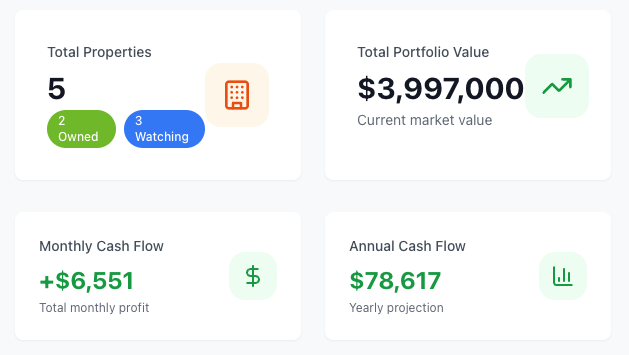
Overcome AI-driven challenges
As with any innovation, AI isn’t a magic solution that solves every problem. Models are only as effective as the data they learn from, and any flawed or outdated information can distort their predictions. For example, if certain recent zoning changes or infrastructure plans aren’t factored in, you might not see an accurate picture of a neighborhood’s trajectory. That’s why staying informed about local developments is still essential, even if you rely on data-focused technology.
Another challenge is knowing how to interpret the output that forecasting tools provide. While the model can supply probabilities, confidence intervals, or comparative metrics, it’s ultimately your responsibility to combine this AI-driven information with broader industry knowledge. Think of it like having an ultra-knowledgeable advisor at your side, but you still need to ask the right questions and use your own expertise, especially when finalizing deals or negotiating contracts.
Put your forecasting insights to work
So how do you bring AI into your everyday real estate workflow? Here are a few practical ways to leverage forecasting models:
- Identify emerging hotspots. Use AI to spot neighborhoods where job growth or population trends suggest rising demand for rentals or quick development.
- Evaluate renovation projects. Predict which building improvements are likely to fetch higher rents or sales prices, so you invest in upgrades that truly pay off.
- Time your listings wisely. Plan sales or lease announcements to coincide with peak demand windows, based on historical patterns and current market signals.
- Screen potential properties. Narrow your search to listings that align with your defined criteria, such as estimated cash flow, vacancy rates, or resale potential.
If you’re searching for a ready-made platform that simplifies rental property insights, you might explore Rental Optimizer (https://rentaloptimizer.com). This AI-powered tool analyzes local metrics and market trends to help you identify properties with strong ROI potential. Instead of sifting through endless property listings, you can quickly spot those that match your custom criteria, saving time on research and focusing more of your effort on closing lucrative deals.
Look ahead to AI’s next chapter
AI in real estate is still evolving, and the future holds even more exciting possibilities. As data collection improves and algorithmic models grow smarter, you might see tools that handle everything from contract negotiations to tenant screening. Some investors envision a day when AI can dynamically adjust rental prices, marketing campaigns, and financing options in real time, keeping pace with shifting economic factors and local market conditions.
All these advancements share one common theme: reducing uncertainty in the buying, selling, and renting process. While no mathematical model can fully account for every twist and turn, AI drastically lowers your risk by generating informed analysis that would otherwise take you days or weeks to compile manually. By adopting these technologies now, you position yourself at the forefront of real estate innovation and open doors to more consistent, scalable success.
Real estate ai forecasting models can be the key to a smarter, more efficient investment strategy. By analyzing enormous data sets and pinpointing trends that might otherwise go unnoticed, AI technologies guide you toward decisions that align with both your short-term goals and your long-term vision. You’ll not only save time, but also reduce guesswork in a market where clarity is often hard to come by.
If you’re ready to see how AI can elevate your next deal, consider integrating an advanced platform such as Rental Optimizer. Soon, you’ll be finding properties that maximize returns and future-proofing your portfolio against fluctuations you can’t predict alone. Even though these models won’t replace your intuition or industry expertise, they can be a powerful ally in your quest for profitable, sustainable investments.
Make Smarter Rental Investments & Boost Profits
Use AI to Assess Opportunities
Compare Cap Rates & Cash Flows
Optimize Rental Income
RentalOptimizer.com