
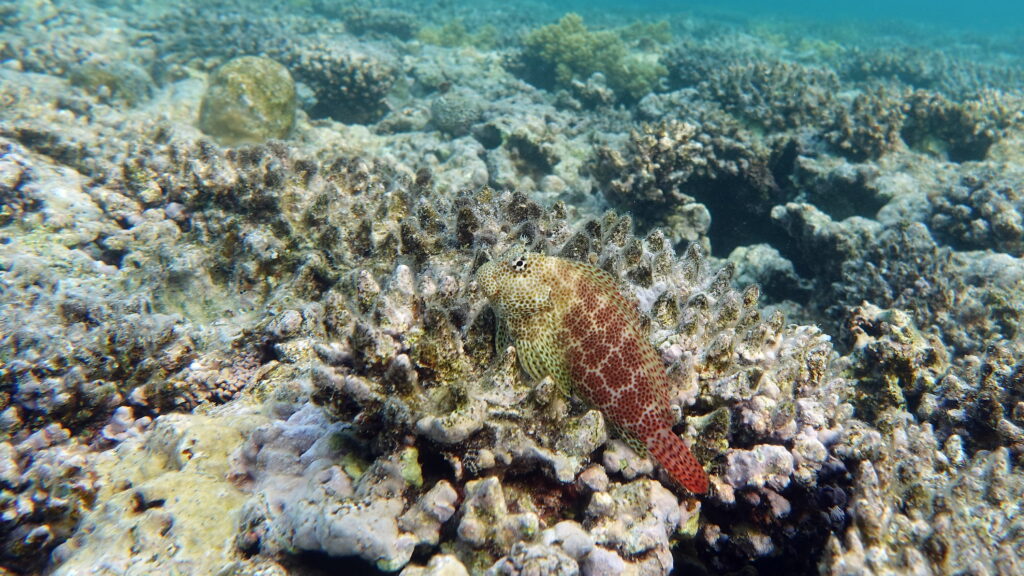
Did you know the impending collapse of coral reefs is a problem for anyone who eats seafood, insures a building, or relies on the power grid?
The International Union for Conservation of Nature (IUCN) recently released its first global assessment of coral reef ecosystems. It found that 96 percent of the world’s shallow-water reef ecosystems face a high risk of collapse by 2075.
We’ve heard of coral reef warnings for decades. In 1998, 21 percent of the world’s reefs experienced heat strong enough to bleach their coral. That was the first wake-up call. By 2010, 37 percent were bleached, and then 68 percent by 2017, and finally 84 percent in the most recent event, which ran from 2023 to 2025.
So what does the coral reef collapse have to do with your business?
Coral is the ocean’s foundation
Coral looks like rock. But it’s alive.
Tiny animals build hard skeletons that pile up over centuries and build the reefs. When the water gets too hot for too long, the coral turns white, a process called bleaching. And then much of the living reef dies.
Reefs cover about 1 percent of the ocean. But according to the National Oceanic and Atmospheric Administration, they provide habitat for at least 25 percent of marine life. More than half of U.S. fisheries species depend on reefs for part of their lives.
It’s just like the canary in the coal mine. The small birds get sick from toxic gases in the mines before people can detect them. So, a struggling canary is an early warning signal.
Coral plays that same role for the ocean. IUCN director general Grethel Aguilar called reefs an “early warning system for the state of the seas.”
When foundations fail, other things crumble
When a reef collapses, hard coral disappears. Algae and sponges take over. Fish lose their food, shelter, and breeding grounds.
Dying reefs impact the coastline. Reefs work like underwater speed bumps that slow waves before they reach shore. The U.S. Geological Survey estimates that U.S. reefs prevent $1.8 billion in flood damage to property and the economy each year. Another study in the journal Nature Sustainability identified the critical coastline infrastructure based on the USGS research, finding that reefs consequently protect a number of hospitals, roads, and power plants.
So, a warmer ocean bleaches and kills coral. The dead reef stops slowing waves. Storm water floods and damages buildings along the coast. From there, the impact and cost move into increasing insurance premiums, rebuilding costs after storm events, and more.
Your business has coral too
Coral reefs aren’t visible. Yet we know they’re at risk. But most of the popular press sound alarm bells based on declining fish, warming water, El Niño events, and other things we more directly experience. The root cause, the coral reef collapse, often sits below the radar (or sonar).
Every company has its own version of a reef. It’s the less visible and often intangible part of the organization – from its culture to its partnership networks – that supports and enables the quantifiable business results leaders care about.
In a supply chain, for example, it might be a small manufacturer that produces one essential part nobody else makes and is a sole-source vendor to your largest supplier. In fact, you might not know they even exist. Your dashboard tracks on-time delivery from your largest suppliers. It may not track whether that supplier’s supplier is losing its best engineers due to some unforeseen circumstance that may put its business (and yours) at risk.
When it comes to your culture, the equivalent of the reef is your people who help others without being asked. They answer the new hire’s questions. They mediate and resolve friction between teams. When they burn out or leave, you might not know it. But months later, morale starts lagging and project timelines slip.
Revenue, margin, and customers are the fish in this analogy. They’re the visible metrics. By the time they start dropping, your foundation may have been eroding for months.
Reinforce your foundation
Here’s how to ensure your foundation remains strong:
-
- Find your foundation. For your top visible metrics, identify the people, suppliers, and systems they depend on, and what “healthy” looks like.
- List leading signals. Choose a measure that would change months before revenue declines, like problems with a key supplier’s suppliers or attrition of your own organization’s informal leaders.
- Quantify intangibles. Add leading signals to your dashboards and discuss them alongside your financial metrics so you can intervene as needed while there’s still time to act.
If you only count fish, you’ll miss what’s happening to the foundational reef that keeps them alive.
I publish Leapfrogging the Headlines to help leaders cut through the noise, gain clarity on what’s happening, and make smarter decisions. Subscribe below to get each issue delivered free.

Join 30,000+ other leaders