

When you first explore real estate investing, you want to make sure each dollar works harder for you. That is where AI real estate investment tools come into play. Instead of sifting through endless listings or relying on manual research, you can tap into sophisticated data analysis that highlights profitable rentals, forecasts market changes, and automates many of the back-end tasks that typically slow you down. The result? A sharper focus on growing your investment portfolio and maximizing overall returns.
Below is a comprehensive look at how you can harness the power of AI in your journey toward successful rental property ownership.
Recognize the value of AI in rentals
AI, at its core, uses algorithms to spot patterns across massive datasets. For real estate, that means everything from predicting price shifts in certain neighborhoods to highlighting up-and-coming rental markets. By blending machine learning with your own investment instincts, you can minimize guesswork and save time.
A quick look at AI’s role
When you rely on AI, your arsenal of data grows exponentially. Tools can generate deep property insights by assessing multiple factors, such as:
- Neighborhood demographics
- Historical rental performance
- Comparable property values
- Local price trends
These insights are a strong starting point for your due diligence. If you pair your knowledge of an area with the outputs of real estate ai algorithms, you will have a sharper perspective on which properties might deliver the best returns over time. Rather than slogging through hundreds of listings, you can quickly zero in on potential gems that match your budget and growth goals.
Benefits for aspiring landlords
As a new investor, it can be intimidating to make big decisions on rental properties without a seasoned mentor or estate agent on speed dial. AI helps fill in those gaps and boosts your confidence by supplying more structured data and clear metrics.
- Saves you time on manual research and spreadsheet tasks
- Reduces the risk of underestimating repair costs or future vacancy rates
- Highlights emerging neighborhoods that may not yet be on your radar
- Focuses your capital on properties with the highest earning potential
By combining AI insights with your personal goals, you can cut through the noise and build a well-thought-out property strategy from day one.
Prepare your AI investment strategy
Even the most advanced AI systems need clear direction. Before diving into detailed property analytics, you will want to outline your financial goals, timeline, and the overall approach you plan to use. Once your priorities are set, choosing the right AI platform or tool becomes more straightforward.
Clarify your property goals
Think about the type of rental business you want to build. Are you interested in short-term rentals, like those near vacation hotspots? Or would you prefer a long-term lease setup that provides consistent monthly cash flow? By understanding your rental model, you can structure the AI’s parameters more precisely.
- Define your income target for each rental property
- Determine your tolerance for renovation or fix-and-flip projects
- Consider whether you want single-family houses, duplexes, or multifamily units
Once you have these parameters, you can feed them into the specific ai rental property analysis tools, guiding the technology to focus on properties that align closely with your short-term and long-term goals.
Find the right platform
Next, choose a digital solution that not only meets your needs but is also easy for you to use regularly. Some AI platforms offer all-in-one services, covering data collection, property valuation, and even predictive analytics for future rent growth. Others take a more specialized approach, focusing on narrower tasks, like ai rental property screening for tenant applications or ai rental property valuation to estimate price points.
Make sure you select platforms that:
- Integrate seamlessly with your existing tools or processes
- Provide clear data visualizations and actionable insights
- Have an intuitive interface and robust customer support
Clarity and user experience are crucial. You do not want to waste time struggling with complicated dashboards. Your goal is to let AI handle the heavy lifting so you can focus on bigger-picture decisions.
Make Smarter Rental Investments & Boost Profits
 Use AI to Assess Opportunities
Compare Cap Rates & Cash Flows
Optimize Rental Income
Use AI to Assess Opportunities
Compare Cap Rates & Cash Flows
Optimize Rental Income
RentalOptimizer.com
Gather and analyze rental market data
Real estate ultimately hinges on location. If you purchase a property in a neighborhood with declining demand or limited job growth, your returns could stagnate. That is why you want to tap into AI’s ability to sort out real-time figures and identify emerging trends before a market becomes too competitive.
Focus on neighborhood potential
Your first step is to look into ai rental market trends. These tools sift through area-specific indicators—like new business development or high occupancy rates—and compare them to broader city or state data. You might discover that a lesser-known district has recently seen a wave of new employers, which can drive up rental prices. Or you could find that a well-established neighborhood is nearing its market peak, making it less appealing as a long-term investment.
By zeroing in on neighborhood potential, you give yourself a strong advantage. AI data can show you how average rental income has changed over the past few years, how vacancy rates are shifting, and what new projects (commercial or residential) may shake up the local economy.
Identify price trends
Market data reveals more than just current property values. It also puts you at the forefront of predicting future price fluctuations. Even small changes in overall demand can significantly impact how quickly you can rent out a property, as well as how much you can charge. You can rely on machine learning systems to examine property sales, rental applications, and newly listed units in your target region. From there, you can estimate how the local supply and demand might evolve over the next few months or years.
Analyzing price trends involves:
- Checking average rent increases or decreases over time
- Monitoring how quickly listings are filled in comparable properties
- Watching broader economic factors that could boost or reduce demand
With AI’s help, you reduce the guesswork. You also gather the confidence to back up your decisions with consistent data, ensuring that you pick areas most likely to yield steady returns.
Optimize property selection and valuation
Once your market research is done, you are ready to dive deeper and single out individual properties. AI real estate investment tools excel here because they can integrate many data points—property size, historical repairs, local amenities, and more—to forecast a property’s true earning potential.
Use AI for deeper analysis
Property selection begins with some fundamental questions: Is this home or building structurally sound? Does it align with consumer demand in that neighborhood? AI can help you answer these questions by running large-scale comparisons of certain property features and neighborhood trends. If you combine a smaller, more personal assessment of a place (e.g., doing a property walk-through) with the aggregated data from your chosen AI platform, you have a balanced view of whether that address is worthy of your investment dollars.
You can also integrate ai rental property analysis modules to break down the property’s potential in terms of occupancy levels, rent ranges, and typical upkeep expenses. While there are always outliers, an AI-driven forecast can bring you remarkably close to the real-world performance you can expect once you sign the closing papers.
Estimate ROI with confidence
Accurate property valuation is one of the most crucial aspects of rental investing. If you overpay significantly, you will face a narrower profit margin. If you underprice your rent, you leave money on the table every month. AI-based valuation models are built around historical data, current market dynamics, and future expectations. Depending on the tool, you might see suggestions for rent price adjustments to remain competitive, or warnings about neighborhoods undergoing transitional phases.
To nail down ROI:
- Feed the AI system as many comparable data points as possible
- Check historical occupancy rates in similar units
- Factor in your projected taxes and insurance
- Account for typical maintenance costs from ai property management software
From there, you should have a realistic snapshot of what you stand to gain each quarter or year. Balancing rental income with operational expenses is the secret to making your property cashflow-positive.
Streamline property management tasks
Once the property is in your hands, you do not want to lose momentum by getting bogged down in day-to-day tasks. That is where AI-powered strategies for handling everything from tenant inquiries to rent collection can truly shine. With a well-configured system, you can automate repetitive chores and free up more time to expand your portfolio.
Automate tenant screening
Tenant screening can be one of the most time-intensive processes for any landlord. A single oversight could lead to months of unpaid rent or expensive property damage. By incorporating ai rental property screening into your workflow, you can sort applications in a fraction of the time, pulling in background checks, credit reports, and even references. The AI platform identifies risk factors and red flags based on your desired threshold, such as minimum credit scores or a stable employment history.
An automated approach also ensures a more consistent and fair review process—everyone gets assessed under the same criteria, lowering your chances of biased or inconsistent approvals. Once you have locked in quality tenants, the rest of your day-to-day management becomes smoother.
Simplify day-to-day upkeep
From rent reminders to maintenance tickets, an AI-driven property management system can reduce the headaches that come with overseeing multiple units. Tools that tie together communication, scheduling, and recordkeeping let you keep tabs on everything in one place. Whenever a tenant submits a maintenance request, the system can forward it to a recommended contractor or give you an overview of potential repair options based on prior fix-it jobs.
If you have multiple rentals, you can compare which properties require the most upkeep. Over time, you may notice patterns in property issues or identify ways to streamline tasks across all your units. Even if you work with a property management firm, your AI platform can provide a data-driven snapshot of what is going on, so you can hold them accountable for performance and efficiency.
Scale your portfolio with AI
After you have set up one or two AI-assisted properties, scaling up tends to become simpler. By using the same tools and strategies repeatedly, you already know what works best in your market, how to screen tenants quickly, and how to forecast rental returns accurately.
Leverage property management analytics
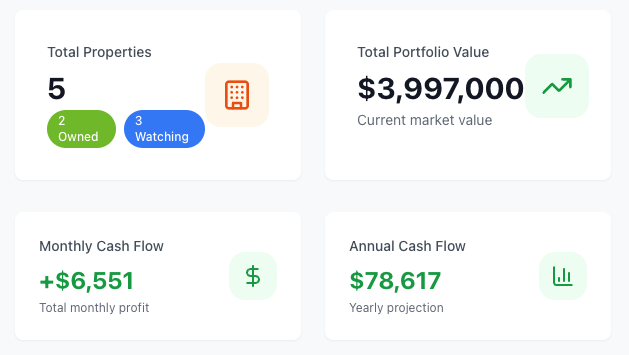
When you are ready to expand, look into ai property portfolio management. This kind of solution aggregates data from multiple properties in one place, highlighting the big picture metrics you need. For example:
- Cash flow projections across your entire portfolio
- Upcoming lease renewals or tenant turnover
- Combined maintenance costs and patterns
- Revenue breakdowns by property type or location
Essentially, you want the platform to provide an overall health check on your investments at a glance. If you notice one building consistently underperforming, you can decide whether to adjust rent, plan a larger renovation, or eventually sell and reinvest. Meanwhile, your top-performing rentals serve as a blueprint for future purchases.
Harness automated tools
At a certain point, reviewing each property individually becomes inefficient. You will want to explore automated real estate investment platforms that tap into machine learning to identify potential buys and automatically run cost analyses. You can even set your own triggers—for instance, “If a listing under $200,000 appears in neighborhood X, flag it for review.” By letting the AI pre-screen these leads for you, you cut hours from your daily to-do list.
The more comfortable you become with these automations, the more you can scale without feeling overwhelmed. Soon, you may find that your portfolio grows at a steady pace, fueled by data-backed acquisitions instead of hunches.
Overcome common pitfalls
AI is not a silver bullet. There are pitfalls that can undermine your plans if you rely too heavily on a computer-generated report or forget to factor in local nuances. Being aware of these mistakes beforehand keeps your strategy well-grounded.
Rely on local insights too
AI excels at parsing thousands of data points, but it does not live in the neighborhood. A property might look fantastic on paper, but context on street conditions, local neighbor disputes, or upcoming zoning changes can shift your perspective. Speak with local residents. Visit the area yourself, if possible. Look up city council documentation to confirm future construction plans. Combine that real-world feel with a robust AI-driven analysis for the most accurate decision-making.
Verify data accuracy
Sometimes an AI tool might have limited or outdated data for an up-and-coming area. If the underlying data is incomplete or inaccurate, your projections will be off. Double-check info with multiple sources. Look up county tax records. Compare results from different AI platforms if you need a second opinion. In the end, your final judgment should come from a blend of personal diligence, local knowledge, and AI’s predictive power.
Common issues to look out for:
- Incorrect property tax estimates
- Missing data on recent renovations
- Inaccurate or inflated projected rental income
The more you verify your numbers, the less risk you face in committing your capital to a miscalculated opportunity.
Plan your next steps
As you refine your AI-driven approach, remember that you can gradually layer on more automation. Start small. Maybe you adopt a single tool for ai-powered rental property management, or add modules for ai rental property valuation. Let one process prove itself, then integrate the next. Over time, your system will feel like a well-oiled machine, guiding you toward strategic property choices and streamlined day-to-day duties.
Here is a quick rundown of what the end-to-end workflow might look like:
- Define your investment objectives.
- Use AI tools to pinpoint the most promising neighborhoods and property types.
- Validate findings through site visits, local feedback, and cross-checking data.
- Acquire the property based on your refined ROI estimates.
- Automate tenant screening, rent collection, and upkeep tracking.
- Monitor performance across your portfolio.
- Repeat the process, adding new homes or complexes that match your success criteria.
Each of these steps can benefit from the insights that AI real estate investment tools provide. By pairing them with your personal research, you keep the human touch that fosters tenant relationships and ensures you never lose sight of on-the-ground realities.
Ultimately, AI is here to support, not replace, your instincts. When used correctly, it hands you a faster, deeper understanding of where the market stands and where it might head next. Begin with one or two rentals, refine your system, and continue scaling up as you learn. Over time, this balanced approach can transform your real estate investments from a side project to a powerful income engine.
Make Smarter Rental Investments & Boost Profits
Use AI to Assess Opportunities
Compare Cap Rates & Cash Flows
Optimize Rental Income
RentalOptimizer.com