

Artificial intelligence (AI) is no longer just a buzzword in tech circles. It has become a core driver of change in real estate, particularly in the realm of rental investments. As you explore AI rental market trends, you will quickly discover how valuable these tools are in helping you analyze prospective properties, gauge local demand, and refine your overall strategy. Instead of relying on gut instincts and manual spreadsheets, you can tap into machine-managed insights that reveal hidden opportunities in everything from single-family homes to large multifamily complexes.
At its core, AI takes large volumes of real estate data—rental prices, vacancy rates, tenant demographics, neighborhood growth patterns—and pinpoints meaningful patterns faster than a human analyst ever could. Many early adopters have already used AI-based methods to locate rental properties with above-average revenue potential. You can follow their lead by using specialized platforms, software, and algorithms to get accurate forecasting and precise asset valuations. This move toward automated, data-driven decision-making can help you invest more confidently and maximize your returns over time.
Yet, you might be wondering if you really need AI for something as straightforward as collecting monthly rent. The short answer is yes. AI does far more than handle rent collection. With the right approach, you can gain predictive insights into tenant selection, local rent growth, expenses, and even the best times to buy or sell your properties. This coverage transforms your investment strategy from reactive to proactive, letting you seize opportunities early and head off potential setbacks. In short, the biggest AI rental market trends empower you to plan a long-range vision for your portfolio.
Below, you will find a comprehensive guide to harnessing AI in your real estate rental investments, from analyzing a neighborhood in real time to automating many parts of property management. Let us take a step-by-step look at how AI solutions function, the key benefits they bring to your investment decisions, and the common challenges you may face along the way. By the end, you will have a clear plan to begin applying AI to improve your real estate ROI.
Adopt AI for property analysis
When you think about making a rental investment, you likely start by crunching numbers: how much the property costs, how long it will take to become cash-flow positive, and what maintenance might add up to. AI-based property analysis goes deeper, scouting multiple data points to ensure your numbers are realistic.
Layered data for full context
One of AI’s biggest strengths is its ability to synthesize multiple data layers at once. It collects information on local crime rates, historical property values, school quality, and job market trends. Then it weaves these insights together to forecast demand, rental income potential, and long-term appreciation. Instead of juggling dozens of websites and spreadsheets, you can access integrated reports that highlight the strongest areas of opportunity.
You can learn more about this process through our detailed guide to ai rental property analysis. You will discover how AI-enabled platforms evaluate metrics such as vacancy patterns and neighborhood growth so you can avoid downtrends and ride the upswing in areas ripe for new rental units.
Real-time market insights
AI does not operate in a static environment. Its algorithms constantly feed on fresh data from online listings, property sales, tenancy databases, and even local economic shifts. As a result, when something changes—like property taxes spiking due to new municipal regulations—your AI tools can quickly recalculate how these new factors impact your projected returns.
In addition, advanced solutions integrate seamlessly with multiple listing services (MLS), online rental marketplaces, and social data. As soon as a prospective neighborhood’s property prices begin to climb or a new corporate office opens nearby, your AI-based system alerts you to a change in demand. This ability to see potential upswings or downturns as they happen helps you act early, refine your buying strategy, or keep an eye on vacancy rates that may soon rise.
Connecting to AI-driven algorithms
Investors often suspect that AI is either too technical or too abstract. In practice, many AI tools are becoming surprisingly user-friendly. For instance, you can sign up for a platform that delivers daily or weekly property suggestions based on your criteria—listing price, neighborhood rating, historical rent returns, and more. The heavy lifting of modeling, forecasting, and cost analysis happens behind the scenes.
If you are curious about the logic powering these algorithms, it is worth exploring real estate ai algorithms. This resource discusses how various machine learning approaches weigh hundreds of data points to paint a realistic picture of potential investment outcomes. By demystifying how AI performs its analyses, you can embrace the technology with more trust.
Make Smarter Rental Investments & Boost Profits
 Use AI to Assess Opportunities
Compare Cap Rates & Cash Flows
Optimize Rental Income
Use AI to Assess Opportunities
Compare Cap Rates & Cash Flows
Optimize Rental Income
RentalOptimizer.com
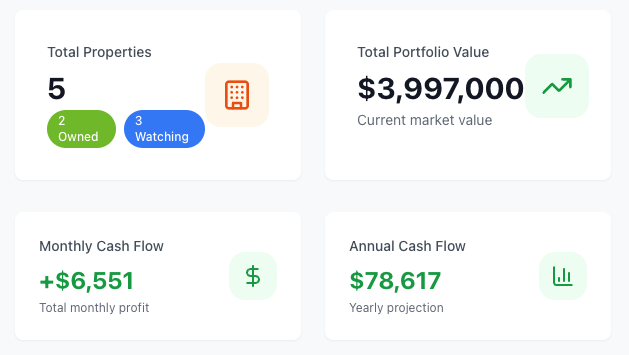
Boost property valuation accuracy
Pinpointing the right rental rate and understanding a property’s true worth can be notoriously difficult, particularly in fast-changing markets. Traditional methods use historical comps and professional appraisers, but increasingly, AI systems can deliver valuation estimates that are more accurate and up to the minute.
Data-driven fair market value
Your property valuation should ideally reflect comparable property transactions, neighborhood desirability, and upcoming market changes. AI tools excel at scanning thousands of relevant sales in your area. By leveraging these results, you will discover how slight differences in square footage, property age, or bedroom count translate to potentially big changes in market value.
When you are confident in your property’s value, you can make more precise offers, set the right rental rate, and negotiate from a position of strength. Ai rental property valuation goes into more detail about how AI arrives at these figures and how you can use them to decide if your target listing is priced fairly.
Ongoing recalibration
Because the housing and rental markets move quickly, the most beneficial AI valuation platforms update their estimates as soon as new property sales occur. If you keep your portfolio of prospective properties within an AI-powered dashboard, you will stay aware of changes that might affect your prospective deals. This helps you plan for renovations, weigh the pros and cons of a slight rate increase, or greenlight a purchase when a property hits an ideal price point.
Impact on ROI
Valuation accuracy plays a crucial role in calculating return on investment (ROI), particularly when you are determining net operating income (NOI) and total cash flow. By harnessing AI-based valuations, you will have the detail you need to project realistic outcomes instead of relying on best guesses. This clarity builds your confidence in scaling up your rental portfolio, knowing your upward or downward margin of error is smaller thanks to the power of AI.
Streamline tenant screening tasks
Selecting excellent tenants is critical to hitting your rental income targets and avoiding costly evictions or property damage. Traditional tenant background checks can be laborious. Fortunately, AI can save you time by automating much of this process.
Automated background checks
AI-enabled platforms pull credit histories, employment records, and references, then evaluate them against set criteria you define. For instance, you can specify your minimum credit score threshold or target salary range. The system can then alert you when an applicant clearly meets your standards—or falls short. This targeted screening narrows your pool of potential renters, letting you focus on the best leads quickly.
To see how AI-driven tools improve this crucial step, check out ai rental property screening. Proper screening not only saves time but also significantly reduces the odds of late payments or sudden vacancies. By relying on automated checks, you also minimize the possibility of overlooking critical red flags in an applicant’s profile.
Predictive tenant profiles
Some AI screening solutions do more than just highlight basic issues. They also use predictive scoring models to estimate whether someone will be a reliable tenant. These systems consider data such as length of employment, monthly credit card balances, and even social media presence (where permitted by law). With these data points, AI ranks applicants based on their likelihood to pay rent on time or renew their lease. This boosts your efficiency and lowers headaches later on.
Fair housing considerations
While AI-based screening can help you avoid unqualified tenants, it is important to remain mindful of fair housing regulations. You are legally required to treat all applicants equally regardless of race, gender, ethnicity, or other protected status. In this respect, AI can actually boost compliance because it relies on uniform data sets and consistent evaluation criteria. Nonetheless, you should routinely review your AI systems to ensure they align with relevant laws and do not inadvertently penalize a protected group.
Manage your portfolio with AI
As you acquire more rental properties, you might notice how easy it is to get bogged down in day-to-day tasks: listing vacant units, scheduling repairs, and responding to tenant messages. AI can automate several aspects of property management, freeing you to focus on higher-level strategies.
Centralized dashboards
AI-powered property management platforms integrate your data into a single, centralized dashboard. This tool might track your rent roll, upcoming lease renewals, maintenance tickets, and expense reports. By collecting everything under one roof, you gain a quick overview of each property in your portfolio. You can spot patterns, identify underperformers, and react to emerging issues quickly.
For a deeper look, explore ai-powered rental property management. These solutions are designed to handle repetitive tasks—from auto-generating rent reminders to scheduling inspections—so you can concentrate on finding new ways to grow your business.
Predictive maintenance
One area where AI often shines is in predicting maintenance issues before they become critical. By analyzing past repair data along with property age and usage metrics, AI can suggest when a furnace might need replacement or when a roof requires inspection. You can then fix issues in a proactive, controlled manner instead of dealing with costly emergencies. This predictive element does more than save you money, it also keeps tenants happy, reducing turnover.
Portfolio optimization
If you manage multiple rentals, you might want to compare the performance of each property over time. AI can help you sort out overhead costs, occupant satisfaction, and net cash flow for every unit. By analyzing these metrics, you will see if a property is consistently underperforming or if another is ready for a rent increase. Some investors systematically apply AI to decide which holdings to sell and which markets to target next. If this type of macro-level oversight appeals to you, consider ai property portfolio management to learn how advanced functionalities can track and optimize different aspects of your portfolio.
Address common AI adoption hurdles
Although AI is trending upward in the real estate industry, adopting it can present some challenges. From privacy concerns to the complexities of interpreting AI outputs, it is wise to anticipate hurdles before they arise.
Interpreting algorithmic outputs
Most AI tools provide you with forecasts or recommendations. If these outputs or scores are not clearly explained, you can feel like you are blindly relying on a “black box.” One workaround is choosing user-friendly interfaces that detail how the AI arrived at a particular conclusion. You should also research the underlying data sets involved. If your AI solution draws on outdated or incomplete rental listings, your results could be skewed. Stay vigilant by reviewing how each platform you use gathers and processes its information.
Have a look at ai real estate investment tools to see how various products handle data collection and presentation. Understanding an AI platform’s methodology helps you interpret results with more confidence.
Ensuring data privacy and compliance
Since you will be processing sensitive information—income data, social security numbers, or credit histories—data privacy becomes a top priority. Be sure each platform encrypts that data and abides by relevant regulations governing data handling and tenant privacy. Also, some local and federal jurisdictions place limits on how you can use certain data points in making housing decisions. Reviewing your platform’s compliance features or consulting a legal expert can help you avoid unintentional violations.
Balancing AI with human oversight
It is easy to imagine AI doing everything, from deciding which properties to buy to setting rental rates. Yet in most successful cases, humans still bring the final judgment. You know your market in a way an algorithm might not fully appreciate. For instance, local events such as a planned city revitalization project can dramatically affect long-term appreciation but might not show up in your AI’s data set until much later. Combining your firsthand knowledge with the patterns AI detects leads to more robust, well-rounded decisions.
Explore automated platforms
If building a stack of individual AI tools feels complicated, you can keep it simpler by adopting end-to-end solutions that bundle property discovery, valuation, and management. These are sometimes referred to as automated real estate investment platforms, which not only source properties but also handle day-to-day tasks.
Full-cycle investment approach
With a single platform, you can sort through on-market and off-market listings to find high-potential rentals, estimate your returns, and handle digital lease signings. This soup-to-nuts approach makes the entire investment process more seamless. For example, you can filter new listings with advanced AI, run side-by-side comparative analysis, then quickly generate an offer that is in line with the system’s identified fair market value.
Coordinated management
Once you close on a property, the same platform may offer integrated leasing and rent collection tools. Tenant requests and maintenance updates feed into your portal, and you retain real-time oversight of each transaction. Such cohesive systems can prevent your workflow from splintering across multiple software options.
Drawbacks to consider
While these bundled platforms are convenient, you will want to confirm they have all the specific features you care about. Some might excel at property searches but not offer robust forecasting for year-two or year-three returns. Be certain that whichever platform you choose can handle scaling. As you add more units or shift your investment focus to new neighborhoods, the system should adapt smoothly.
Use specialized AI property management software
Not every investor wants an all-in-one platform. Perhaps you prefer to remain hands-on in picking properties, but you would love help with daily management tasks. In that scenario, ai property management software may be an ideal fit.
Streamlined communication
Imagine automatically fielding tenant questions about rent due dates, maintenance requests, or leasing inquiries. AI-driven chatbots can respond immediately, giving residents the support they need so you can step in only for more complex issues. This cuts down your response times and enhances tenant satisfaction while requiring minimal effort on your part.
Performance tracking
Property management software can also provide robust data tracking. Instead of scanning monthly statements or spreadsheets, you can see your collected rents, outstanding balances, operational costs, and even occupancy trends at a glance. By comparing these stats across all your properties, you quickly spot areas that need attention. This constant feedback cycle helps you act on anything from chronic late payments to suspicious spikes in utility costs.
Decision-making insights
Beyond daily operations, AI can generate recommendations based on your current occupancy rates, rent growth trends, and maintenance logs. If the data suggests you are frequently spending money on HVAC repairs, for example, the AI might recommend scheduling an upgrade to reduce long-term expenses. Over time, these incremental optimizations can add up to a fairly significant boost in your bottom line.
Incorporate human expertise
AI is powerful—no question about that. Yet you still have a critical role in shaping your real estate vision. Your own experience and intuition remain essential in any investment strategy, which AI only amplifies. Think of AI as your data-gathering and pattern-recognizing ally that saves you from sifting through thousands of listings and tenant backgrounds. When integrated with your local market awareness, it forms a partnership that can become the bedrock of a thriving real estate portfolio.
Validating AI-driven predictions
Whenever an AI tool suggests a particular investment, walk through the numbers manually or discuss them with a trusted realtor or investor group. If the AI’s forecast is overly optimistic—perhaps because it missed intangible factors—you might catch that mismatch before making a commitment. Conversely, if you trust AI more than you trust your own instincts, you could miss hidden opportunities that the platform overlooked.
Cultivating local networks
Even as you lean on AI, you should not overlook the value of personal relationships with local contractors, property managers, and other investors. These people can offer real-time feedback on a region’s market sentiment, raising flags your AI might be slower to detect. Balancing the new wave of AI automation with good old-fashioned networking creates a synergy that is often more beneficial than either approach alone.
Plan your next steps
By now, you have an overview of how AI rental market trends are reshaping the way you find, analyze, and manage rental properties. You also know how AI can zero in on promising property leads, refine your valuations, and streamline both tenant screening and day-to-day operations. All that is left is to create a concrete plan for bringing these tools into your investment strategy.
- Identify your goals.
Determine what you want from your rental investments. Are you pursuing steady cash flow, long-term appreciation, or a quick exit strategy? Pinning down these objectives helps you choose the ideal AI tools. - Sample different platforms.
Explore a few platforms or apps that align with your goals. Try a specialized solution for property management and a more comprehensive tool for portfolio expansion. You might test a particular feature—such as automated tenant screening—before gradually expanding the AI’s role in your strategy. - Leverage existing data.
Gather any records you have, including historical rental rates, repair logs, and occupancy trends. Feed these insights into your AI tools so you can get accurate recommendations. - Keep learning.
As your comfort with AI grows, dig deeper into the best practices for using these platforms. Ai rental property valuation and ai property portfolio management can provide ongoing tips and tricks to optimize your approach. - Balance AI with personal insight.
Do not forget that a nuanced view of the market—plus strong local contacts—will always matter. Use AI as a guiding compass, but bring in your own experience to truly excel.
Ultimately, your success in real estate hinges on timely information, proper analysis, and decisive action. AI can propel you forward on all those fronts by providing instant, accurate insights that let you move faster and smarter than your competition. When wielded holistically, these tools transform your entire approach to rental investing, helping you maintain consistent returns and a well-managed portfolio.
AI is not the future; it is the present. By engaging with the latest ai rental market trends and implementing the best tools, you can continue making better-informed decisions. Whether you are new to property investing or ready to scale up, you have the momentum you need to turn rental real estate into a consistently profitable venture. Embrace the power of AI, refine your strategy, and unlock your portfolio’s full potential. It is time to elevate your real estate game, step by step, with the precision and clarity only AI can bring.
Make Smarter Rental Investments & Boost Profits
Use AI to Assess Opportunities
Compare Cap Rates & Cash Flows
Optimize Rental Income
RentalOptimizer.com