

You want to make smart, data-driven decisions for your rental property investments—this is where AI rental property valuation can give you a genuine edge. By leveraging sophisticated algorithms that crunch and interpret property data at scale, you can spot undervalued assets, forecast rental income more accurately, and manage your portfolio with greater efficiency. In this ultimate guide, you will discover how AI transforms your real estate strategy from guesswork into precise forecasting. Let’s explore how it all fits together and how you can apply these insights to maximize your returns.
Discover why AI valuation matters
AI valuation tools offer a straightforward way to estimate what a property should rent for, given factors like location, size, condition, and local market trends. Traditional valuation methods often require extensive manual research and rely heavily on the experience of the investor or an appraiser. AI, on the other hand, can process far more data in less time, drawing on advanced real estate ai algorithms to refine your property research.
Faster data collection and analysis
Conventional property analysis demanded sifting through mountains of listings, sales records, and market reports. By the time you finished, the market might have shifted. AI-powered valuation shortens this timeframe significantly. In a matter of seconds:
- You gather comparable sales or rentals nearby.
- You factor in neighborhood trends, like upcoming developments or new businesses.
- You incorporate broader economic indicators to forecast rental demand.
This speed frees you to focus on higher-level strategy—like negotiating deals and optimizing your property’s appeal—rather than being bogged down in spreadsheets.
More objective property values
Even the most experienced real estate investors can fall prey to biases. Maybe you or your advisor have a soft spot for historic homes, or you are swayed by a property’s curb appeal. AI reduces emotional bias by crunching numbers in a neutral manner. It does not matter if the property has a beautiful facade or if your friend recommended it—AI simply weighs the data. When you trust algorithms to provide foundational numbers, your valuation strategy stays rooted in facts rather than hunches.
Boost your accuracy
When you tap into AI-powered rental property analysis, you can more accurately estimate rental yields and predict occupancy rates—both are critical to calculating your potential cash flow. With robust analytics, you are less likely to be blindsided by hidden costs or overlooked property details.
Predicting rental income
Accurate forecasting of rental income hinges on two major inputs:
- Neighborhood dynamics: Crime rates, schools, public transit, and walkability can significantly impact renters’ willingness to pay.
- Local supply and demand: If new developments are springing up or if a large employer just relocated, your potential pool of tenants might grow or shrink fast.
AI can fuse these data points to forecast rental asking prices, giving you a glimpse of how your property might perform. You no longer have to guess whether you are charging too much or leaving money on the table.
Setting realistic budgets and timelines
Renovation costs, maintenance, and property taxes can fluctuate more than you expect. AI rental property valuation tools can be augmented with budget modeling, pulling in local contractor rates or materials prices for a more precise renovation budget. By predicting how long it might take to line up suitable tenants, you can better plan for cash flow gaps. This planning helps you know when to initiate an ai rental property screening process, so you are ready to vet potential tenants as soon as your property is listed.
Make Smarter Rental Investments & Boost Profits
 Use AI to Assess Opportunities
Compare Cap Rates & Cash Flows
Optimize Rental Income
Use AI to Assess Opportunities
Compare Cap Rates & Cash Flows
Optimize Rental Income
RentalOptimizer.com
Focus on data insights
The foundation for accurate, AI-driven real estate valuations lies in a multi-faceted data set. AI tools look at everything from regional economic growth to demographic shifts and property-specific details. This comprehensive scope ensures valuations feel less like a random guess and more like a legitimate forecast.
Diving deeper into local market data
Market data is not only about sales prices. AI also considers:
- Seasonal fluctuations: Demand for rentals might peak in summer, then slow in winter.
- Local infrastructure: Proximity to highways, hospitals, or tech hubs can sway rent prices.
- Neighborhood trends: The age of existing buildings, planned commercial developments, or revitalization projects can all influence long-term returns.
One benefit of tapping ai rental market trends is that you can stay updated on how neighborhoods change over time. If you know a district is on an upswing, an AI-driven tool may detect hidden opportunities you might otherwise miss.
Improving your portfolio strategy
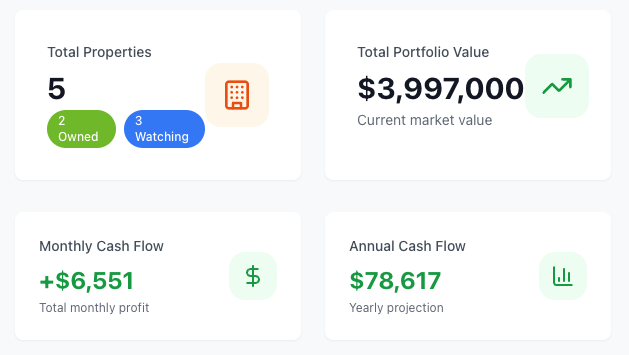
AI does not limit you to a single property—it can also help you make sense of an entire portfolio. By examining how each asset performs over time, you can decide whether to hold, sell, or do value-add renovations. Integrating ai property portfolio management is a way to keep track of all your properties, rental income, and vacancies. With this centralized approach, you can quickly compare how each property is doing and spot which ones need extra attention.
Implement AI for valuations
So how do you actually incorporate AI rental property valuation into your workflow? Think of it as a four-step process: select the right tools, gather your data, run the valuations, and interpret the results. With that interpretation comes a decision—whether to buy, hold, or pass on a particular property.
Step 1: Choose the right platform
Several AI-driven platforms exist to help you automate parts of your analysis. Some specialize in multi-family units, while others focus on emerging markets. You might prefer a more comprehensive tool like ai real estate investment tools, or you might try automated real estate investment platforms for a one-stop solution. As you compare your options, consider:
- Cost structure: Are there monthly fees, per-analysis fees, or subscription tiers?
- Data coverage: Does the platform pull from reliable, current listings and relevant regional stats?
- User interface: Can you easily switch between properties and read the AI-driven insights, or is the system clunky?
Step 2: Gather property information
No tool is perfect if the information you supply is incomplete. Make sure you collect the necessary data:
- Exact address
- Number of bedrooms, bathrooms, and square footage
- Recent renovations and the current condition
- Municipal property records and known tax assessments
If you are adding features like a finished basement or yard improvements, list these details too. The more you feed the AI, the more refined your valuation results.
Step 3: Analyze and refine the results
Once you run the data, you will typically get a projected rental range. Compare that range to what local listings show for similar properties. Does the number seem too high or too low? AI is powerful, but it can sometimes overemphasize outdated or incomplete data points. Your real-world observations can supplement any discrepancies you see. This is also a point where you can plug in your property information into multiple AI platforms—if several are consistently returning the same figure, you can be reasonably confident in your property’s estimated value.
Step 4: Set your ownership strategy
With a solid valuation, you are better equipped to shop for insurance, set your rental asking price, or formalize your improvement timeline. If you discover the property might need an additional upgrade to meet local neighborhood standards, you can plan that under a more realistic budget. This strategic clarity is one reason many investors rely on ai-powered rental property management to tie valuation data to ongoing operational tasks.
Tackle common challenges
While AI rental property valuation is a game-changer, it does come with certain pitfalls. The most common ones include inconsistent data quality, the risk of overreliance on unverified tech, and local market anomalies that algorithms have not fully accounted for.
Data availability and quality
AI is only as good as the data behind it. If you are looking at a smaller town or rural area, your AI tool may struggle to find enough local comps. Or maybe the data is outdated because local sales rarely get digitized quickly. Take these steps to mitigate risks:
- Confirm data sources: Check if your platform regularly updates its listings from Multiple Listing Services (MLS), city records, and other reputable sources.
- Inspect anomalies: If your AI valuation suggests a property’s rental rate is double the neighborhood average, dig deeper to find out why.
- Blend manual checks: Speak to local property managers, check local real estate boards, or do a quick search to verify the tool’s suggestions.
Overreliance on AI
It can be tempting to trust your AI’s results completely and forget the human aspect. While AI reduces bias, it occasionally lacks context. Maybe a major employer is about to leave the region, or city council just approved a new entertainment district—both could dramatically change rental demand. Even the best AI cannot always predict sudden legislative or economic changes. Maintain a balanced approach by pairing your AI findings with local intel.
Local market quirks
Some areas have rent caps, strict landlord-tenant laws, or unique architectural constraints. AI can pick up on historical data, but it might not always interpret certain legislative or cultural nuances. By staying informed of local regulations and trends, you can add a layer of human judgment that complements your AI tool. This is also why a good portion of your strategy should revolve around verifying the conclusions of your valuations before you make a major investment.
Expand beyond valuations
Once you see the benefits of AI for valuation, you can carry the same technology over to other aspects of property investing and management. After all, rental property profitability does not end at closing—it depends on how effectively you manage income and expenses over time.
Portfolio planning and diversification
When you hold multiple rentals, you want an overview of how each property is performing. You might add new acquisitions where the local real estate market looks promising or divest where rental demand is dropping. With ai property portfolio management, you can even spot correlations—perhaps two properties in different states are tied to the same local employers or seasonal tourism. Recognizing these connections allows you to spread your risk and balance returns.
Streamlining your tenant process
The journey does not end after you purchase a property. Tools such as ai rental property screening let you evaluate potential tenants, handle background checks faster, and reduce the chance of non-payment or property damage. By integrating this into your broader AI approach, you ensure a continuous feedback loop where your tenant history feeds back into your property’s projected performance.
Ongoing market trend monitoring
Market conditions are not static. They shift daily, influenced by everything from interest rates to cultural preferences. Using AI, you can track trends in real time, see how average rents are changing, and watch for new opportunities in up-and-coming neighborhoods. Tools like ai property management software and ai rental market trends can automatically alert you when it is time to adjust rental rates or when a new market is worth investigating.
Plan your next move
If you are ready to embrace AI rental property valuation, start by selecting a tool that matches your investment style. Gather the right data, cross-check the projections with local market knowledge, and then make a confident decision about where to invest. By blending AI with human insight, you stand to gain stronger returns and a more resilient real estate portfolio.
Over time, you can integrate complementary tools to handle everything from ai rental property analysis to daily ai-powered rental property management. This unified approach transforms each stage of your property investment journey—from your initial discovery call with a realtor, to the day you cash your monthly rent checks—into a smooth, data-driven operation. Now is your chance to leverage these cutting-edge tools and start seeing the concrete impact they can have on your bottom line.
Make Smarter Rental Investments & Boost Profits
Use AI to Assess Opportunities
Compare Cap Rates & Cash Flows
Optimize Rental Income
RentalOptimizer.com