

If you are looking to grow your real estate rental investments in a simpler and more strategic way, AI property portfolio management can make all the difference. It takes the guesswork out of property selection, financing, and maintenance. By leveraging machine learning models and data-driven insights, you can spot winning properties before others do, adapt to market swings, and stay on top of tenant relationships. Whether you have a single rental unit or several properties, AI tools help you streamline operations and focus on what matters most: reaching your financial goals.
In this ultimate guide, you will learn how to set clear investment objectives, evaluate properties with AI, find qualified tenants faster, manage day-to-day tasks, and plan for future growth. If you have been wondering how to keep track of new rental opportunities, or reduce time spent in spreadsheets, AI-powered solutions can do much of the heavy lifting. Let’s walk through the core pillars of modern rental property investing and see how AI fits naturally into each step.
Learn the benefits for rental investors
Using AI in your property management routine goes beyond simply crunching numbers. The real advantage lies in how predictive analytics, automation, and algorithmic insights free you from manual tasks. Here are a few of the most important benefits:
- Better decision-making
AI analyzes vast amounts of market data, including neighborhood trends, property histories, and comparable rentals. This helps you spot the most lucrative investments faster than a manual approach ever could. - Increased efficiency
Automating rent collection, scheduling maintenance, and screening tenants saves you hours each month. Implementing ai-powered rental property management lets you focus your energy on portfolio growth. - Proactive risk mitigation
An AI engine can flag potential problems, such as a tenant’s likelihood of late payments or an area’s declining property values. By catching red flags sooner, you are better able to shield your portfolio from unforeseen losses. - Optimized property performance
AI-driven insights can forecast cash flow, occupancy rates, and seasonal demand fluctuations. This knowledge allows you to price rentals accurately and ensure your units remain profitable year-round.
The best part is that many AI tools today are accessible even if you are new to real estate investing. You no longer need a tech background to harness predictive analytics for day-to-day decisions.
Set clear investment goals
Before diving deeper into any AI solution, start by clarifying your destination. If you do not know what your success metrics look like, no tool can truly optimize your portfolio. Consider these steps when forming your game plan:
- Define your target ROI
Are you aiming for a short-term return, a steady monthly cash flow, or long-term appreciation? Write down your return on investment (ROI) or cash-on-cash target. AI tools will be much more valuable when you can feed them a clear focus. - Identify your ideal property type
Some investors prefer single-family homes in fast-growing suburbs, while others target multi-unit properties in established neighborhoods. If you know exactly what you want your properties to look like, AI filters data accordingly and reveals matches sooner. - Decide your risk tolerance
Every investment carries some risk. If you have a high tolerance, you might chase emerging neighborhoods for bigger gains. If you prefer stability, AI can help track more established zones with a history of dependable rental returns. - Establish a timeline
Knowing your timeline helps decide which AI-powered insights are most relevant. Short-term investors might care more about short bursts of growth or flipping opportunities, while those building a long-term portfolio for retirement often focus on steady yields.
Once your goals are in place, you can lean on ai real estate investment tools to spot relevant trends and drive decisions. Tech’s ability to convert raw data into actionable steps is what makes AI-driven investing so powerful.
Make Smarter Rental Investments & Boost Profits
 Use AI to Assess Opportunities
Compare Cap Rates & Cash Flows
Optimize Rental Income
Use AI to Assess Opportunities
Compare Cap Rates & Cash Flows
Optimize Rental Income
RentalOptimizer.com
Apply AI to property selection
Selecting the right property forms the core of every successful rental portfolio. AI helps you weigh location, property condition, local demand, and pricing in a fraction of the time:
Leverage real-time market indicators
When you rely on ai rental market trends, you focus on real estate metrics like listing velocity, average days on market, and median rents. AI combs through these signals and identifies patterns that might be buried under layers of data.
- Demand analysis: AI highlights where rentals are in high demand, so you can avoid oversaturated areas.
- Rent benchmarking: Tools integrate local comps to show you a fair rent range for your target neighborhood.
- Trend forecasting: Machine learning models learn from historical data to forecast future property values or rental rates.
Use automated real estate search platforms
Some automated real estate investment platforms scrape multiple listing services (MLS) for you and apply filters from your investment criteria:
- Price range: Narrow your focus to properties likely to deliver desired returns.
- Neighborhood rating: Gauge safety, amenities, local job growth, and school quality.
- Turnkey vs. fixer-upper: If you plan to flip or add value, AI helps you gauge renovation costs and potential after-repair value.
Compare properties side by side
AI makes comparisons more accurate by focusing on relevant variables, such as property type, layout, year built, and neighborhood metrics. Pairing these insights with real estate ai algorithms can help you quickly see how two properties with a similar purchase price might deliver drastically different returns.
Streamline property analysis
Once you have a shortlist of properties, it is time to run the numbers. Thorough analysis is vital, especially if you plan to hold a property for the long run.
Dive into AI-driven valuation
AI rental property valuation tools can refine your purchase price estimates. By analyzing local market comps and historical appreciation rates, these programs attempt to predict the “true” value of a property more accurately than traditional manual appraisal. This is where you get clarity on whether the seller’s asking price is fair, or if you can negotiate a better deal.
Project future cash flow
You will want to factor in monthly expenses, such as mortgage payments, property taxes, insurance, and maintenance costs. AI-based calculators incorporate historical data on rent growth and turnover rates, giving you a realistic estimate of monthly profits or shortfalls. Many investors leverage ai rental property analysis to forecast year-by-year scenarios for up to a decade. The end result is a data-backed projection of how your rental income might evolve over time.
Evaluate neighborhood growth
A property’s potential is tied to its surroundings. Look at job growth, planned commercial developments, public transportation, and construction activity. AI digs deeper into local and regional data, correlating infrastructure spending with property appreciation. Paying attention to these signals helps you avoid being caught off guard by major changes in a neighborhood’s profile.
Use a property comparison table
To organize your findings, keep a simple table so you can compare key metrics at a glance. Here’s an example of data points you might track using AI insights:
| Property | Asking Price | Projected Rent | Neighborhood Rating | Yearly Cost (Approx.) | Estimated ROI (%) |
|---|---|---|---|---|---|
| A | $250,000 | $1,900 | Medium-High | $15,500 | 10.2% |
| B | $300,000 | $2,300 | High | $18,000 | 11.6% |
| C | $200,000 | $1,600 | Medium | $13,000 | 9.3% |
Armed with data like this, you can make your decision based on objective metrics rather than hunches.
Manage tenant screening and leasing
Once you acquire a property, finding and keeping quality tenants becomes your top priority. Traditional screening is time-consuming. Checking credit reports, verifying income, and phoning references can eat into your day. Fortunately, AI can simplify and enhance the entire process.
Adopt AI tenant screening
AI rental property screening platforms analyze applicants and flag potential issues such as inconsistent rental histories or high-risk credit markers. This process prioritizes the most qualified renters and helps you handle applications at scale. You can set your own acceptance criteria, like minimum credit score or monthly income thresholds, and let the platform do the rest. Clear, data-driven decisions reduce the chances of biased or purely subjective judgments.
Streamline lease management
Some AI tools auto-generate lease agreements and track deadlines for renewals, security deposits, or other documentation. You might set up a digital signature workflow so that approved applicants can sign from anywhere. This level of automation reduces administrative tasks and helps you maintain consistent legal compliance across your portfolio.
Predictive tenant retention
An AI-powered system can monitor payment patterns, identify early signs of tenant dissatisfaction, and suggest proactive measures. For instance, if a tenant consistently pays late, the software might recommend an email reminder strategy or highlight a need to open a conversation about payment plans. Prompt intervention keeps good tenants in place and prevents vacancies that can erode your monthly cash flow.
Improve rental property management
Efficient day-to-day operations, maintenance, and recordkeeping are critical to your success. This is another area where AI can lighten your workload.
Use centralized management software
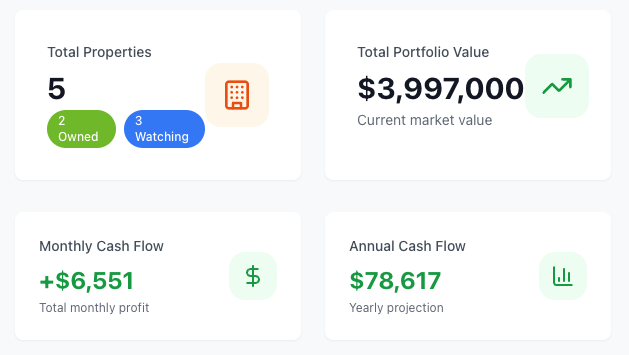
Managing multiple rentals becomes much simpler with ai property management software. You get a dashboard featuring real-time updates on rent collection, maintenance tickets, lease expirations, and more. One platform can handle tasks like:
- Automated rent reminders and invoicing
- Digital tracking of maintenance requests and progress
- Securely storing rental agreements and documentation
- Tracking monthly and annual profit/loss statements
Preventive maintenance alerts
AI tools can analyze historical maintenance logs and anticipate mechanical failures or structural problems. Patterns in HVAC repair requests, for example, might indicate it is time for a major overhaul. By scheduling inspections before problems become severe, you avoid high repair costs and unhappy tenants.
Dynamic rent adjustments
Your AI software can track local supply and demand to optimize rental prices on the fly. While you might set an initial rent, the system could recommend slight adjustments based on factors such as seasonal trends, upcoming move-outs, or competitor price changes. This helps keep your units filled and your rental rates competitive.
Keep communication lines open
Good relationships with tenants go a long way. Some AI-based chatbots can handle common questions: “Is my rent late?” “Where do I send maintenance requests?” “Can I extend my lease?” By handling routine queries, chatbots free up your time for larger strategic tasks. Remember, if your tenants feel heard and valued, they are more likely to renew leases and treat your property with care.
Scale and diversify with AI
Once you have the right processes in place, it is time to grow your portfolio. Expanding can be as simple as repeating what you have already done, but AI gives you greater flexibility to explore new regions and property types.
Expand into new markets
Detecting emerging real estate hot spots often involves analyzing demographic trends, job prospects, and shifting population patterns. Even if you have never stepped foot in a region, AI’s local demand forecasting can give you confidence. Using ai rental property analysis for brand-new markets is a valuable way to identify potential winners without guesswork.
Explore different property classes
If you have invested heavily in single-family units, you might consider multifamily or even commercial properties for diversification. Your AI system can automatically adjust to different real estate segments, adding specialized data points like occupancy rates for apartment complexes or business lease terms for commercial units.
Optimize financing strategies
Some software solutions compare multiple financing routes, modeling how each might impact cash flow and returns. Rather than relying solely on a 30-year fixed mortgage, you can plug in various loan products or lines of credit and run scenario tests. AI can reveal which financing approach best matches your goals, from higher leverage for growth to lower monthly payments for stable cash flow.
Reduce your management burden
The further you scale, the more tasks pile up: rent collection, turnover coordination, legal compliance, finances, and more. AI tools become essential in maintaining efficiency, especially if you are overseeing properties across multiple states. Platforms like automated real estate investment platforms can handle a large volume of tasks simultaneously, ensuring you are not stuck micromanaging each new property.
Put it all together
AI property portfolio management provides the framework to simplify your investment journey. By letting algorithms handle data-heavy tasks, you can redirect your time and energy toward broader strategic moves, like long-term goal setting and tenant satisfaction. Here is a quick recap of the steps you might take:
- Start with clear goals: Defining your desired returns, risk profile, and investment timeline will shape your entire approach.
- Use AI for property selection: Pull from real-time data to find undervalued neighborhoods and high-performing properties.
- Practice precise property analysis: Forecast valuations, rental income, and maintenance needs so you have a clear financial snapshot.
- Screen and lease intelligently: Protect your portfolio with AI-driven tenant screening and streamlined lease management.
- Upgrade daily management: Adopt centralized platforms to automate rent collection, maintenance, and communication.
- Scale confidently: Leverage new market insights, property classes, and financing methods to grow your portfolio while maintaining control.
No matter where you are in your rental investment journey, AI tools can add layers of clarity and efficiency that you could not manage with spreadsheets alone. Even small steps—like adopting a simple ai rental property screening service or automating lease renewals—help you progress toward a more profitable, less stressful approach to real estate. By combining your knowledge of the market with the power of machine learning, you are well on your way to building a future-proof rental portfolio.
Make Smarter Rental Investments & Boost Profits
Use AI to Assess Opportunities
Compare Cap Rates & Cash Flows
Optimize Rental Income
RentalOptimizer.com