

Embrace the AI revolution
You’re about to guide your organization through one of the boldest shifts in modern business: ai transformation change management. It’s not just about installing software or deploying a chatbot. You’re rallying teams, rethinking processes, and shaping a culture that can thrive in a world where AI moves faster than any previous innovation. Feeling the pressure? Good, because that’s the energy you’ll harness to create real impact.
AI promises everything from predictive analytics to next-level automation. Often, though, the biggest pain points come not from the technology itself but from hesitation, confusion, and misalignment among your people. If you want to succeed, you’ll need to build a clear roadmap that embraces the speed of machine learning while staying human at the core.
Identify your biggest hurdles
Before you make changes, you need to pin down what could trip you up. By recognizing the high-risk spots right out of the gate, you’ll head off common stumbling blocks.
- Resistance to new tools or responsibilities
- Lack of understanding about AI’s role and potential
- Poor alignment between teams and leadership
- Unclear success metrics or short-term thinking
When you’re aware of these issues, you can pivot proactively rather than scramble in firefighting mode. Give your teams space to voice concerns, process the unknowns, and help shape solutions that set everyone up for success.
Design a flexible framework
Any transformation plan needs structure, and that’s definitely true when AI is involved. Still, the old playbook for big corporate initiatives might not cut it with the breakneck pace of AI-driven innovation. Instead, lean on an agile framework that allows you to iterate quickly. You’ll gather real-world feedback from your early pilots, refine your approach based on data, and keep the momentum rolling.
Consider how your organization normally handles change. Do you have top-down directives? Or is it more employee-led? Whichever your style, your plan must adapt. Maybe you run two-week sprints to test machine learning solutions, then host a weekly all-hands demo. Or you might opt for smaller daily “touchpoints” to keep the conversation going. The trick is ensuring feedback loops are continuous.
For a deeper dive into proven change management tools, take a look at this online course by Dr. Soren Kaplan. It’s packed with practical resources that you can adapt for an AI-focused strategy, giving you ready-made templates and processes to keep teams consistent and on track.
Lead Successful Change Management Projects!
 Get instant change processes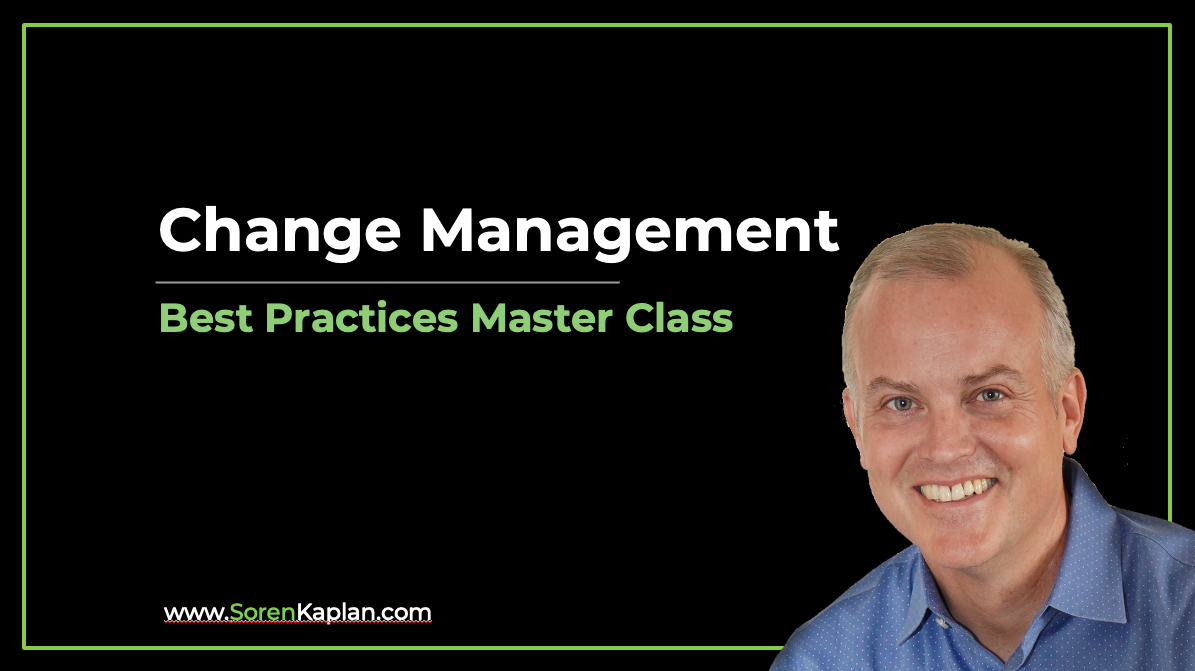
Activate your change champions
People rarely adopt new tech—or any new process—just because it’s rolled out in a memo. You need enthusiastic supporters. Think of them as your in-house influencers: individuals who see AI’s potential and have natural influence within their departments. Most times, these aren’t just managers. They might be savvy data analysts or team leads who relentlessly look for fresh opportunities.
Empower these champions with the autonomy to experiment and the responsibility to share wins and challenges. When you equip them with real support, they’ll help you reinforce your transformation plan without pushing it in a top-down way. Their success stories become your social proof. Plus, they can train others in practical, organic ways that build immediate trust.
Leverage AI as a change driver
Here’s the paradox. You’re using AI to revolutionize your workflow, yet you also need AI to help manage the transformation itself. It might sound like a puzzle, but you can harness very real AI capabilities to streamline communication, identify skill gaps, and even predict the impact of specific decisions.
Imagine running sentiment analyses on employee feedback or user surveys to spot soft signals that live under the radar. Or consider predictive analytics to forecast the success rate of a pilot program before rolling it out globally. By letting AI do the heavy-lifting behind the scenes, you’re both demonstrating its power and fast-tracking your decisions with fresh insights.
Track and refine your path
Success stories are rarely linear, and AI isn’t immune to road bumps. That’s why you need to measure as much as you can, whether it’s productivity metrics, employee engagement scores, or performance indicators tied to new AI tools. Give yourself the data and you’ll find it a lot easier to pivot when something doesn’t go as planned.
Once a pilot is up and running, do a quick retrospective. Did you meet your objectives? Where did your teams stumble more than you expected? Take an honest look at the data, make necessary tweaks, and keep iterating. This is what sets great AI transformation change management apart from the typical “roll it out and hope it works” approach.
You don’t need to wait for everything to be perfect to scale. AI thrives on feedback loops, so each cycle of improvement only makes the tech—and your transformation plan—smarter and more resilient. By staying adaptable, you’ll steer your organization toward steady growth even amidst the fast pace of AI’s evolution.
Remember, the key is to let AI do what it does best—handle data, predict patterns, and streamline processes—while you focus on guiding your people and culture toward a confident, future-proof mindset. Because when you strike that balance, AI stops being a buzzword and becomes a genuine engine for your next wave of innovation.
Lead Successful Change Management Projects!