

Artificial intelligence real estate trends are rapidly evolving, and you might be wondering why they matter so much for your day-to-day operations. Whether you manage a growing agency, lead a property management company, or develop cutting-edge technology for real estate clients, understanding where AI fits in can boost efficiency and sharpen your competitive edge. By exploring how machine learning, predictive analytics, and data-driven tools change the way you serve clients, you can position yourself at the forefront of an entire industry shift.
Understanding AI in real estate
You have probably noticed how technology has already influenced everything from home searches to loan qualification. AI is the next phase, using algorithms that learn and improve over time to make real estate processes smarter. Instead of manually sifting through hundreds of listings, for example, AI can analyze market data from countless sources and quickly identify which neighborhoods or properties best align with your client’s needs.
You will also see AI in action when it comes to speeding up tasks like contract generation and mortgage approvals. By tapping into deep learning models that recognize patterns in documents, AI can help you reduce the human error that slows closings or leads to overlooked liabilities. At the same time, virtual assistants and chatbots are stepping in to answer common questions, making your customer service more efficient. When used thoughtfully, AI becomes a partner that handles routine work so you can focus on bigger-picture decisions.
Spotting the latest trends
To keep up with your competitors, it helps to understand which AI-driven developments have the most impact on real estate. Here are a few trends you are likely to encounter:
- Predictive analytics that generate targeted property recommendations based on historic and real-time data
- Chatbots and virtual assistants that respond instantly to buyer or renter inquiries
- Smart property valuation models that quickly estimate market value and forecast potential appreciation
- Computer vision tools to automate property inspections or identify features in listing photos
These innovations are becoming more accurate every year. Whereas traditional tools rely on set formulas, AI-driven technologies adapt and refine themselves with each new data set. If you have ever wished you could accurately time the market or spot hidden gems faster than anyone else, these models will feel like realizing that vision.
You should also pay attention to the interplay between AI and Internet of Things (IoT) devices. Smart sensors can now capture property usage data around the clock, giving you insights into maintenance needs before they become expensive headaches. By plugging this data into an AI platform, you streamline everything from energy management to predicting when appliances may fail.
Leveraging data for decisions
At the core of AI is high-quality data. You want a strategy that organizes both structured information, like square footage and list prices, and unstructured data, such as text in emails or historical sales narratives. The more precise your data is, the more accurate your AI predictions become.
A well-designed AI solution can speed up your team’s decision-making process by providing real-time dashboards that highlight key market indicators. Instead of digging through spreadsheets or manually crunching numbers, you can generate immediate insights and adapt as market conditions change. These systems also help you spot anomalies, such as an unexpected price hike in a particular neighborhood or a surge in rental demand after new infrastructure is announced.
Below is a quick comparison of several AI use cases that can guide your real estate decisions:
| AI use case | Benefit |
|---|---|
| Chatbots and virtual assistants | 24/7 lead engagement and faster responses |
| Predictive analytics | More accurate property valuations |
| Image recognition tools | Faster and more detailed listing creation |
While each of these technologies saves you time, it is important to clearly define the data you feed them. AI models will only be as good as the information you provide, so it pays to invest in data cleansing and management. Consider creating a dedicated team or hiring an external expert to handle tasks like data integration, ensuring your AI engines operate with up-to-date and accurate inputs.
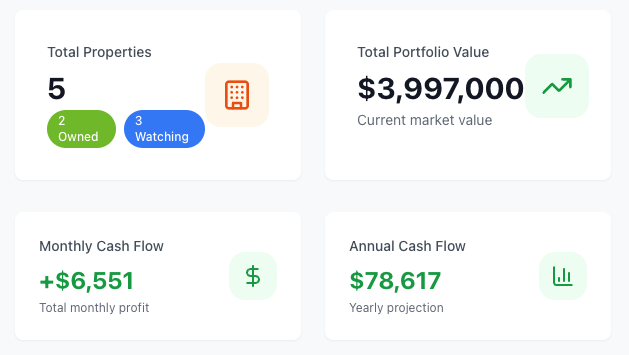
Make Smarter Rental Investments & Boost Profits
 Use AI to Assess Opportunities
Compare Cap Rates & Cash Flows
Optimize Rental Income
Use AI to Assess Opportunities
Compare Cap Rates & Cash Flows
Optimize Rental Income
RentalOptimizer.com
Addressing concerns and benefits
When incorporating artificial intelligence real estate trends into your workflow, you might encounter both excitement and apprehension. Clients may worry that handing over tasks to machines could lead to privacy or security breaches. Employees might fear displacement if too many processes become automated. Your leadership responsibility includes addressing these concerns head-on.
One obvious priority is data protection. You should verify that AI tools comply with relevant privacy regulations and that they encrypt sensitive client information. In practice, this means working with trusted software vendors who have strong security protocols. Many AI platforms allow you to anonymize or scrub identifying details from large-scale data sets, mitigating privacy risks while still gleaning valuable insights.
On the upside, AI frees up time for higher-level tasks that rely on personal judgment or creativity. You can reassign your teams from manual data entry or repetitive screening of leads to more strategic roles, like forming stronger client relationships. Rather than replacing human expertise, AI tends to amplify it by taking care of mundane chores. You end up with quicker closings, more accurate listings, and a consistently better client experience.
Preparing your real estate team
If you are ready to embed AI into your real estate strategy, the first step is ensuring your team is primed for change. Even the most powerful algorithm will struggle if your office workflows are disorganized or if employees do not understand how to make the most of new technology. Start by pinpointing which roles will need training, whether in data visualization, AI ethics, or using specific software solutions. You might enlist third-party consultants or schedule weekly workshops for employees to experiment with new tools in a low-pressure environment.
It is also smart to encourage collaboration between traditional real estate professionals and data analysts or data scientists. While the former provides domain knowledge, the latter can build models that anticipate market swings or evaluate the risk of new developments. Combining both skill sets helps you craft AI solutions that match the realities of day-to-day real estate transactions. For a deeper look at how AI is reshaping property management and brokerage operations, you can explore our article on artificial intelligence in real estate.
In mapping out your AI roadmap, do not underestimate the importance of communication. Keep your teams informed about upcoming tools and why they are being introduced. Celebrate small victories, like reduced paperwork or faster responses to inquiries, so everyone recognizes AI’s positive impact. By building a culture that embraces innovation, you set yourself up for a seamless transition.
Conclusion: Embracing AI solutions
Artificial intelligence is reshaping the way properties are bought, managed, and sold. With thorough planning, you can adopt AI-driven tools that elevate your productivity and make your client services more robust. By spotting emerging trends, leveraging quality data, and addressing valid concerns, your real estate business can thrive in a constantly changing market. Forward thinking and flexibility are your allies in this journey.
If you are looking to maximize rental property performance, consider exploring Rental Optimizer at https://rentaloptimizer.com. This AI-powered platform provides detailed insight into rental property analysis, helping you streamline decision-making and drive higher returns. Coupled with the steps you have already taken to understand artificial intelligence real estate trends, it can serve as another valuable tool in your real estate technology arsenal.
Make Smarter Rental Investments & Boost Profits
Use AI to Assess Opportunities
Compare Cap Rates & Cash Flows
Optimize Rental Income
RentalOptimizer.com