

You’ve likely heard the buzz around automated real estate investment tools and wondered why they’re so popular. These AI-powered platforms are changing the way you analyze properties, forecast returns, and fine-tune your overall portfolio strategy. Instead of juggling spreadsheets and sifting through endless market reports, you can rely on machine learning algorithms to quickly identify promising opportunities. Automated tools improve everything from deal sourcing to risk analysis, allowing you to focus on higher-level decision-making. Ready to see how they do it? Let’s explore the biggest reasons these solutions are game changers—and how you can choose the best option for your real estate investment goals.
Understand why these tools matter
You might be accustomed to the traditional process of real estate investing: scanning listings manually, gathering market data, crunching numbers on a spreadsheet, and then hoping your outreach to brokers or sellers yields promising leads. While this approach can work, it demands significant time and effort. That’s where automated real estate investment tools step in. They quickly collect, filter, and evaluate vast amounts of data in the background, leaving you free to make more strategic decisions based on clear insights.
How the manual approach falls short
- You end up spending hours on repetitive tasks that software could handle.
- Data might be incomplete or out of date if you rely on older resources.
- Human error can creep into your analysis, causing inaccurate forecasts.
By contrast, automated tools integrate live market feeds, neighborhood trends, and predictive models to deliver up-to-the-minute insights. If your calculation relies on old numbers or partial data, you risk missing the best properties—or miscalculating a property’s true potential.
Explore key benefits
Whether you’re a seasoned investor or just stepping into the real estate arena, automated tools can provide a host of advantages that help your wallet and your workflow.
Faster analysis for better deals
One of the main benefits you’ll observe with automated real estate investment tools is how swiftly they process property data. Instead of sifting through dozens of listings in a spreadsheet, you can use an AI-powered platform to instantly see which listings are undervalued or have strong rental potential. This speed is crucial in competitive markets where deals can vanish overnight.
Reduced guesswork and risk
Guesswork isn’t the strategy you want in real estate. Automated solutions leverage machine learning models that continually refine their predictions based on new data points. For instance, AI might identify a neighborhood on the rise by analyzing building permits, job growth, and demographic shifts. Factoring that predictive insight into your decision-making reduces your risk by pointing you toward stable or appreciating markets.
Optimized portfolio tracking
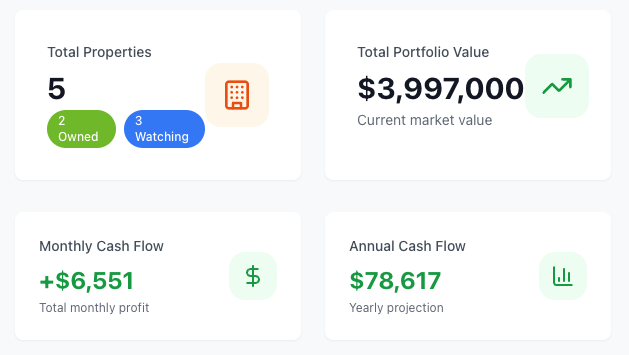
Beyond individual properties, AI platforms also help you track overall portfolio performance. You can easily compare returns across multiple properties, identify underperforming units, and pinpoint trends that might boost future cash flow. For example, an automated dashboard might alert you if certain neighborhoods in your portfolio show higher vacancy rates, giving you the chance to target solutions before those issues escalate.
Focus on essential features
With so many products on the market, it’s easy to get overwhelmed. Before committing to any platform, you’ll want to look for specific core features that offer real value.
Smart property screening
The best platforms offer robust screening tools to identify profitable deals. For example, an automated tool could weigh multiple factors—fair market rent, potential cap rate, local school ratings, and projected appreciation—to flag properties that match your desired risk level. This proactive approach saves you from manually sorting through a flood of listings.
Customizable analytics
Automated platforms should allow you to customize data points based on your investment goals. You might focus on short-term rentals, single-family homes, or large multifamily properties. Each strategy has a unique set of metrics. If the platform lets you refine these metrics and generate reports accordingly, you’ll get clearer insights into projected returns and long-term profitability.
Real-time alerts and updates
Real estate markets move quickly, and your success often depends on how quickly you can act on new information. A strong platform should alert you to changes in your chosen market—such as a property price drop or an emerging area with rising rental demand—so you can make timely offers. Real-time notifications are essential for gaining an edge over other investors.
Make Smarter Rental Investments & Boost Profits
 Use AI to Assess Opportunities
Compare Cap Rates & Cash Flows
Optimize Rental Income
Use AI to Assess Opportunities
Compare Cap Rates & Cash Flows
Optimize Rental Income
RentalOptimizer.com
See how to evaluate the best software
Now that you know what features matter, how do you separate top-tier solutions from the rest? A key step is analyzing a platform’s track record, user interface, and pricing structure.
Check the track record
Many AI-powered tools promote cutting-edge algorithms, but you need proof that those algorithms deliver accurate forecasts. Request case studies, testimonials, or any evidence that shows how the platform has helped investors realize better returns. Look out for platforms that have demonstrated their predictive power over multiple real estate cycles, because any software can look good in a one-year snapshot.
Assess user experience
No matter how advanced the software, if it’s cumbersome to navigate, you’ll find yourself ignoring important data. That’s why platforms with intuitive dashboards, clean interfaces, and easy-to-use analysis tools can save you hours of frustration—and help you get the most from the data. Try a demo if one is available, and see how quickly you can perform tasks like generating a cap rate report or exporting data for your own records.
Understand pricing and support
Tools can be costly, but remember that you’re investing in a service that will hopefully yield better returns in your portfolio. Compare monthly or annual subscriptions, and see if lower-tier plans still include the most important features. Pay attention to customer support as well. Some platforms offer robust email and phone support, while others provide only basic community forums. If you run into an issue analyzing a deal, you’ll want quick assistance.
Avoid common mistakes
While automated real estate investment tools are undeniably powerful, using them carelessly can undermine your success. Here are a few pitfalls you’ll want to watch out for.
Relying solely on AI-generated data
AI models, no matter how sophisticated, occasionally misfire or struggle with data that is incomplete or atypical. To mitigate this risk, combine AI tools with your general market knowledge and local expertise. If a platform suggests a property is poised for rapid value appreciation but you know the neighborhood is dealing with infrastructure challenges, trust your broader research.
Overlooking local regulations
An automated tool might highlight a great vacation rental property, but if the neighborhood has strict laws banning short-term rentals, you could get stuck with a property you can’t use as intended. Always stay on top of zoning codes and homeowner association rules to ensure your investment follows local regulations.
Anchoring on one metric
Handy as tools may be, you can’t base your entire decision on a single output like projected rental income. Look at multiple metrics—cash-on-cash returns, neighborhood trends, occupancy rates, and projected appreciation—to form a well-rounded assessment of any investment opportunity.
Consider the future of AI in real estate
The rise of automated real estate investment tools is just the beginning. AI-driven software is evolving at breakneck speed, meaning you can look forward to increasingly sophisticated innovations in the near future. Emerging capabilities include advanced predictive analytics, natural language processing for market news, and automated property management features that handle tasks like dynamic rent adjustments and tenant communications.
Possible upcoming trends
- Deeper neighborhood analysis that uses real-time data from local economic indicators.
- VR and AR integrations for immersive property viewings and condition assessments.
- Automated lease agreement generation and compliance checks, further speeding up operations.
Staying aware of these developing trends will ensure you’re always ready to capitalize on new features that boost your returns and streamline your processes even more.
Look at a real-world example
If you’re ready to see how these AI-based platforms work in practice, check out Rental Optimizer (https://rentaloptimizer.com). This service stands out by focusing on rental property analysis and portfolio tracking. You can quickly view predictive rent estimates, local vacancy rates, and personalized recommendations for maximizing cash flow over time. Whether you’re managing single-family homes or multifamily units, the automated analysis helps you spot market shifts early. This means you can lower your operational costs and secure higher returns across your entire portfolio.
Why Rental Optimizer is noteworthy
- Specialized for rental market analysis, giving you a targeted toolkit.
- Real-time data integration that auto-updates your dashboard.
- A user-friendly approach that doesn’t bury you in complex spreadsheets.
By studying platforms like Rental Optimizer, you’ll see firsthand how AI technology translates theoretical insights into concrete, data-driven solutions that positively impact your bottom line.
Key takeaways
- Automated real estate investment tools save you time by quickly filtering and analyzing listings, so you can spend more energy on securing deals.
- Built-in machine learning models reduce your risk by factoring in trends and predicting changes before they become widespread.
- Look for must-have features like smart property screening, customizable analytics, and real-time alerts, along with a proven track record.
- While AI is powerful, combine it with your market insights. Local regulations, neighborhood quirks, and personal expertise still play a big role in your success.
- The future of AI in real estate is bright, bringing even more sophisticated analytics and potential profit-boosting features.
Ultimately, these platforms help turn guesswork into informed decisions, taking you from a purely reactive approach to a refined strategy rooted in data and foresight. By choosing a highly rated tool—and combining it with an active involvement in your local market—you can optimize every phase of your investing journey. Explore the options, test demos, and see how automated real estate investment tools could supercharge your portfolio. You’ll likely discover that adopting these solutions puts you miles ahead in a competitive industry.
Make Smarter Rental Investments & Boost Profits
Use AI to Assess Opportunities
Compare Cap Rates & Cash Flows
Optimize Rental Income
RentalOptimizer.com