

If you are curious about media literacy with AI technology and want to navigate today’s complex media landscape more confidently, you are in the right place. With news coming at you from every angle, it is natural to feel overwhelmed or uncertain. The good news is that artificial intelligence is making media literacy easier than ever. By using AI to evaluate the bias in articles and identify the assumptions that skew reporting, you can take immediate steps toward more balanced understanding.
Below, you will find an in-depth, user-friendly guide to help you get started. You will discover practical strategies, explore specialized AI tools like BiasBreaker (https://biasbreak.org) and Bridger (https://thebridger.org), and learn how to apply everything to your daily routine. Let’s dive in.
Recognize the need for media literacy
In a world of nonstop headlines, developing media literacy protects you from confusion and misinformation. Media literacy involves understanding how information is created, shared, and consumed. It helps you:
- Distinguish fact from opinion.
- Detect editorial bias or selective storytelling.
- Form opinions based on evidence rather than emotion.
News outlets often prioritize engaging audiences over providing balanced viewpoints. They may gloss over key facts, reinforce stereotypes, or fuel divisive debates. If you are aware of these tendencies, you can better pick out what is accurate and what is slanted, ensuring you form a more balanced understanding of events.
Why AI matters for today’s media environment
The volume of digital information available today is impossible to sift through manually. You might read multiple articles on the same topic, each claiming to hold the “truth,” but only scratching the surface. Here is where AI technology steps in. AI can scan massive amounts of text quickly, detect patterns indicating potential bias, and highlight gaps or loaded language. Instead of spending hours on background research, you can rely on AI to handle the initial heavy lifting and then apply your critical thinking.
Spot common signs of bias
Even before you begin using advanced AI tools, you can sharpen your bias detection skills. You will recognize many of the following indicators once you start examining the headlines in your feed.
- Emotional or loaded language: Words like “devastating,” “outrageous,” or “unbelievable” might reveal subjective framing.
- One-sided quotes or sources: When an article quotes only one person or organization, the story may lack a well-rounded perspective.
- Lack of context: If you see sensational claims but little background information, question whether important details are missing.
- Clickbait titles: Headlines promising shocking revelations or dramatic conflict often prioritize clicks over accuracy.
- Selective data usage: Articles might cherry-pick statistics to support a specific narrative while ignoring contradictory evidence.
Being aware of these cues primes you to approach any piece of media more critically. Still, human perception is not infallible, and that is where media literacy with AI technology can make a significant difference.
Check the Bias of any News Article
 Powered by AI
Learn how AI can help
Artificial intelligence can take the guesswork out of evaluating an article’s objectivity by inspecting language patterns and context at scale. Here are some ways AI steps in:
- Text analysis: AI models break down an article’s text into units (words, phrases, sentences) and assess them for sentiment, tone, and other linguistic markers.
- Source comparison: Some AI tools cross-reference multiple sources to see if certain facts have been reported consistently.
- Perspective mapping: By comparing how different outlets report the same event, AI can show you where viewpoints overlap or diverge dramatically.
These capabilities translate into quicker, clearer feedback for you. Instead of reading ten different pieces to see the full picture, an AI system can highlight each article’s viewpoint in minutes.
Reducing your workload
AI also mitigates information overload. With so many publications popping up, it is easy to miss hidden biases or subtle omissions. By letting AI scan articles for red flags, you save time and direct your energy toward verifying the results and drawing your own conclusions. It is far more efficient than tackling the entire research process on your own.
Explore advanced AI tools
Specialized AI-driven media literacy platforms are emerging to guide you through spotting bias and finding a more balanced middle ground. Two tools worth exploring are BiasBreaker and Bridger.
BiasBreaker
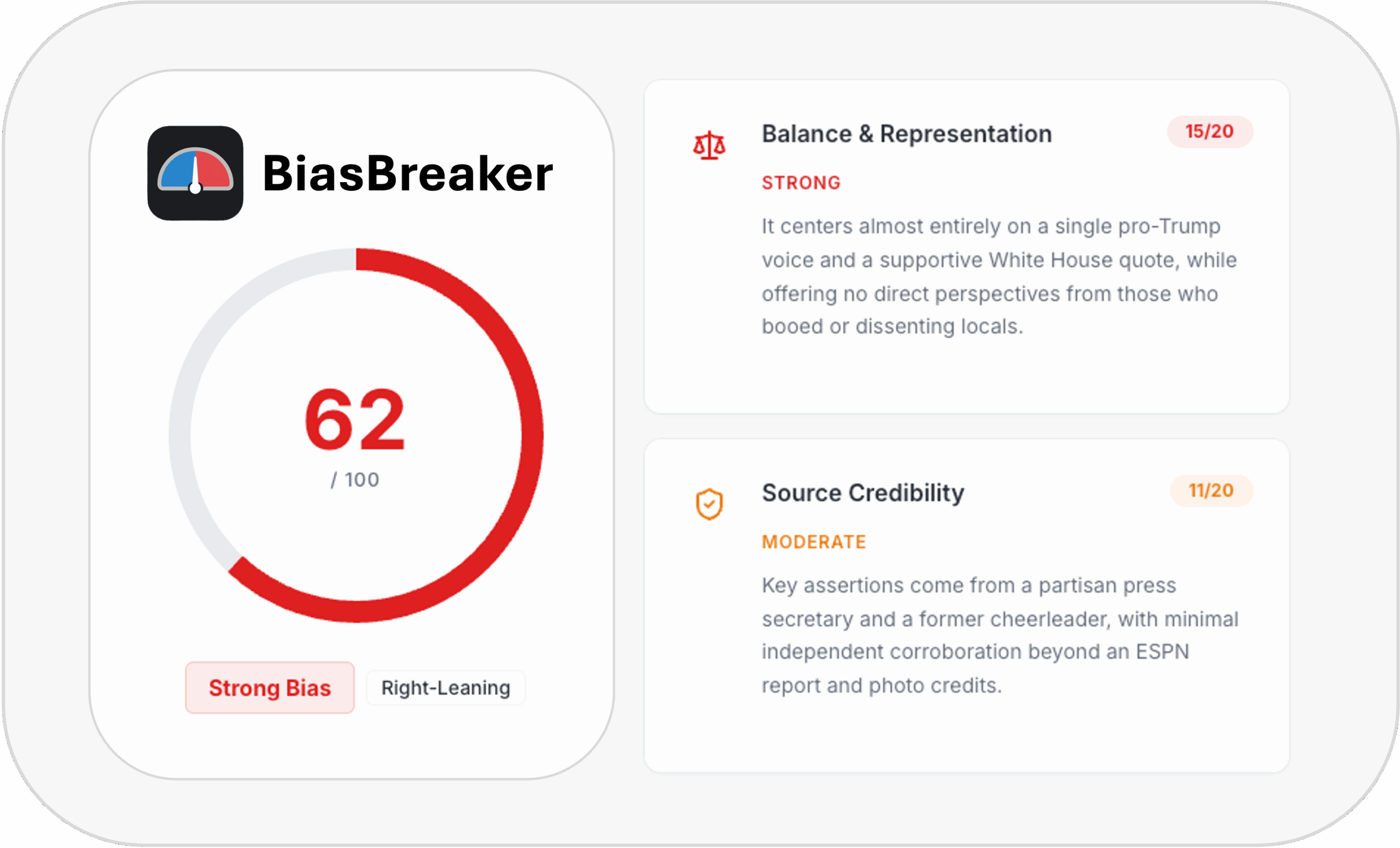
BiasBreaker (https://biasbreaker.org) uses AI algorithms to evaluate the language of an article and uncover evidence of slant or imbalance. You can paste the text of an article into BiasBreaker or upload a file for immediate analysis. The platform provides:
- A breakdown of sentiment across the article.
- Clear indicators of possibly biased language.
- Suggestions for additional sources to fill in any gaps.
By spotlighting loaded words and phrases, BiasBreaker helps you quickly decide how fair an article might be. The data-driven approach offers a starting point for questioning why certain words were chosen, or whether the article left out valuable perspectives.
Bridger
Bridger (https://thebridger.org) focuses on bridging the gap between opposing viewpoints. If you notice two stories with opposite takes on a similar topic, you can submit them both to Bridger. The AI:
- Uncovers hidden assumptions that each article makes.
- Pinpoints the stark differences between them (on facts, framing, or values).
- Identifies common ground where a more balanced perspective might be formed.
By using Bridger, you get a clear picture of the complexities underlying each side. This insight can help you find a middle path or at least gain a deeper understanding of why people disagree so fervently. It is particularly valuable for classrooms or team discussions, as it helps participants step outside entrenched positions.
How to get started with these tools
- Choose an article you are curious about, ideally one that feels strongly worded or skewed.
- Head to BiasBreaker (https://biasbreaker.org) and upload or paste in the text. Check for sentiment distribution and any warnings the tool raises.
- If you want to compare two opposing articles, copy each into Bridger (https://thebridger.org).
- Review the assumptions highlighted by Bridger, then note if there is any overlap or common ground in the coverage.
- Combine these insights with your own judgment to form a more nuanced view of the overall topic.
Consolidate your findings
Once you have used an AI-powered tool to analyze an article, you might be wondering how to organize and act on what you have learned. Consider creating a simple personal reference table or spreadsheet that tracks the biases and assumptions you uncover.
| News Source | Main Topic | Potential Bias/Slant | Key Assumptions Exposed | AI Tool Used |
|---|---|---|---|---|
| ExamplePublisher | Local election coverage | Uses strong adjectives for one candidate | Candidate X is heroic | BiasBreaker |
| OpposingOutlet | Local election coverage | Ignores alternative viewpoints entirely | Candidate Y is extreme | Bridger |
Maintaining a record can help you see patterns over time. Maybe you will notice the same sites repeatedly framing stories in a particular way, or certain topics generating more emotional language.
Reflect on your own reactions
It is also useful to record your personal feelings about the information you read. Ask yourself:
- Do I feel tense, angry, or defensive after reading this article?
- Am I inclined to share it without verifying the facts?
- Did the AI analysis align with my initial impression?
These questions reveal whether your own biases poke through. AI is not just about spotting mistakes in the article itself, but also about uncovering how your mindset might be influenced by a particular presentation of facts.
Build strong media habits
Much like developing a healthy lifestyle, cultivating media literacy is an ongoing effort. AI provides powerful assistance, but consistency ensures the lessons stick. Here are some easy strategies to strengthen your day-to-day habits.
Choose diversified sources
Seek a variety of perspectives—local, national, and international newspapers or broadcasts. Follow a few reputable, nonpartisan research organizations. Rotate your reading list every now and then, addressing any blind spots you discover. By doing so, you reduce the risk of echo chambers reinforcing the same biases repeatedly.
Set specific goals
Carve out time daily or weekly to review your favorite publications using AI tools for quick checks. If you focus on specific issues—for instance, political campaigns or health news—commit to analyzing a certain number of articles each month. This structured approach ensures you see a gradual improvement in your understanding of bias.
Track your progress
Document when you notice a shift in your perspective. Has your skepticism become more constructive rather than cynical? Do you catch yourself verifying claims before automatically believing them? Tracking small wins helps you stay motivated. Jot them down in a journal or digital notes app.
Teach others to use AI
If you work in education, business, or simply interact often with friends or family, you can help them improve their media literacy with AI technology. Sharing the AI-guided approach can multiply the media-savvy individuals in your network.
Educators
- Classroom discussions: Encourage students to bring articles on a specific topic. Let the AI tool highlight potential bias, then facilitate a group discussion about how those biases might shape student opinions.
- Assignment prompts: Ask learners to summarize an article’s viewpoint, run it through an AI tool, and then revise their summary in light of the tool’s analysis. This exposes them to the concept of checking and rechecking sources.
Parents
- Family media hour: You can set aside a bit of time each day or week to analyze a news story with your children. Show them how to feed the article into BiasBreaker, interpret the results, and spark a meaningful conversation about what they see.
- Practical lessons: If your kids are approaching social media age, teach them to question what they read online. Let them try Bridger with a friend, analyzing two different takes on the same viral video or trending event.
Business professionals
- Team-based training sessions: Offer short workshops where employees learn how to quickly run articles through an AI tool before sharing within the organization. This keeps the internal communication more fact-based and fosters a culture of thoughtful media consumption.
- Decision-making processes: If your team relies on external news reports to shape strategies, ask members to verify the factual grounding of those reports with an AI tool. This way, decisions are formed on more reliable data.
Empower yourself with balanced news
Above all, remember that you remain in control of your media intake. AI can clue you into subtle biases and shortcuts, but your critical thinking turns those insights into real understanding. While the technology can highlight problem areas, you decide what to read, watch, or trust.
Once you develop a routine of regularly using AI tools to evaluate stories, you will likely find that you experience less frustration or confusion about conflicting media narratives. You can navigate even the most divisive topics with a sense of clarity. By combining human judgment with the efficiency of AI, you forge a path that is both informed and balanced.
If you feel ready to take the next step, pick a current hot-topic news article—perhaps one that has caused debate among your friends or colleagues—and run it through BiasBreaker or Bridger. Scrutinize the results. If something does not match your initial impression, investigate further. Over time, you will sharpen your skill at spotting bias so well that you can guide others toward greater media awareness.
The more people embrace media literacy with AI technology, the better the chance we have of reducing polarization and promoting constructive dialogue. You gain the power to see multiple sides of every story and reach a more grounded perspective. So go ahead, harness the tools at your disposal, and become a champion of balanced, informed media consumption for yourself and your community.
Check the Bias of any News Article