

If you’ve been following technology trends in your field, you know that real estate AI technology is already reshaping how properties are bought, sold, and managed. Whether you operate a local agency, manage a nationwide brokerage, or head a forward-thinking property management company, artificial intelligence is creating new opportunities to streamline workflows, boost revenue, and enhance the tenant or buyer experience. By paying attention to the most relevant AI tools and tactics, you can give your organization a competitive edge in a dynamic market.
Below, you’ll discover various ways to integrate AI into your day-to-day operations and long-term strategy. You don’t need to be a computer scientist to do this successfully; what you do need is an openness to experimenting with new approaches, plus a willingness to adapt your processes as technologies advance. Let’s explore how AI can transform your business in practical, straightforward ways.
Recognize AI’s influence on property data
At its core, AI thrives on data. Real estate transactions, leasing agreements, tenant histories, property listings, and property management records all contain massive amounts of data. When you pair that data with AI-driven algorithms, you suddenly gain new insights into future property values, buyer preferences, and building maintenance needs.
In simpler terms, machine learning systems learn from the data you feed them. If every rental agreement, commercial lease, or home sale in your portfolio becomes part of your AI’s knowledge bank, you can create predictive models that help you see market trends faster. For instance, you might use AI to compare sales prices in a neighborhood across the past five years, factoring in mortgage interest rates, local school ratings, and even seasonal trends. These calculations often take place in the background, so you see only the results—such as a recommended price range for a new listing or a forecast for occupancy rates.
You already know the real estate field produces mountains of documents. By using systems designed for artificial intelligence in real estate, you can free your team from manual data entry and consistent re-checking of details. Instead, machine learning models process documents, flagging anomalies or highlight areas of potential risk. Over time, this can reduce human error, speed up compliance checks, and create a smoother experience for clients who expect quick turnaround times on valuations or financing.
Predict market shifts with analytics
Forecasting is essential for any real estate venture, and AI excels at analyzing historical patterns to project possible future outcomes. While traditional modeling relies on a handful of data sets like property values or neighborhood demographics, AI systems can sift through thousands of data points in a matter of minutes. This includes fluctuations in local job markets, crime rates, consumer buying habits, and beyond.
Perhaps you’re a property manager overseeing multiple apartment buildings in different cities. Predictive analytics can guide you in estimating how demand might shift next year if a large employer relocates or a new attraction opens nearby. Similarly, brokerages can use AI to determine the best time of year to list certain types of properties, analyzing everything from interest rate changes to local school calendars.
When your team harnesses this sort of predictive power, you can make informed decisions faster. For example, you might decide to invest in a growing neighborhood before everyone catches on, or you might advise clients to hold off selling until market conditions improve. Even if AI’s pinpoint accuracy occasionally faces limitations (predicting the future will always be imperfect), you’ll likely be far more prepared for market swings compared to organizations that rely on guesswork.
Personalize property recommendations
AI is also quickly transforming the buyer or renter journey. If you’ve shopped online and seen those “recommended for you” product lists, you’ve already encountered AI-driven personalization. In real estate, this can mean showing potential buyers a curated selection of homes that match their preferences—such as price range, location, and architectural style—without requiring hours of manual filtering.
You might already have a client database showing the properties they’ve clicked on or the neighborhoods they’ve researched. AI can analyze that browsing behavior and highlight listings that fit those same criteria. From there, you connect with your clients quickly, offering a short list of properties they’ll likely find intriguing. This makes the overall customer experience smoother and can speed up the path to a deal.
For property managers, personalization might include alerting current tenants about upgrades they can make to their space, or suggesting premium services based on past usage. Think about how a streaming service notices the shows you watch, then recommends similar ones. You can apply the same idea to real estate. By giving clients and tenants deeper personalization, you’re essentially mirroring successful e-commerce models—except you’re doing it in a sector where personalized experiences were once limited by manual processes.
Make Smarter Rental Investments & Boost Profits
 Use AI to Assess Opportunities
Compare Cap Rates & Cash Flows
Optimize Rental Income
Use AI to Assess Opportunities
Compare Cap Rates & Cash Flows
Optimize Rental Income
RentalOptimizer.com
Expedite sales with virtual tours and AI chatbots
Virtual tours aren’t new, but AI systems can take them to a new level by quickly stitching imagery together, adjusting lighting in real time, or suggesting ways to stage a space virtually. A potential buyer across the country could do a detailed walkthrough of a home without traveling, complete with interactive features that call out square footage or approximate remodeling costs.
Meanwhile, AI chatbots on your website or messaging platform can handle basic inquiries—like scheduling showings, checking property availability, or explaining application processes—so your team can devote more time to closing deals and developing deeper relationships. As AI chatbots learn, they adapt to the specific language and needs of your market, providing relevant answers faster and reducing the pressure on your staff to juggle dozens of inquiries each day. This smart automation gives your clients instant gratification, reflecting well on your brand and overall service quality.
Streamline property maintenance and facilities management
If you manage a large portfolio—whether residential or commercial—maintenance can turn into a logistical puzzle. AI helps you anticipate when building systems need attention, often spotting patterns that might go unnoticed by human inspection alone. For instance, if a particular HVAC unit uses more energy than average, AI might flag it as needing a tune-up or replacement before it fails. This proactive approach saves you money in the long run, since you’ll address minor issues before they balloon into expensive emergencies.
Similarly, AI-driven facility management software can track patterns in maintenance requests, such as repeated problems on specific floors or repeated tenant issues in certain units. By mapping out these trends, you can prioritize capital upgrades based on actual data rather than guesswork. This level of in-depth insight can also help you negotiate better contracts with contractors or service providers, as you’ll have a transparent record of how often repairs are needed.
If you’re responsible for multiple properties, you can imagine how a single oversight can lead to large-scale impacts—like widespread air-conditioning failures in summer or heating problems in winter. AI systems simply offer better early detection. The technology interprets sensor data from smart thermostats, water meters, or security systems. Instead of your team constantly scanning dashboards, you can rely on AI alerts so that you focus on the most pressing tasks at hand.
Enhance tenant and client interactions
Your success often depends on how satisfied your tenants, buyers, or sellers feel about their experiences. AI-driven communication tools make day-to-day interactions smoother. For instance, you could set up automated notifications that alert tenants about package deliveries or maintenance schedules. Your staff won’t have to manually email or text everyone, because the system sends messages automatically when a package is scanned at the front desk.
On the client side, consider how AI chatbots—mentioned earlier—can offer instant support even when your office is closed. If a potential buyer has a question at midnight about application requirements, the system can respond immediately and guide the client to the next steps, such as filling out a basic form or requesting a callback. You’ll show that your operation is available around the clock without actually paying for nighttime staff.
That said, you should always leave space for human interaction when it matters: AI can handle routine tasks, but sensitive negotiations or urgent tenant emergencies often require a personal touch. The goal here is to use AI as a helpful assistant rather than a replacement for the human-centered approach that real estate transactions often demand.
Address security and compliance challenges
Data security is paramount in real estate. Your files include sensitive financial records, personally identifiable information, and even proprietary market data. Using any AI solution means ensuring that your systems are both robust and compliant with regional regulations. Before deploying new technology, you’ll want to confirm that it meets data protection laws, like GDPR in Europe or relevant privacy acts in other locations.
It’s also critical to train your employees on best practices for AI usage. For example, staff members should understand how algorithms reach certain recommendations. While it’s convenient to rely on the AI’s output, you still hold responsibility for verifying accuracy. In some cases, AI solutions can inadvertently produce biased outcomes, so you need to conduct regular reviews of how the software processes data. This is especially important in real estate, where location-based disparities can lead to unintentional discrimination.
Ultimately, adopting AI requires a balance between embracing innovation and maintaining rigorous cybersecurity standards. Storing large amounts of property data and personal information calls for heightened awareness around encryption, user authentication, and breach prevention. Make sure your technology partners or vendors outline precisely how they protect your data. That way, you can enjoy the benefits of faster, more intuitive workflows without exposing yourself to unnecessary risk.
Compare AI use cases at a glance
To understand how AI might complement your day-to-day responsibilities, it helps to see a brief comparison of popular applications within real estate. While no single solution covers every need, combining different AI tools often produces the best outcomes.
| AI Application | What It Does | Potential Benefit |
|---|---|---|
| Predictive Analytics | Analyzes past market data | Helps forecast property values |
| Virtual Assistants | Automates scheduling and FAQs | Improves customer service |
| Computer Vision | Scans images for listing highlights | Creates interactive virtual tours |
| Facility Management Tools | Monitors building systems | Reduces maintenance costs |
| Document Recognition | Extracts data from files | Speeds up paperwork processing |
When you combine these different features—like using predictive analytics to set competitive lease rates and facility management tools to keep your property running smoothly—you’ll start to see that real estate AI technology can act as a strategic growth driver. Remember to perform regular evaluations, upgrading or replacing AI tools as your needs change.
Explore strategies for smooth adoption
Adopting AI is about more than just installing software. You’ll likely need to train your team, update workflow processes, and phase out outdated manual tasks. To make the transition smoother:
- Start small: Begin with one AI application, such as a chatbot for initial customer inquiries. Observe its performance and gather feedback before rolling out additional capabilities.
- Involve your team early: Ask employees for their input and concerns from the start. If they understand why you’re launching AI tools, and how it benefits them, they’ll be more enthusiastic about training.
- Test thoroughly: Whether you’re implementing an AI-driven property valuation tool or a virtual tour platform, conduct small-scale tests. This gives you space to identify issues and gather data on performance.
- Maintain human oversight: Use AI to streamline your operation, but continue to involve staff in final decisions. People still add critical context and judgment that AI can overlook.
By refining these steps and integrating them into your project timeline, you’ll achieve a far smoother AI adoption process. While there can be a learning curve, the result is typically better productivity, happier teams, and satisfied clients.
Move forward confidently with AI
From boosting marketing campaigns to maintaining better control over property operations, real estate AI technology is an ever-expanding field with an array of benefits. You can leverage AI’s capabilities to unravel complex market trends, personalize buyer experiences, manage buildings efficiently, and create around-the-clock customer support. This shift doesn’t happen overnight, but with careful planning, your organization can evolve alongside these transformative tools.
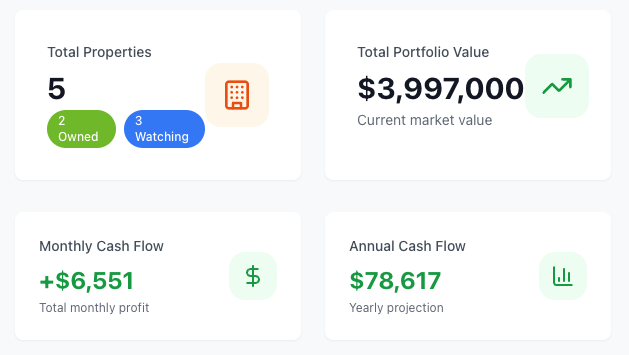
Remember, you never have to go it alone. Coworkers, external consultants, and established vendors can offer valuable advice on staying ahead of the competition. Additionally, a range of specialized AI-driven platforms cater to each aspect of real estate. For instance, if you’re looking to analyze rental properties for profitability and reduce risk, consider exploring the AI-powered rental property analysis platform, Rental Optimizer. By visiting Rental Optimizer, you can see how an advanced tool automates tasks like comparing local rents, forecasting cash flow projections, and identifying areas with strong investment potential.
As your business embraces AI, you’ll soon discover that the technology expands your capabilities without rejecting the personal connections that make real estate such a human-oriented field. By combining genuine interactions with AI-generated insights, you can provide services that are more efficient, more responsive, and more attuned to what modern clients expect. The choice is yours—but if you’re seeking growth, higher revenues, and satisfied clients, AI in real estate may be the most direct route to achieving those results.
Make Smarter Rental Investments & Boost Profits
Use AI to Assess Opportunities
Compare Cap Rates & Cash Flows
Optimize Rental Income
RentalOptimizer.com