

Real estate investment software US platforms have taken the industry by storm, revolutionizing the way you evaluate, track, and manage different property portfolios. With artificial intelligence (AI) at the core of many of these tools, you can now access in-depth rental projections, market analyses, and risk assessments in seconds. The challenge, however, is figuring out how to optimize these platforms without falling into common traps. From inaccurate data inputs to overlooking advanced features, there are plenty of pitfalls that can derail even the most promising rental returns.
In this article, you’ll explore the mistakes that often happen when using real estate investment software. Along the way, you’ll learn how AI-driven solutions can streamline every stage of your investment cycle, ensuring you maximize potential yields while making data-backed decisions with confidence. Whether you’re new to this technology or looking to refine your approach, these strategies will help you avoid setbacks and harness the full power of AI for your real estate ventures.
Recognize how AI shapes investing
Artificial intelligence has transformed property analysis, drastically reducing the time and resources required for market research. Instead of sifting through endless spreadsheets or skimming neighborhood reviews one by one, you can rely on complex algorithms that sift through large data sets. Here’s how it changes the game:
- Pinpointing profitable locations: AI compares rental rates, occupancy trends, and local amenities, helping you identify areas where properties are likely to appreciate.
- Forecasting returns: Predictive models can run simulations based on future market conditions, letting you see possible outcomes before you commit capital.
- Sorting relevant property data: Rather than manually compiling local housing statistics, AI filters and presents only the most essential information.
However, AI is only as good as the data you feed it. If the source data is outdated or incomplete, your forecasts will suffer. Remember that the technology does not replace your instincts as an investor. Instead, it complements your decision-making by handling much of the analytical heavy lifting. The key is knowing how to interpret the results. Combine your on-the-ground knowledge with AI-driven insights so you can form a complete picture of each opportunity.
Review vital software features
Not every real estate investment software is created equal. Selecting the right features makes all the difference between guesswork and making confident, data-driven decisions. Before you commit to a platform, keep an eye out for these capabilities:
- Property comparison tools: Look for detailed side-by-side comparisons that let you analyze key metrics like rental yield, vacancy rates, and local comps.
- Market forecasts: The ability to predict future property values or rental income helps you plan long-term strategies.
- Automated cash flow analysis: Quick calculations of operating expenses, mortgage payments, and profitability save you hours of manual work.
- Scenario planning: Some AI solutions let you model best-case, worst-case, and mid-range scenarios, enabling more flexible decision-making.
When you use a software solution that aligns with your investment goals, you narrow down risks by catching red flags early on. Certain platforms, for instance, may only focus on single-family residences, while you might be interested in commercial or multifamily properties. Clarify your specific needs so your chosen software can deliver relevant insights and the highest return on your investment.
Avoid poor data input
Data accuracy can make or break your investment strategy. One of the most common mistakes is assuming the software will handle every detail without oversight. In reality, your initial inputs often guide the software’s projections. A single oversight when entering rent estimates or operational costs can send you down the wrong path.
Here are a few best practices to consider:
- Verify data sources: Use official records or credible reports for local property values, vacancy rates, and neighborhood demographics.
- Cross-check manual inputs: If you’re importing your own figures, like renovation costs, double-check them for accuracy. typos or miscalculations can skew an entire analysis.
- Update data regularly: Conditions change over time. Periodically refresh input data for ongoing projects.
AI excels at spotting patterns, but it can’t read your mind. If the numbers you enter are flawed, even the most impressive algorithm will produce misleading results. Resist the temptation to rush through the setup phase. It’s far better to spend extra time getting all your metrics correct before launching a full-scale property analysis.
Make Smarter Rental Investments & Boost Profits
 Use AI to Assess Opportunities
Compare Cap Rates & Cash Flows
Optimize Rental Income
Use AI to Assess Opportunities
Compare Cap Rates & Cash Flows
Optimize Rental Income
RentalOptimizer.com
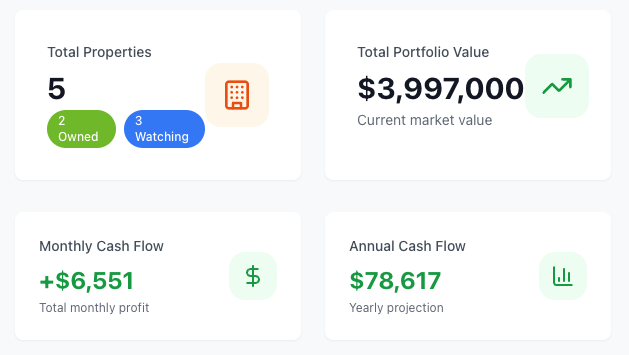
Check user-friendly design
A cluttered or confusing interface might seem like a superficial concern, but it can actually hinder your decision-making. When the software’s layout is too scattered or overloaded with jargon, you may end up missing critical insights simply because you can’t find them. Additionally, a poorly designed platform might hide advanced features behind complex menus that you don’t notice right away.
Key indicators of a user-friendly design include:
- Intuitive navigation: You should be able to move between cash flow analysis, market projections, and portfolio summaries without searching through endless tabs.
- Clear reporting: Charts, tables, and visual summaries should be easy to understand, even for non-technical users.
- Customizable dashboards: The option to tailor your view for different types of deals or property segments can speed up your workflow.
An interface that’s simple to navigate also encourages more frequent use. The more comfortable you are exploring data, the more insights you’ll uncover. Some investors discover that the software’s best features go unnoticed for months simply because they’re buried in an unintuitive menu. Make sure your platform’s design doesn’t become a barrier to smarter real estate investing.
Compare advanced analytics outputs
Advanced analytics—such as predictive modeling, sentiment analysis, and automated risk scoring—represent a game-changer in real estate forecasting. If you gloss over these capabilities, you could miss lucrative opportunities. For example, some AI tools can cross-reference rental demand spikes with upcoming zoning changes to identify underappreciated areas. Others analyze local income levels, school ratings, and even traffic data to gauge a property’s long-term rental feasibility.
One example of this new breed of AI-powered applications is Rental Optimizer. This platform focuses on rental property analysis and portfolio tracking, using AI to compile large sets of rental data into actionable insights. By comparing expected rental income, maintenance expenses, and historical occupancy rates all in one place, you avoid guesswork and zero in on promising markets much faster.
When evaluating the advanced analytics in real estate investment software, pay attention to:
- Data references and transparency: Where does the platform pull its statistics from, and can you trace the results back to reputable sources?
- Option to customize or refine models: Look for a solution that lets you tweak assumptions about expenses, rent growth, or appreciation over time.
- Correlation with real-world events: AI predictions should consider local trends, economic shifts, or regulatory changes.
Overreliance on analytics without human judgment can be risky, so aim for balance. The software can show which properties appear the most profitable on paper, but never forget to measure non-quantitative factors—like local community growth or planned infrastructure projects—that might not show up in a data set.
Verify integration with workflows
Real estate investment software US tools become even more powerful when they connect smoothly with your existing processes. An often-overlooked mistake is failing to confirm whether the software can sync up with property management systems, CRM tools, or accounting platforms you already rely on. Managing multiple disjointed systems can introduce errors, create double work, and waste valuable time.
Ask these questions to ensure seamless integration:
- Does the software offer direct imports or exports of financial statements?
- Can it link to your preferred property management platform?
- Is there an option to add or remove modules based on your business needs?
Integration is particularly crucial if your portfolio consists of multiple property types or extends across different regions. You don’t want to juggle varied spreadsheets or struggle to reconcile data coming from disparate sources. By focusing on workflow alignment early on, you’ll skip the frustration of messy data transfers and reduce the risk of missing vital updates.
Understand security and privacy
Protecting your data is a non-negotiable aspect of using AI-driven property analysis tools. A misstep in security can expose sensitive financial details or even personal information about tenants. Unfortunately, many investors overlook this factor, assuming that any reputable software must be fully secure by default.
Here’s why that assumption can be a mistake:
- Data breaches lead to financial exposure: If your information is compromised, you could face legal fees or loss of client trust.
- Regulatory penalties: Real estate transactions often involve private financial data that warrants compliance with data protection laws.
- Increased vulnerability with multiple integrations: The more interconnected your tools are, the more you need to ensure each link in the chain is secure.
Before committing to a software solution, make a point to review its privacy policies and security credentials. Ask about encryption standards and how often data backups occur. Investigate whether the platform has had any prior breaches or issues. Proactively discussing these measures sets the stage for a smoother, safer experience.
Leverage ongoing software support
Even the most advanced real estate investment software will need periodic updates, bug fixes, or user training. Underestimating how crucial ongoing support is can leave you in the dark when new features roll out or significant OS updates are required. Additionally, if you run into a technical glitch and can’t access your data, a strong support team or knowledge base can prevent prolonged downtime.
Here’s what solid support often looks like:
- Fast response times: Ideally, you should receive help within hours, not days.
- Comprehensive knowledge base: Tutorials, FAQs, and user forums can resolve many common questions quickly.
- Regular training sessions: Especially helpful if you have a larger team that must learn to use new features effectively.
Many developers also conduct webinars or send out newsletters highlighting upcoming additions or changes. Remember to keep your subscription current. If you let your software license lapse, you may lose access to updates or even to your stored data. Staying engaged with the platform ensures you’re always equipped with the latest, most accurate insights.
Move forward confidently
Navigating the real estate market is already challenging—so adding new tools can feel overwhelming at first. Yet with careful planning and attention to each detail, AI-driven real estate investment software US solutions can genuinely become your secret weapon in an increasingly competitive environment. The trick is to avoid the pitfalls that so many investors encounter: inaccurate data inputs, ignoring user-friendly features, overlooking advanced analytics, skipping software integrations, and neglecting security measures.
When you incorporate leading-edge tools like Rental Optimizer, you’ll see how AI can streamline your day-to-day tasks by automating property assessments, generating detailed forecasts, and managing portfolio performance. However, software can’t entirely replace your personal expertise. Rely on your knowledge of local property markets and your ability to interpret nuanced factors that don’t always show up in data sets. The best approach is a balanced partnership: let AI handle routine or complex calculations, and apply your experience to validate or refine its results.
Once you address these common mistakes, you’re less likely to hit roadblocks and more likely to uncover lucrative opportunities. Take a moment now to review your current processes. If you’re not fully capitalizing on your chosen system’s functionalities or if you’ve been eyeing a new AI-based software, make sure to implement what you’ve learned here. That way, you’ll move forward with clarity, confident in the knowledge that you’re tapping into every advantage real estate investment software can offer.
Make Smarter Rental Investments & Boost Profits
Use AI to Assess Opportunities
Compare Cap Rates & Cash Flows
Optimize Rental Income
RentalOptimizer.com