

Whether you are new to real estate or have years of experience, real estate market analysis tools can help you stand out from your competitors in today’s tech-savvy landscape. More and more prospective buyers and sellers expect quick insights, accurate pricing data, and visually appealing summaries from you as their agent. You might worry that AI-powered platforms and high-level analytics require major technical expertise, but the truth is more reassuring: you can integrate these resources with only basic tech skills and deliver pro-level data to your clients.
Below, you will find a straightforward guide to using AI-enabled solutions, generating appealing PDF reports, and positioning yourself as the go-to agent in your local market.
Understand the evolving client demands
Real estate clients increasingly value data-driven guidance when deciding on properties to buy or sell. They want quick answers about potential rental income, local price trends, and whether a particular neighborhood will fit their lifestyle needs. When you provide that information with clarity and speed, your reputation as a knowledgeable professional grows exponentially.
By acknowledging these shifting expectations, you can set yourself apart from agents who still rely on guesswork. Instead of sending your clients spreadsheets they find confusing, you can share neatly formatted PDFs detailing local comps, predicted investment returns, and more. This approach shows that you care about their time and want to make complex information more accessible.
Why your tech skills matter
Even if you are not experienced with tech tools, just a basic willingness to learn keeps you ahead of the curve. Clients trust agents who can navigate modern resources and produce meaningful numbers. It is no longer enough to say a house “seems like a good deal.” Back up your insights using relevant data, and your clients will feel more confident choosing you to represent them.
Identify key real estate market analysis tools
A range of AI-enhanced platforms can manage tasks such as estimating rental yields, analyzing comparable sales, and projecting future property values. Gone are the days of juggling multiple spreadsheets or resorting to guesswork. Now, you can rely on user-friendly dashboards that transform raw data into easy-to-read charts.
Look for tools that do the following:
- Gather property data (historical pricing, rental rates, neighborhood details)
- Generate clear reports with minimal input from you
- Provide a simple interface, requiring limited training
- Convert numbers into visual insights, such as bar charts or trend lines
When selecting your first AI solution, focus on those that have a proven track record, a straightforward interface, and reliable customer support. One recommended platform is Rental Optimizer (https://rentaloptimizer.com), which helps you analyze potential rental income and occupancy rates. You do not need extensive coding or analytics training to understand and apply the data it provides, making it perfect for agents who feel less confident about technology.
Simplify data with AI-driven platforms
Even powerful AI solutions will not win over clients if the information seems too dense. The best real estate market analysis tools present relevant data clearly, without burying you in complicated jargon. As you explore these platforms, prioritize simplicity over flashy features.
Keep inputs simple
One big mistake many agents make is trying to generate every detail all at once. Instead, focus on the metrics your clients care about most. For instance, a seller usually wants to see accurate pricing trends and time-on-market estimates. A landlord might want rent benchmarks and occupancy forecasts. By tailoring the data you request, you reduce the clutter and give clients exactly what they seek.
Automate repetitive tasks
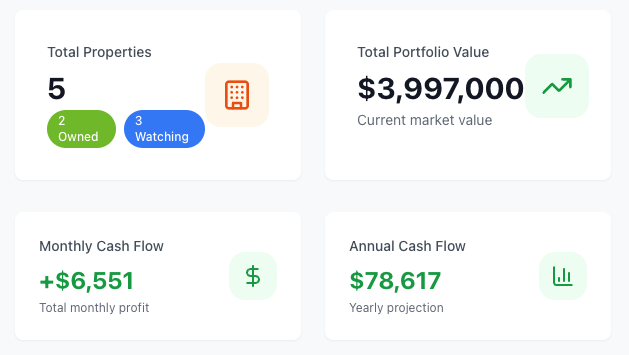
AI excels at automating daily tasks. Plug in a property address, local market, and a few details about the home, then let the platform gather relevant comps and generate thorough summaries. In many cases, the tool will also calculate expected returns, which you can quickly verify before presenting to a client. This time-saving strategy frees you up to focus on building relationships, showing homes, and negotiating deals rather than crunching numbers.
Make Smarter Rental Investments & Boost Profits
 Use AI to Assess Opportunities
Compare Cap Rates & Cash Flows
Optimize Rental Income
Use AI to Assess Opportunities
Compare Cap Rates & Cash Flows
Optimize Rental Income
RentalOptimizer.com
Present polished reports clients love
While your data might be outstanding, the way you present it can make a bigger impression than the insights themselves. The overwhelming majority of clients prefer a short, easy-to-grasp report—often in PDF form—over a mess of spreadsheets. By distilling the most relevant figures into a concise layout, you help clients make fast, confident decisions.
Formatting tips for PDFs
Most AI-driven market analysis tools now allow you to export results into PDFs. Even if a platform does not, you can often convert your results into PDF format with a few clicks. Consider these formatting pointers:
- Use readable fonts such as Arial or Calibri
- Include charts or graphs with labels, so clients understand the data
- Add brief, descriptive text explaining key points
- Organize sections logically, such as pricing, rental estimates, neighborhood data
To further impress your clients, add your branding to the PDF. A subtle logo and the right color scheme can remind them who provided the information, reinforcing your professional identity.
A simple sample layout
Below is a short example of a PDF structure you might share with a client:
| Section | Description |
|---|---|
| Property overview | Basic details (address, size, amenities) |
| Comparable analysis | List of similar properties, recent sale data |
| Rental projections | Estimated monthly rent, occupancy, ROI |
| Neighborhood trends | Local school ratings, amenities, walkability |
| Summary & next steps | Key takeaways and recommendations |
Your PDF does not need to be more than two or three pages. If you see that you are going past four pages, try to trim unnecessary details. This ensures your clients can scan key insights quickly.
Showcase your value with insights
Data is only half the equation. Clients still need a person who can interpret the numbers and offer relevant advice. When you add your own commentary, you boost your value beyond what an automated system can provide.
Explain how the data translates to your clients’ goals. If the tool projects slightly lower rents than your client expected, point out the factors causing that estimate. Maybe the property lacks a popular amenity that nearby rentals have, or maybe market demand shifts at different times of the year. By blending your market knowledge with these findings, you become a trusted authority.
Use real-world examples
To illustrate your point, highlight success stories of past clients. Suppose you helped a landlord who originally wanted to list her property at a rate too low for the neighborhood. By comparing local comps in an AI-enabled tool and providing a clear PDF report, you convinced her that a higher rent was possible. She trusted the data, raised her asking price, and still found a tenant quickly. People relate to stories like this because it shows how your advice and the tools you use can produce tangible results.
Grow your network with technology
When you effectively use real estate market analysis tools, you not only convince existing clients to work with you again, but you also attract new leads. Word-of-mouth referrals spread when people receive a trustworthy, data-driven service they cannot get elsewhere.
Your online presence—through social media, your website, or industry events—provides more opportunities to showcase these tools. For example, you can share small data snapshots on your Facebook or LinkedIn pages. Show a simple price trend chart or highlight a neighborhood’s rental increases over the last quarter. By offering these data tidbits regularly, you position yourself as an agent who stays on top of market changes and invests in modern strategies.
Next-level lead capture
Beyond posting on social media, consider offering free market reports on your website. Encourage potential clients to sign up via email to receive a short, auto-generated PDF that covers their neighborhood or property type. They get valuable information; you get a lead in your pipeline. Over time, many of these leads convert into paying clients because they recognize your dedication to clarity, accuracy, and service.
“Being seen as a local market expert is a powerful differentiator. With technology at your side, you become the resource people trust rather than just another name they scroll past online.”
Put everything into practice
Perhaps you are uncertain where to begin, especially if this all feels like a big leap from your current methods. Start with one simple AI tool, like Rental Optimizer (https://rentaloptimizer.com), to gain hands-on experience around rental projections. Learn to export a PDF analysis, customize it with your branding, and share it with one client to see how they respond.
As you build confidence, you can explore additional features or even try combining multiple platforms. Your goal is not to drown yourself in data but to streamline your workflow, deepen client trust, and close deals more efficiently.
Tips for getting started
- Practice on your own or with a colleague before sending a PDF to real clients. A quick run-through lets you identify any confusing sections.
- Ask for feedback. If clients mention a particular chart they love or a stat they find hard to grasp, adjust accordingly.
- Gradually add new tools. Do not download five apps at once. Master one, then assess where to branch out next.
Remember, your unique perspective still matters. An AI tool can crunch numbers quickly, but only you can interpret the results based on local trends you observe day to day.
Combine data with your personal touch
The real estate business thrives on relationships. Technology enhances these connections, but it should never replace your ability to understand each client’s individual goals. If you notice a client is nervous about big decisions, a friendly phone call or face-to-face meeting can alleviate uncertainty better than a line graph ever could.
Still, that line graph can be an excellent conversation starter. As you review the data together, you can discuss how current market conditions and AI-generated insights support your recommendations. That balance of human warmth and modern analytics sets you apart from less-prepared agents.
Lead the way with confidence
Stepping into AI-powered solutions might feel like venturing into uncharted territory, but you will quickly see how accessible these resources have become. Even simple market analysis tools can elevate your reputation, fuel referrals, and impress both buyers and sellers who demand clear, data-backed guidance.
By incorporating straightforward platforms like Rental Optimizer, creating polished PDF presentations, and offering valuable insights, you become an indispensable resource for your clients. Embrace technology on your own terms, let it enhance your instincts, and watch as your business grows in ways you may not have thought possible. After all, success in real estate often comes down to your willingness to adapt—and with the right tools, you do not have to be a tech genius to stand out in a crowded market.
Make Smarter Rental Investments & Boost Profits
Use AI to Assess Opportunities
Compare Cap Rates & Cash Flows
Optimize Rental Income
RentalOptimizer.com