

When you search for “ai article bias detection,” you’re almost certainly looking for a way to sort through today’s constant flood of news and commentary. Sometimes, a headline or an opinion piece can stir emotions that leave you wondering if you have all the facts. Thankfully, AI offers tools that help you spot hidden angles in articles, so you can stay informed without feeling overwhelmed. In this post, you will discover how AI identifies bias, why media literacy is so important for you and your family or profession, and how to incorporate AI-based solutions into your everyday news consumption.
Recognize why article bias matters
Article bias shapes how you perceive events, issues, and even your neighbors. Stories that lean too far in one direction can influence your thoughts and decisions in subtle ways. You might read an article about a local policy, then later realize you absorbed a strong bias without noticing the slant.
By recognizing bias, you position yourself and those around you to develop balanced viewpoints. This is especially critical if you lead classroom discussions, manage a workplace, or guide your children through complex social topics. The higher the stakes, the more important it becomes to identify slanted reporting.
Different types of bias to watch out for
- Framing bias: When articles only present facts that support one viewpoint while ignoring the rest.
- Confirmation bias: When you favor or believe stories that confirm what you already think, and dismiss those that challenge your perspective.
- Selection bias: When editors or journalists choose sources or data that push a specific angle, rather than offering a balanced mix.
Understanding these core biases is your first step toward fair news evaluation.
See how AI detects hidden bias
Artificial intelligence excels at finding patterns and anomalies in large amounts of text. Think of AI as a digital microscope that highlights phrases, word choices, and even tones an article uses repeatedly. This ability allows AI to break down the language of an article and show whether the writer is leaning heavily toward one side of a story.
When you use an AI program to scan your favorite news sources, you might receive a quick snapshot of which topics are treated differently or which authors use consistently loaded vocabulary. By mapping these details, AI helps you see the bigger picture of how a story is being presented.
How AI processes information
- Data collection: AI tools gather text from articles, blogs, and sometimes even social media.
- Language assessment: Natural language processing (NLP) models identify patterns in vocabulary, sentence structure, and tone.
- Bias detection algorithms: These algorithms highlight words or phrases that might indicate strong opinions, emotionally charged language, or incomplete data.
- Reporting: The AI interface delivers a score or summary revealing how an article stacks up in terms of objectivity or potential bias.
This multi-step process makes AI an invaluable asset for anyone trying to maintain neutral ground and see issues from multiple angles.
Explore BiasBreaker for fair news
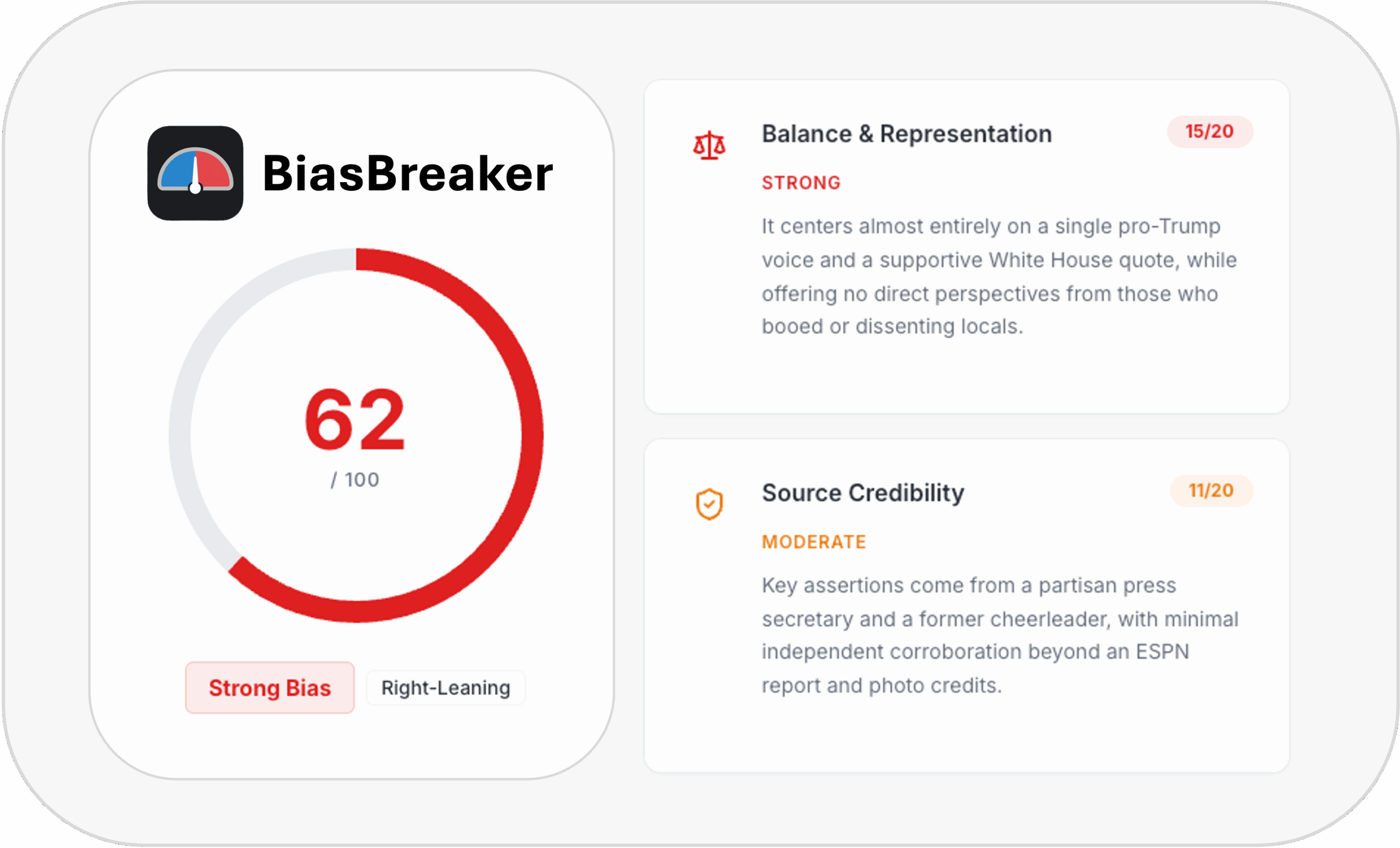
Sometimes, you just need a quick health check on an article before you share it with others. That’s where tools like BiasBreaker come in. BiasBreaker is an AI-powered media literacy application that shows you how an article could be leaning, helping you determine if the piece is balanced or leaning toward a specific perspective.
What you can do with BiasBreaker
- Scan multiple articles at once: Easily see if different reports on the same topic align or drastically diverge in tone.
- Identify emotional language: Detect if writers are using fear-based or inspirational language to influence readers.
- Compare coverage: Check if articles from two sources tell the same story or if crucial information is missing in one.
By regularly using BiasBreaker, you gain a fresh pair of eyes that can spot slanted commentary in seconds. This approach helps you stay focused on facts and improves your confidence in the news you pass along to students, colleagues, or loved ones.
Use Bridger to find common ground
Even if you realize an article is biased, you might still struggle to see how two opposing viewpoints can overlap. Bridger, found at https://thebridger.org, is an AI-powered tool designed to highlight the assumptions in two conflicting perspectives and then propose a middle ground.
Bridging divided views
Imagine you are confronted with two editorial pieces: one praising a new policy and one criticizing it fiercely. Bridger can:
- Lay out each side’s assumptions: Find phrases or ideas that show the underlying beliefs driving each viewpoint.
- Reveal potential middle ground: Suggest areas where both sides have common interests or shared values.
- Encourage constructive dialogue: Foster conversations that help people collaborate and reach understanding, rather than remain stuck in disagreement.
Using Bridger isn’t about forcing you to abandon your convictions, but rather about uncovering the valid concerns or insights that both sides might share. It is a powerful way to see that even the widest rift can have a point of connection.
Check the Bias of any News Article
 Powered by AI
Build a practical media literacy checklist
While AI helps you pinpoint bias, you still play a central role in staying fair-minded. A personal checklist lets you approach every headline or opinion piece with consistent habits. Here is a straightforward list you can adapt to your own routine.
- Ask who wrote it: Identify if the author, institution, or media outlet has a known agenda.
- Check the date: Make sure the information is current, or at least verify if older data is still relevant.
- Compare headlines: Read different sources covering the same event, noticing if angles differ widely.
- Watch for extreme language: Words like “always,” “never,” “disaster,” or “triumph” can sometimes be red flags.
- Look for missing facts: Ask yourself what context is missing, and whether that context is crucial to telling the whole story.
- Use AI tools: Scan articles with tools like BiasBreaker or gather two opposing commentaries with Bridger to uncover hidden assumptions.
These steps help keep you consistent in your approach, allowing you to develop a deeper sense of media literacy and maintain a balanced outlook.
Overcome common misunderstandings
When you first hear about AI-based bias detection, it is normal to have questions or concerns. Here are a few clarifications that might address those worries.
Is AI itself unbiased?
AI systems rely on data. If that data has embedded biases, the AI could reproduce those patterns. Reputable developers work hard to train models on diverse data sources to reduce skew. That is why it is wise to use AI as an assistant, not an absolute authority.
Will AI replace your judgment?
No. AI complements your critical thinking, it doesn’t replace it. While these tools highlight potential issues in an article, you still decide how to evaluate facts and choose what to believe. Think of it as a safety net rather than a full replacement for your own reasoning.
Does it work for every type of article?
AI is highly adaptable, yet some long-form analyses, nuanced commentaries, or creative writing pieces might be trickier to categorize. Still, scanning them can give you clues about general tone, word usage, and whether the coverage is balanced.
Can technology alone solve the problem of bias?
AI helps identify it, but building a more balanced media environment is a shared responsibility. Journalists who commit to fair reporting, readers who embrace diverse viewpoints, and educators who guide students to question sources all contribute to a healthier information ecosystem.
Apply AI to your news routine
Once you see how these tools work, it becomes much easier to integrate them into your everyday media consumption. If you regularly read newspapers, blogs, and feeds, you can keep a few best practices in mind.
- Start small: Choose one AI tool, like BiasBreaker, to scan your top three news sources once a week.
- Set a reminder: Schedule a quick check on Bridger whenever you see two sharply opposed viewpoints on your social media timeline.
- Record your observations: Note any surprises, like discovering that a seemingly balanced article was laced with strong language or that two sides of a debate shared a surprising belief.
- Share insights: Talk to friends, family, or coworkers about your findings. By showing actual examples of bias or balance, you can encourage others to adopt AI-driven media literacy.
Over time, you may find that your personal radar for bias grows sharper, making you less likely to accept starkly one-sided arguments at face value.
Key takeaways for balanced viewpoints
- Spot bias quickly: Understand that commonly overlooked bias can color any news story or commentary you read.
- Use AI to your advantage: Tools like BiasBreaker and Bridger reveal hidden angles, emotional language, and shared assumptions you might otherwise miss.
- Practice checks and balances: By maintaining a simple media literacy checklist, you build healthy habits that encourage fairness and deep understanding.
- Stay curious: Ask questions, explore multiple sources, and recognize that bias is rarely black and white.
AI article bias detection gives you the means to cut through sensationalism, confirm trustworthy sources, and hopefully reclaim some peace of mind in your daily reading. Rather than feeling overwhelmed by polarized news, you can take confident, methodical steps in your own quest for balanced information.
Consciously choosing how you consume media helps you steer conversations in your classroom, workplace, or home toward more productive and informed discussions. With AI as a friendly assistant, you can engage with current events without letting yourself be swayed by hidden agendas. Whether you are a parent trying to guide teens through divisive headlines or a professional seeking clear insights into market trends, these tools and strategies allow you to stay objective and make thoughtful decisions based on facts rather than hype.
Check the Bias of any News Article