

AI media bias evaluation can help you cut through the noise of today’s headlines by revealing hidden agendas, slanted language, and half-truths you might otherwise miss. Whether you are a parent teaching digital literacy to your kids, an educator guiding students through news sources, or a business professional looking to stay well-informed, AI-driven tools provide fresh ways to question the stories you come across. The goal is not to make you distrust everything you read, but rather to empower you to see beyond sensational sound bites and find a more balanced perspective.
Below is an in-depth look at how technology can illuminate the biases in the news you consume, along with practical tips for using AI platforms like BiasBreaker and Bridger to hone your media literacy skills.
Understand media bias
Before you get into the nuts and bolts of AI tools, it helps to understand how and why bias surfaces in news reporting. Bias does not automatically mean false reporting. Rather, it reflects how a piece of news is framed, which elements it emphasizes or omits, and how data and quotes are interpreted.
Why bias exists
- Profit-driven models: News outlets often rely on advertising revenue, so they focus on stories, angles, or emotional triggers that drive clicks and views.
- Cultural perspective: Journalists and editors have their own experiences and beliefs, which can unconsciously influence word choice and story focus.
- Audience segmentation: Media platforms aim to appeal to a specific demographic or political viewpoint, which can shape the kind of news they highlight.
- Time constraints: Under tight deadlines, reporters might oversimplify issues or rely on talk points from well-known figures, reinforcing existing viewpoints.
Bias does not always reflect malicious intent. However, it still skews how you perceive the world. By recognizing that every story comes with a lens, you set the stage for a deeper, more critical understanding of what you see and read.
Common types of bias
Bias can show up in different ways, including:
- Selection bias: Only certain quotes, facts, or sources are chosen to fit a particular narrative.
- Exclusion bias: Entire viewpoints are left out or significantly downplayed, making the story feel one-sided.
- Labeling bias: Loaded terms (e.g., “radical,” “controversial,” “extreme”) are attached to people or ideas, influencing how you regard them.
- Spin bias: Emotional or dramatic language is used to sway your perception rather than just presenting events plainly.
When you understand the shapes and forms bias can take, you become more attuned to skewed reporting, allowing you to spot problematic coverage even without specialized AI tools.
Recognize how AI helps
Since many news stories are delivered at lightning speed—through apps, social media, and around-the-clock TV coverage—it is difficult to keep up with everything, let alone deconstruct each article. This is where AI steps in. AI-powered approaches analyze vast amounts of text, looking for patterns in semantics, tone, vocabulary, and sources. The result is a data-driven snapshot of how “objective” or “subjective” a piece of writing might be.
The power of automated analysis
At a high level, AI tools can:
- Scan hundreds of articles in minutes: AI systems excel at large-scale text processing. They can quickly compare how various outlets cover the same event.
- Identify keyword usage and language cues: Words with emotional, dramatic, or partisan connotations can tip you off to potential slant or spin in a news story.
- Detect extremes: By looking for polarizing statements or comparing multiple viewpoints, AI highlights how neutral (or biased) the coverage may be.
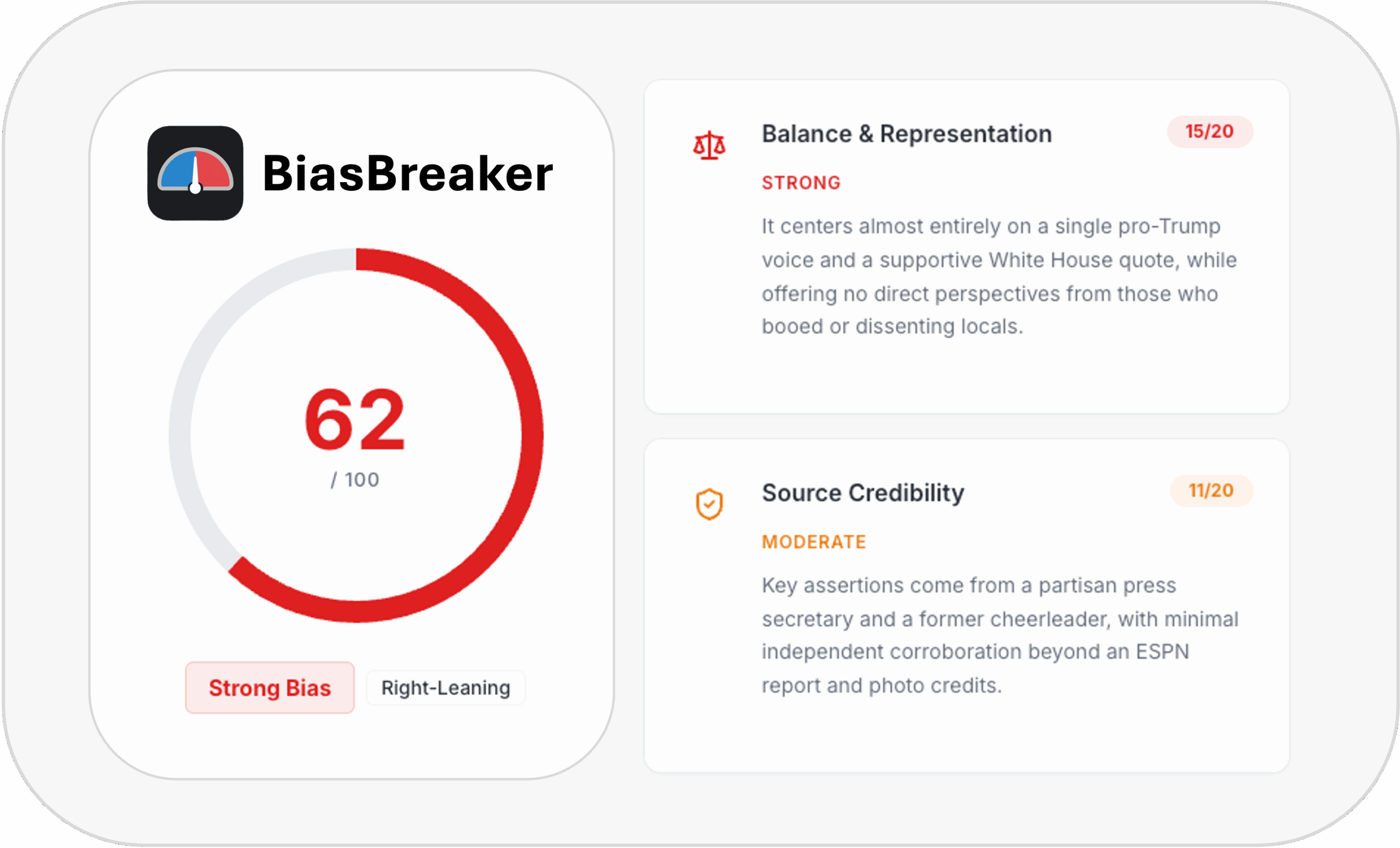
- Provide simplified visuals: Many AI-driven platforms provide charts or color-coded summaries that highlight biased language. These visuals make it easier to see if sources are balanced, if quotes come from opposing perspectives, or if one viewpoint dominates.
A new wave of AI solutions
AI media bias evaluation does not guarantee foolproof results—algorithms themselves can carry hidden assumptions. However, tools are evolving rapidly to become more transparent. Many of them allow you to customize your analysis. For instance, you might prioritize certain signals, like fact-checking references or mention of specific expert sources, so the AI can look more deeply into those elements.
Remember, however, that AI is a support tool, not a flawless authority. It gives you data to consider so you can make your own informed decisions about a story’s reliability or credibility.
Explore key AI tools
Two AI-driven platforms stand out for their unique approaches to bias detection and resolution: BiasBreaker and Bridger.
Introducing BiasBreaker
BiasBreaker analyzes text for linguistic signals, keywords, and sentiment indicators that are often linked to media bias. It then presents a summary of possible slants or areas you may want to question further. You might discover, for example, that a piece uses emotionally charged descriptions, or references only one type of source repeatedly.
Here are some ways you can use BiasBreaker:
- Paste an article’s text directly: If you receive a suspicious article via social media or email, BiasBreaker can scan it quickly and produce a detailed report.
- Compare coverage across outlets: Try analyzing more than one source about the same event. By seeing how each source phrases key details, you will get a better sense of where biases differ.
- Bookmark the highlights: Save the summaries and share them with friends or colleagues who could benefit from a deeper look at the news.
Check the Bias of any News Article
 Powered by AI
Using Bridger
Bridger tackles media bias from another angle. It uncovers the assumptions between two opposing viewpoints, then looks for common ground. For instance, if you are researching a heated political debate, you can supply Bridger with editorial opinions from two contrasting media outlets. The tool then highlights the main points each side presents and attempts to identify areas of agreement or compromise.
Ways to leverage Bridger:
- Bridge polarized discussions: If your workplace or classroom is split on a topic, upload or summarize the relevant arguments, and let Bridger spotlight potential areas where both sides can meet.
- Guide conversation: Use Bridger’s insights to ask clarifying questions in your next meeting or group discussion.
- Evaluate your own bias: Provide Bridger with your viewpoint and an opposing stance to see if you are missing vital facts or oversimplifying the other side.
By comparing these two tools, you will see a broad overview of how AI can help you quickly recognize, analyze, and potentially move past the biases that often hamper civil discourse.
Build Bridges in a Polarized World

Develop your analysis skills
While AI platforms are powerful aids, they work best when combined with your own sense of discernment. Think of these tools as conversation starters—prompts that nudge you to dig deeper, consider other angles, and gather more evidence before forming an opinion.
Cross-reference AI results
After you run an article through an AI system, you might see specific bias indicators, such as:
- Repetitive loaded terms: Words or labels that appear frequently (e.g., “dangerous,” “reckless”).
- One-sided sourcing: The text references only government officials or only activist groups.
- Missing context: Key historical or economic data is absent, making the argument seem incomplete.
Cross-referencing these findings is essential. Instead of reading one biased piece in isolation, line it up with other stories on the same topic. You can also use established fact-checking sites to confirm the details. Look for points of agreement or consensus. If multiple sources—some left-leaning, some right-leaning, plus nonpartisan outlets—report the same facts or data, you can feel more confident in that information.
Combine with critical thinking
Critical thinking means asking questions like:
- Who benefits from this particular frame or perspective?
- Have I seen contradictory reports, and why might they differ?
- Could any vital quotes or statistics be missing?
- Does the piece rely on heavily emotional angles instead of factual details?
When you pair these questions with AI media bias evaluation, you create a powerful filter that helps you move beyond the hype.
Strengthen your overall media literacy
Media literacy is an ever-evolving skill. As soon as you think you have a handle on the most common techniques for manipulation, new methods might appear. Keeping a habit of regular, active learning ensures you do not fall behind.
Simple daily habits
- Compare headlines: If you have time for only a quick check, read multiple headlines on the same story. Headlines alone can reveal bias if they present different angles or omit crucial facts.
- Read past the lead: The first paragraph often sets the tone, but crucial details might appear near the end. AI analysis can quickly identify if an article buries the lead.
- Ask your circle: Sometimes, discussing an article with friends or colleagues reveals viewpoints or interpretations you might have missed.
- Rotate sources: If you typically check only one or two preferred outlets, try occasionally reading a variety of publications or blogs—even those you disagree with.
Incorporate different viewpoints
It may feel uncomfortable to visit sources you suspect have a biased agenda. However, seeing how different outlets frame issues can strengthen your media literacy. You do not need to agree with everything you read, but exposing yourself to a range of perspectives helps you refine your critical lens.
Assess credibility
Finally, always consider a publication’s credibility. Even if AI highlights potential bias, that might not outweigh a source’s overall reputation. Established outlets with clear editorial guidelines may present bias differently than less reputable sites:
| Factor | Consideration |
|---|---|
| Source transparency | Does the site clearly disclose ownership and funding? |
| Track record | Has the publication been reliable in the past? |
| Editorial standards | Are corrections, references, and disclaimers included? |
| Expert contributors | Do accredited professionals or seasoned journalists write for them? |
Keep a mental or written checklist of these factors. Each time you read or share a news item, you will have a sharper sense of its trustworthiness.
Take a balanced approach
AI tools can rapidly evaluate bias, but you still decide what to do with the results. Strive for a balanced view by acknowledging that multiple truths and experiences might coexist within the same national or global event. If you find yourself strongly disagreeing with a specific article or perspective, pause and explore why.
- Look for middle ground: Bridger is an excellent tool for identifying overlapping beliefs or values.
- Seek context: Use BiasBreaker to see if the shock factor is coming from how a piece is worded or if the facts themselves are genuinely alarming.
- Apply your own judgment: Even neutral-sounding articles can have hidden slants. Step back and ask whether your opinions or emotions are guiding your interpretation.
When you move beyond any single viewpoint and consider a range of data, analysis, and interpretations, you help reduce the influence of echo chambers—those enclosed spaces where everyone thinks alike. This balanced approach does not mean you have to straddle the fence on every issue, but it allows you to stand on firmer ground when you do form an opinion.
Key takeaways
- Use AI media bias evaluation to illuminate patterns and framing in the news.
- Recognize common bias types, from selection bias to labeling bias.
- Explore tools like BiasBreaker for quick text scans and Bridger to uncover middle ground in polarized debates.
- Combine AI insights with your own critical thinking, question emotional language, and verify facts across multiple sources.
- Cultivate daily media literacy habits—compare headlines, read multiple outlets, discuss articles with peers, and stay open to diverse viewpoints.
When you balance AI-driven analysis with an active, questioning mindset, you can better protect yourself and others from misleading narratives. As you model this habit for students, coworkers, or family members, you help everyone move closer to thoughtful, fact-based discussions. Ultimately, it is not about silencing opinions, but about ensuring each viewpoint stands on solid, well-examined ground.
Check the Bias of any News Article