

Are you eager to cut through the noise of polarizing headlines? AI-powered media literacy tools can help you step back and see the bigger picture behind every article you read. From recognizing misleading phrases to uncovering hidden slants, these tools aim to expand your awareness rather than dictate your perspective. Below is a comprehensive guide on how AI can support your journey toward more balanced news consumption.
Recognize why media literacy matters
Media literacy is your skill set for understanding and critically evaluating the information you encounter every day. By strengthening your media literacy, you learn to:
- Identify bias in news stories and opinion pieces
- Break down how headlines might shape your first impression
- Examine underlying assumptions that drive certain viewpoints or angles
When you’re unsure if an article or TV segment is skewed, you risk adopting opinions that aren’t rooted in fact. This can shape your decisions on important issues—financial, political, or personal—without you realizing how heavily the reporting influenced you. News outlets often compete for attention, which sometimes leads them to highlight sensational or polarizing content. If you want to see beyond those tactics, you need a consistent way to gauge authenticity and evenhandedness. That’s where AI steps in, helping you filter through the clutter.
Why bias is hard to spot
Human nature plays a big role in how you perceive the news. You often seek out opinions that reinforce what you already believe (confirmation bias), and you may have difficulty seeing the other side of an issue when it worries or frustrates you. This emotional attachment makes it tricky to recognize partiality in your favorite news programs or online articles. AI tools can reveal patterns in language usage that hint at bias, even if your own filters initially keep you from noticing.
See how AI identifies bias
AI relies on patterns, keywords, sentiment analysis, and data-driven algorithms to spot biased angles or politically charged language. It sifts through large amounts of text, searching for indicators like emotional triggers, skewed word choices, and consistent references to one side of an argument. By pinpointing these patterns, AI tools can uncover imbalances you might otherwise overlook.
For example, if a political article regularly uses negatives—“failed,” “disastrous,” “catastrophic”—to characterize one candidate, the AI will flag them. Likewise, it might call attention to loaded terms that praise the candidate’s opponent. Instead of telling you what’s right or wrong, the technology highlights language usage so you can decide for yourself. This step-by-step breakdown of word choices encourages you to apply your own judgment.
From data to insights
When analyzing an article, AI frequently uses a process that includes:
- Tokenizing words. The text is split into individual words or short phrases.
- Checking sentiment. Words are evaluated for their emotional tone.
- Searching for triggers. The system looks for phrases commonly used in charged discourse.
- Evaluating context. This is key, because a single “negative” word isn’t conclusive without surrounding content.
- Summarizing. It compiles your results into a simplified report or highlight reel.
By relying on comprehensive data analysis, AI strives to bring clarity and objectivity to your news consumption. This structure also makes it easier to compare multiple articles covering the same story.
Understand how AI-powered tools work
AI-powered media literacy tools often combine natural language processing (NLP), machine learning, and sentiment analysis to automate bias detection. Thanks to ever-evolving algorithms, these tools learn from user interactions and real-world text samples. They adapt over time, refining their approach whenever they analyze new articles.
Some tools require you to copy and paste the text you want to evaluate, while others integrate directly into your browser or favorite news app. With a quick scan, they produce a highlight of the article’s potential tilt, giving you a snapshot of how the piece might shape your perceptions. You’ll see if it leans more negative or positive, which sources it cites, or how balanced the coverage might be across political spectrums.
Continued learning
As you use these AI resources, they sharpen their detection methods. Each time you confirm or reject a flagged bias, you effectively “train” the system to align with your perspective. This feature improves the tool’s accuracy over time, but it also underscores the importance of using multiple sources and staying aware of your own biases.
Check the Bias of any News Article
 Powered by AI
Explore popular AI-powered media literacy tools
You have several reputable AI resources at your fingertips. Each one brings its own style of analysis, interface, and underlying methodology. Below are two notable tools you might explore to sharpen your understanding of how bias works.
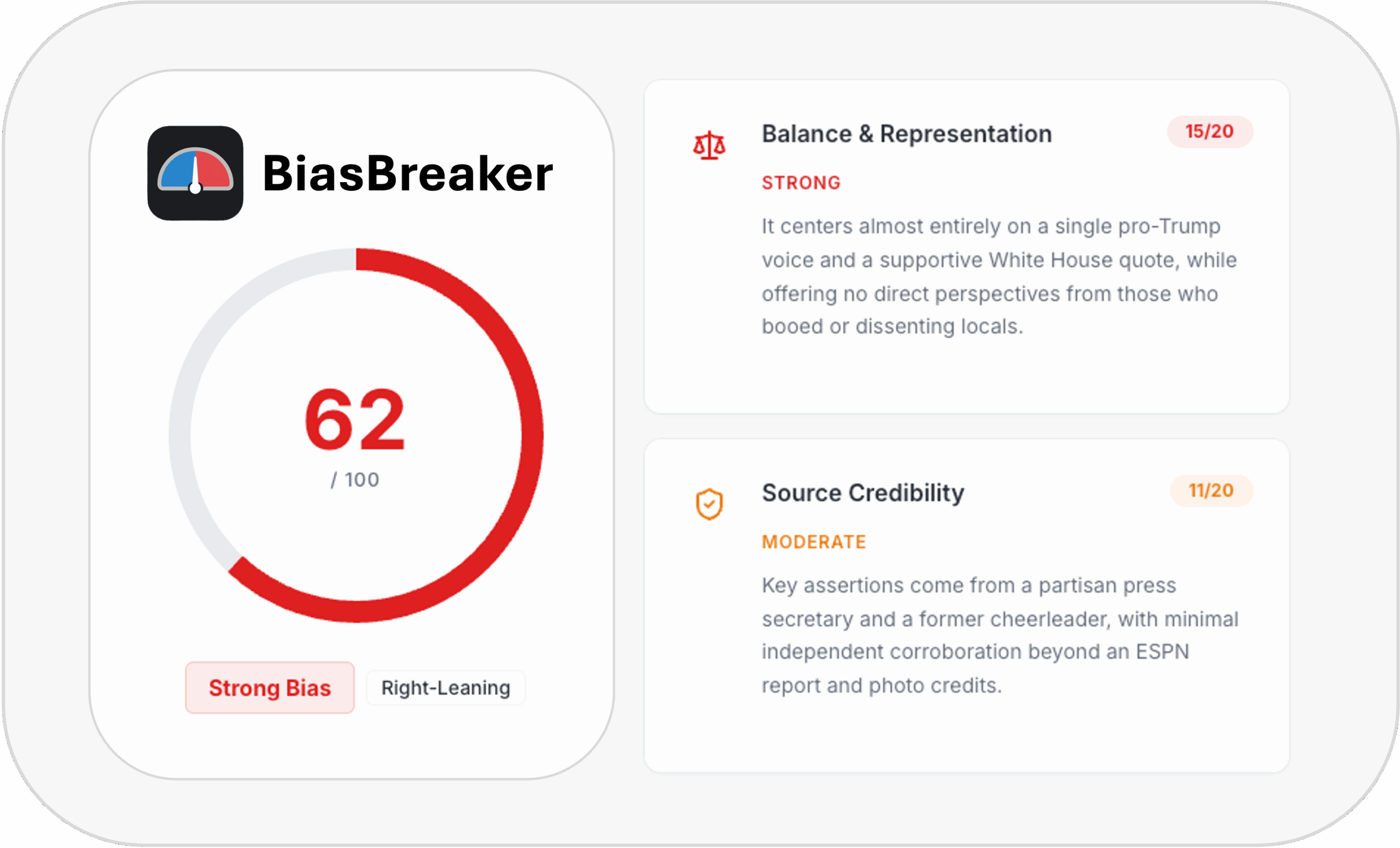
BiasBreaker
BiasBreaker helps you recognize political or ideological biases in articles, blog posts, and other online text. By employing natural language processing techniques, it highlights words or phrases that signal a potential bias. It then presents an overview of which directions those biases appear to lean.
- Features. Offers user-friendly dashboards and explains why certain words are flagged.
- Unique approach. Focuses on providing balanced perspectives on current events, especially political news.
- Best for. Students, teachers, parents, or anyone looking for a straightforward way to identify language patterns in their daily reading.
BiasBreaker is especially useful if you’re short on time. You can get a quick pinch of insight about a post or article, then decide if you’d like to read further. By breaking down specific terms, it also offers a gentle lesson on how easily one’s tone can steer the conversation.
Bridger
Bridger aims to uncover the assumptions behind two opposing viewpoints. Sometimes, you might see fierce disagreements where both sides keep talking past each other. Bridger’s AI identifies the underlying points of contention, then suggests possible middle ground. Instead of fueling a divide, its aim is to help you see where conversation might converge.
- Features. Maps out arguments in a clear structure, calling out each side’s claims and implied beliefs.
- Unique approach. Rather than simply recording a numeric “bias score,” Bridger attempts to facilitate understanding.
- Best for. Moderators, community leaders, and engaged readers who are looking to foster productive dialogue.
Among ai-powered media literacy tools, Bridger stands out for promoting active mediation. Whether you’re a parent trying to teach your kids how to look at two sides of a story, or a business professional who wants to navigate polarized market analyses, this platform encourages empathy and curiosity.
Quick comparison table
Below is a short table comparing these two tools at a glance:
| Tool | Key Focus | Platform | Potential Use Case |
|---|---|---|---|
| BiasBreaker | Detecting bias flags | Web app, plugin | Scan individual articles for subtle language |
| Bridger | Finding middle ground | Web-based | Compare two articles or viewpoints directly |
Whenever you try one of these tools, take note of how its approach fits (or doesn’t fit) your personal style. Different sources require different solutions, so you may find that one platform suits you better for news analysis while the other shines for conversations or debates.
Build Bridges in a Polarized World

Adopt best practices in your daily routine
Even the best AI tools won’t fully replace your own scrutiny. Rather, these insights give you a starting point for critical thinking. Here are a few ways to integrate AI tools into your day-to-day reading habits.
- Evaluate the article’s source. Before you even run a bias check, look at the site domain and the writer’s background. If the piece originates from a major news organization, you might compare it to other outlets to see if there’s consistency.
- Compare multiple angles. Enter the same story from different websites into your AI tool. You might find each publication highlights distinct facts or quotes that lead you to a more robust understanding of the topic.
- Watch for context. If an article references statistics, see if they cite an external source. Read that source yourself, if possible, to confirm accuracy. This step is especially relevant for business professionals who rely on data to make strategic decisions.
- Share your findings. Whether you’re a parent teaching media literacy to your kids or an educator guiding your classroom, consider discussing AI findings with your group or family. Encourage them to question how words and tone affect perception.
Build on your results
Once the AI tool spots potential bias, look up some background information to solidify what you’ve learned. For instance, if you see an article about global climate policy that heavily criticizes one region, investigate that region’s policies in a separate publication. A quick reference to a neutral source can validate or challenge the AI’s analysis. By combining real-world research with AI insights, you make sure you’re not relying on algorithms alone.
Stay aware of AI limitations
While AI can be incredibly helpful, you should keep in mind it’s still a machine. These tools might miss degrees of nuance that a human reader would notice, such as satire or cultural context. They cannot account for every linguistic twist or personal preference. Here are a few common blind spots:
- Sarcasm or humor. AI might interpret jokes as literal statements, flagging them unnecessarily.
- Evolving topics. Language shifts quickly, and if your AI tool isn’t updated, it can’t catch all the new buzzwords or altered definitions.
- Cultural references. Certain phrases might be standard in one region but offending or revealing in another. AI is still catching up to that level of cultural complexity.
- Partial data. An algorithm might overrepresent some sources if it has more samples from one political or media leaning.
That’s why, even when you get a helpful report from BiasBreaker or Bridger, you’ll want to confirm its conclusions with your own reading. Use AI as a guiding partner, not the final word.
Empower your community with AI insights
The conversation about media literacy shouldn’t stay in your head. Spread your newfound awareness to classmates, colleagues, or family members who might overlook just how impactful certain headlines can be. You can:
- Demonstrate AI tools during a community meeting or workshop.
- Encourage your children to run their school reading material through these tools, sharpening their critical thinking skills from a young age.
- Share a side-by-side comparison of two opposing articles and show how your AI tool assessed each one.
If you’re working in a business setting, you can also use these tools to vet industry news. Projects often hinge on public perception, and if a major study or market analysis is shaping your strategy, you need to confirm it doesn’t carry hidden agenda items. By educating your team on how to evaluate specialized reports, you reduce risk and make decisions based on solid data.
Key takeaways
- AI-powered media literacy tools analyze the language of articles to highlight bias and help you think more critically.
- Tools like BiasBreaker give you a quick snapshot of underlying tone, while Bridger zeroes in on finding common ground between opposing sides.
- Combining your own research with AI insights can deepen your understanding of any topic, from local politics to global issues.
- These tools are not infallible—sarcasm, cultural nuances, and limited data sets can affect results, so it’s best to see AI as an aid rather than a substitute for critical thinking.
- Teaching media literacy to others, whether in school, at work, or at home, multiplies the benefits. As more people learn to spot bias and hidden assumptions, you collectively foster an environment where news coverage is taken with a thoughtful, measured approach.
Try testing one of these platforms today on an article that caught your attention. Notice how your instincts compare with the AI’s report. You may find that simple changes in word choice or framing can shape how you feel about a subject, and that’s precisely why media literacy matters so much. Ultimately, your willingness to question and investigate will keep your perspective well-rounded and informed.
Check the Bias of any News Article