
AI bias detection in journalism is changing the way you evaluate news. Today, the vast amount of information you encounter includes written articles, video clips, and social media updates, all competing for your attention. In that busy environment, it’s common to come across stories that tilt left, right, or somewhere in between. Instead of letting those hidden spins and slants shape your beliefs, you can rely on AI tools and practical strategies to sift through stories, identify subtle biases, and see the bigger picture. This ultimate guide walks you through the importance of balanced reporting, explains how AI bias detection works, and shows you what steps you can take to become a more conscious consumer of news.
Pinpoint the need for unbiased reporting
It’s often said that news should present the facts clearly and let you, the reader or viewer, form your own conclusions. Yet many sources inadvertently (or sometimes intentionally) inject biases into their coverage. This can happen through:
- Word choices that signal approval or disapproval.
- Selective reporting that prioritizes some details while ignoring others.
- Editorial context, such as headline framing or op-ed commentary.
When you discover that an article or network frames a story in a certain way, you can become more conscious about what you’re reading. Parents worry about how news bias shapes their children’s worldview. Educators strive to supply students with accurate materials that foster critical thinking. Business professionals need reliable data to make decisions, free from political sway or sensationalism. In all these cases, unbiased reporting matters because it provides a clear foundation for balanced understanding.
Without clarity, you might overlook important perspectives or make decisions based on incomplete facts. Whether you are watching a short news clip or diving into a lengthy analysis, the ability to spot potential bias is essential for developing well-rounded opinions.
Recognize the power of AI
AI has expanded into almost every sector, from personalized recommendations on your music app to real-time traffic updates on your navigation tool. The rise of AI bias detection in journalism is part of this broader trend. Through natural language processing and machine learning, AI-based platforms scan massive volumes of text for patterns, signals, and keywords that might suggest a slant. They can quantify certain phrases and track how coverage changes depending on political or social contexts.
When AI is harnessed to detect bias, it goes beyond pointing out loaded words. It analyzes an article’s sources, the frequency of certain issues getting spotlighted, and the sentiment behind the language. This objective, data-driven perspective helps you gain a deeper, evidence-based understanding of what you’re really reading or watching.
By overcoming some of the limitations that human analysts have (such as fatigue, internal biases, or the sheer volume of daily news), AI assists in reviewing much larger pools of material. Think about it: scanning 1,000 articles from different corners of the world is a task that might take a single person weeks. AI can do it much faster, enabling you to see patterns at a scale never previously possible.
Check the Bias of any News Article
 Powered by AI
Understand how bias detection works
AI bias detection relies on a few key processes to spot both overt and subtle forms of bias. Having a basic grasp of these methods helps you better appreciate how the technology arrives at its conclusions.
- Natural language processing (NLP): NLP is the first step. It parses text and breaks sentences down into tokens (words or phrases). This helps the AI recognize which terms are used frequently and in what context.
- Sentiment analysis: In sentiment analysis, the AI evaluates the overall mood of the text (positive, negative, or neutral). Articles that consistently frame events in negative terms might be leaning toward one side of the spectrum.
- Contextual review: AI tools often weigh how different topics are associated. For instance, if a news outlet regularly pairs a political figure with certain emotionally charged words or claims, that pattern might indicate a bias in coverage.
- Data aggregation: Finally, machines combine the analyses into an overall score or classification. The software might flag stories with exaggerated language, or those lacking balanced viewpoints (like failing to include any opposing quotes).
Thanks to these steps, you receive insights that can guide you toward more balanced content. While AI results are not infallible, they offer a valuable starting point whenever you’re sifting through various sources.
Explore practical AI tools
There are now purpose-built AI platforms and apps to help you weigh the slants and spins in news stories. These tools function as digital advisors, highlighting sections that might be one-sided or providing an unbiased summary. Two notable AI resources are:
How BiasBreaker helps
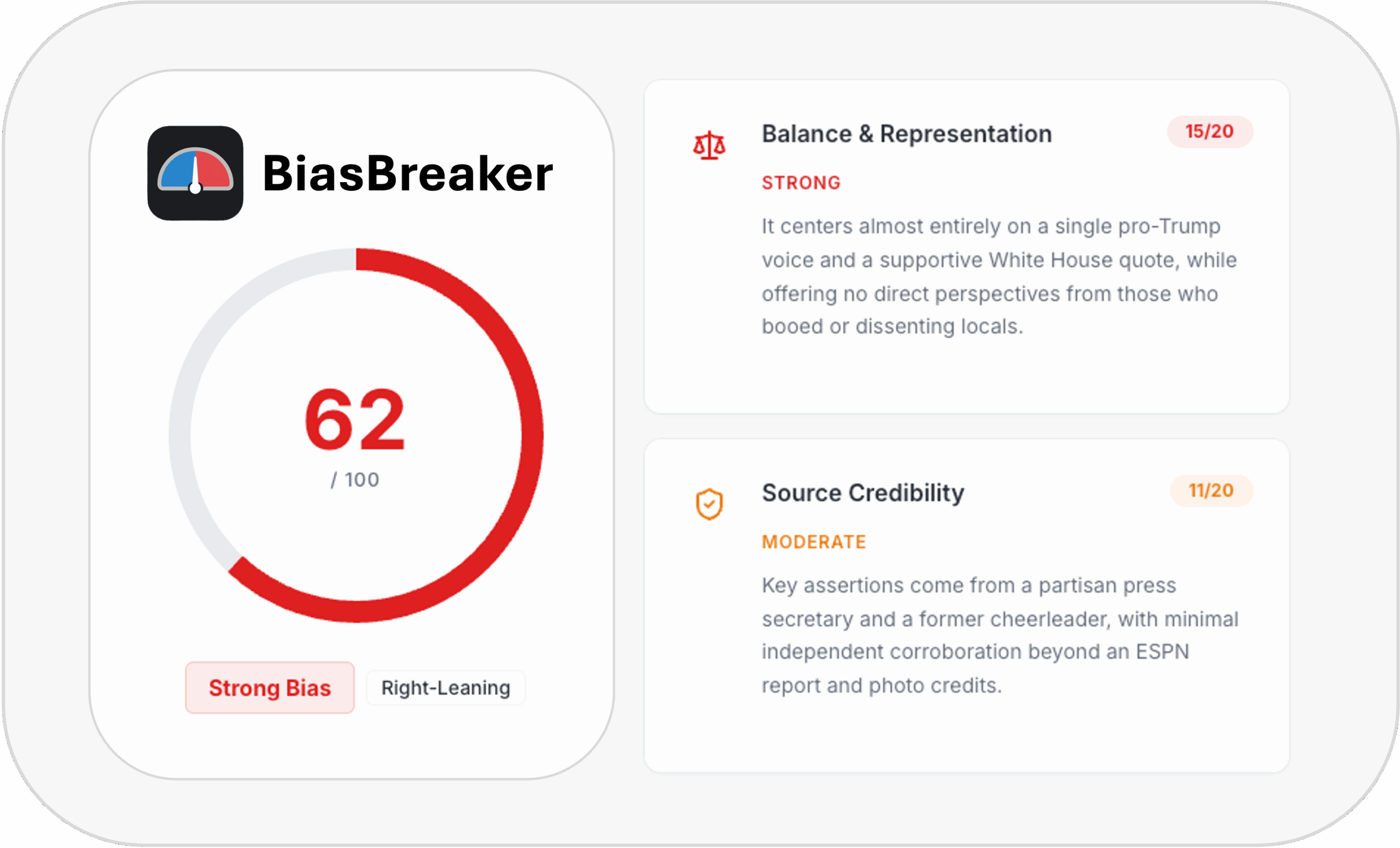
BiasBreaker (https://biasbreaker.org) is an AI-powered application created to advance media literacy. As you browse, it identifies disparities in tone and coverage, pointing out where an article’s angle might push a specific agenda. This tool:
- Flags words that imply emotional bias, telling you when language is charged or neutral.
- Shows charts and visual data so you can compare multiple articles about the same event.
- Suggests alternative sources for a more comprehensive look at the topic.
By seeing how one topic is presented across different outlets, you can practice comparing complete narratives. If you notice that certain data is frequently left out or that only one side of a debate is consistently highlighted, you know it’s time to seek further information elsewhere.
How Bridger fosters common ground
If you’ve ever wished you could step inside two opposing viewpoints and uncover the middle ground, that’s precisely what Bridger (https://thebridger.org) does. Powered by AI, Bridger examines the assumptions behind both sides, then helps you see where they overlap. Instead of focusing solely on words or emotional tone, Bridger:
- Extracts key themes that each viewpoint emphasizes.
- Highlights the shared concerns or interests that can bridge the gap.
- Encourages constructive dialogue by mapping out potential areas of agreement.
This approach is especially meaningful when you’re dealing with hot-button issues like political debates, social policies, or world events. You can explore the narrative, compare perspectives, and step away with a greater understanding, rather than feeling pulled to one extreme or the other.
Strengthen your media literacy
AI tools are a useful addition—but at the end of the day, how you engage with the news plays the biggest role in deciding your level of awareness. Media literacy means having the skills to:
- Question what you read.
- Evaluate quality sources versus questionable ones.
- Understand the difference between news coverage, opinion pieces, and paid promotions.
When you build strong media literacy habits, you’re less likely to be misled by sensational headlines or stories that only show half the picture. Even AI tools become more powerful in your hands because you know which questions to ask and where to probe deeper.
Key media literacy habits
- Look at the credentials of the author and publication. Is it a reputable outlet with a fact-checking process, or is it purely user-generated content?
- Check for direct quotes versus paraphrased statements. Too many paraphrases can hide the actual words of sources, sometimes introducing bias.
- Compare multiple articles on the same event. You might discover big differences in the details they choose to highlight.
By combining these habits with AI bias detection in journalism, you gain multiple layers of defense against poorly sourced or skewed information.
Practice steps for balanced reading
Putting your newfound knowledge into daily practice is where the magic happens. Consider these steps the next time you’re on a news site or browsing social platforms:
- Start with an open mind: Before diving in, remind yourself that each piece of content may have a hidden viewpoint. Keep a curious, open mindset.
- Scan the story for signals: Look at the headline, subheadings, and images. Do they evoke strong emotions? Note whether they set a dramatic or neutral tone.
- Compare coverage: Read at least one additional article about the same topic, ideally from a different outlet. Spot differences in word choices, images, and the people being quoted.
- Use AI tools: Run the article through a bias detection platform like BiasBreaker or check opposing viewpoints on Bridger to see if the coverage overlaps or contradicts.
- Reflect on your findings: Ask yourself: Did I see any emphasis on certain details that might distort the context? Are there missing perspectives that could fill in the gaps?
Regularly running through these steps only takes a few extra minutes, yet it helps you become more confident in the sources you decide to trust.
Extend these strategies beyond news
While ai bias detection in journalism is especially valuable for evaluating news coverage, you can also apply these ideas to nearly any type of content or communication. Think social media, podcasts, or even offline discussions with friends and coworkers. Confirmation bias—the tendency to interpret information in ways that reinforce existing beliefs—extends well beyond headlines and newsfeeds.
Your ability to spot slanted language or see a bigger picture can shape everyday conversations about market trends, community events, or educational debates. By modeling balanced analysis, you not only strengthen your own understanding, but you also encourage your peers, children, or colleagues to adopt the same approach.
Where else to apply bias detection
- Product reviews
- Notice if a reviewer uses emotional or extreme language that points to a hidden agenda.
- Workplace reports
- Look out for internal newsletters or updates that might favor a specific department’s viewpoint.
- School projects
- Encourage students to gather materials from multiple sources to understand historical or scientific topics from multiple angles.
Becoming thoughtful in these diverse areas broadens your capabilities. You’ll find that you’re able to process new perspectives constructively and avoid being caught off guard by sensational or misleading takes.
Take charge of your news consumption
You have more power than you realize. From deciding which organizations to follow, to utilizing AI-driven solutions that expose hidden slants, you can guide your own path toward balanced information. For many of today’s parents, educators, and business professionals, this path starts with acknowledging that bias exists and continues with actively seeking better insight.
Here are a few ways to remain proactive:
- Subscribe to a range of reputable sources. An echo chamber forms when you lean on too few outlets.
- Share your findings. Spread awareness about AI bias detection tools on social media and by word-of-mouth.
- Foster dialogues instead of debates. Encourage others to try Bridger or BiasBreaker so conversations stay informed and constructive.
Even small steps go a long way. You might read one extra article every day, or talk to a coworker about an interesting discrepancy you discovered. These gestures build momentum, leading to more open-minded communities where news is approached with clarity and critical thinking.
Wrap up your approach to balanced news
Shaping a more informed viewpoint is a continuous process. You’re not just a passive recipient of news. By exploring ai bias detection in journalism, you step into the role of an active participant—someone who scrutinizes sources, questions framed narratives, and looks for evidence of balance. AI tools like BiasBreaker and Bridger support you in that effort by highlighting possible slants and inviting you to see common ground between polarized perspectives.
By adopting media literacy habits and leveraging AI, you take meaningful control over your news consumption. The result is a more accurate understanding of the world’s events, powerful decision-making grounded in facts, and a ripple effect that encourages others to do the same. It all starts with your willingness to seek out, evaluate, and share unbiased content. By consistently doing so, you become a champion for clarity in journalism and help foster a healthier, more united discourse in your community.
Check the Bias of any News Article