

AI-powered rental property management might sound like a futuristic concept, yet it is already transforming real estate investing. When you weave artificial intelligence into routine landlord tasks, you can streamline everything from finding the right tenants to predicting market shifts. The biggest advantage: it places real insights and automated workflows directly in your hands. If you have ever wrestled with tenant screening, struggled to price a unit, or wondered how to spot the next neighborhood on the rise, AI offers a fresh way forward.
Below, you will find a comprehensive guide that breaks down how AI can fit into your rental property strategy. Whether you are a first-time investor looking for a single-family home or a seasoned owner managing multiple apartments, you can leverage AI to optimize your returns. By the end, you will see how modern platforms and algorithms build a smarter, faster, and more effective property management system that benefits your bottom line.
Why AI matters in rentals
As you invest in rental properties, you face challenges such as filling vacancies quickly, setting appropriate rents, and reducing risk from potential tenant issues. AI comes to the rescue by analyzing patterns in large sets of data and suggesting actions you can take in real time. You reduce guesswork and help maintain a stable income from your investment.
- Faster leasing cycles: With predictive analytics, you can identify when your rental is most likely to attract prospective tenants.
- Data-driven pricing: AI scrapes and analyzes market rates to give you a more accurate rent range.
- Efficient tenant screening: Intelligent software can evaluate rental applications, pulling in job histories, credit scores, and references quickly, so you spend less time weeding out unqualified candidates.
You might find these applications especially helpful if you manage multiple properties. Tools that harness machine learning can handle incoming leads, compile edge-case scenarios, or even rank your next potential purchase. If you are curious about how AI crunches raw data to supply insights, you can learn more at real estate ai algorithms.
Tools that boost efficiency
AI capabilities usually enter your property management workflow through specific tools or platforms. Some solutions focus solely on analyzing location data, while others streamline day-to-day operational tasks. Choosing the right fit begins with understanding the core functions that each tool can deliver.
Key categories of AI solutions
- Predictive analysis platforms: These systems interpret historical trends, local demographics, and economic forecasts to help you make decisions about rent pricing, renovation projects, and even which properties to buy next. You can explore more on how to refine this approach with ai rental property analysis.
- Tenant screening software: AI can automate background checks, scanning through criminal records, employment history, and social media signals, aiming to filter out individuals who might pose higher risks. A deeper look at this functionality appears in ai rental property screening.
- Property management software: From rent collection to maintenance requests, these platforms often come with built-in AI features that let you respond to tenant needs fast. You will find advanced examples at ai property management software.
- Investment forecasting tools: For those who want to grow a portfolio, you can use AI to compare multiple neighborhoods, property types, and market windows. This helps you spot hidden gems before demand and prices climb too high.
- Automated AI platforms: Services like automated real estate investment platforms offer a near turn-key experience. They evaluate, buy, and set up management protocols for you, charging fees based on performance or subscription plans.
Streamlining day-to-day tasks
While long-term portfolio strategy is important, you also benefit from AI in the routine, daily tasks of being a landlord. Answering tenant questions, scheduling maintenance, or adjusting the rent can eat up hours of your week. By letting algorithms handle much of this workload, you can direct your energy toward building stronger relationships with tenants or scouting new properties.
Automating repetitive processes
- Rental listings: AI can track local inventory and help you optimize your listing times, headlines, and photo captions.
- Rent collection reminders: Chatbots or automated messaging can nudge tenants about due dates, reducing late payments.
- Maintenance ticket routing: Integrated platforms can assess the urgency of a repair request and dispatch the appropriate contractor.
- Default alerts: If a tenant’s payment history raises red flags, AI can alert you, letting you correct the situation before it escalates.
Some property management platforms even measure how quickly you or your team responds to tenant messages. As your performance scores improve, your listings might appear more attractive to prospective tenants. Plus, as you cut response times, you tend to keep existing tenants satisfied and reduce turnover.
Make Smarter Rental Investments & Boost Profits
 Use AI to Assess Opportunities
Compare Cap Rates & Cash Flows
Optimize Rental Income
Use AI to Assess Opportunities
Compare Cap Rates & Cash Flows
Optimize Rental Income
RentalOptimizer.com
Handling tenant interactions
AI excels at recognizing communication patterns and automating responses, but you still want to maintain a human touch. Striking a balance ensures you deliver information efficiently while showing tenants you care about their needs.
Chatbots and virtual assistants
A virtual assistant can handle basic queries like rent due dates, lease terms, or troubleshooting simple home issues. For instance, if a tenant’s furnace stops working in cold weather, the AI bot can reply with a quick checklist:
- Check the thermostat batteries.
- Verify the furnace switch is turned on.
- Suggest scheduling urgent maintenance if the steps do not resolve the problem.
This may be enough to solve minor issues without a phone call. However, you should monitor the chatbot’s performance to ensure it does not miss critical emergencies. When you do need to intervene, you can handle complex or sensitive matters personally.
Personalized communication
As you add more private details—like whether a tenant works night shifts or how many children they have at home—you can customize your interactions for a better daily experience. AI can remind you about birthdays or lease renewal timing, prompting you to send personal messages. Such gestures are minor but can improve loyalty and minimize vacancy risk.
Optimizing your investment strategy
At heart, real estate investing thrives on decisions made at the right time. AI gives you valuable leads on where and when to act. Yet technology alone does not create success; you still need to evaluate whether each move suits your financial goals.
Identifying lucrative markets
The beauty of AI is how quickly it can process vast amounts of economic and demographic data. Property values do not rise in a vacuum. They respond to population growth, wage levels, infrastructure developments, or even new zoning regulations. Instead of manually tracking each variable, you can let AI highlight which neighborhoods show strong potential.
If you want a systematic approach, you can explore tools in ai property portfolio management. They compare multiple suburbs, rating each location on a scale of projected growth or stable returns. Some platforms even factor in your preferred property types, whether single-family homes, townhomes, or condos.
Dynamic pricing
Pricing your rental effectively hinges on supply and demand. If nearby owners raise their rates, you could do the same—unless the local job market has softened. AI tools can gather real-time data on local listings, occupancy rates, and economic indicators, smoothing out the guesswork.
- Seasonal adjustments: AI can suggest raising prices when local colleges open in the fall, or lower them slightly in winter to improve occupancy.
- Competitor analysis: By gathering data on similar properties, AI can recommend a competitive price that still ensures profit.
- Automatic rent increases: You might set a threshold that triggers a rent raise if your property stays fully occupied for a given time, or if the area sees an uptick in wages.
Predictive maintenance
Preventative maintenance might not seem exciting until you stare down a cracked foundation or a leaky roof. AI can track the frequency of similar repairs and how long your property’s systems typically last. This approach:
- Lowers the chance of catastrophic failures.
- Cuts maintenance costs so you stay on top of small issues.
- Minimizes inconvenience for tenants.
When you spot a potential problem early, you can fix it before it turns into a costly project. Over time, you create a track record of well-maintained units, further enhancing tenant satisfaction.
Scaling your property portfolio
Once you master day-to-day operations with AI, you can turn your attention to expansion. Perhaps you want a second or third property in the same region. Or maybe you want to branch into new markets altogether. AI can provide the insights you need at scale, rather than letting random guesswork lead the way.
Portfolio-level analytics
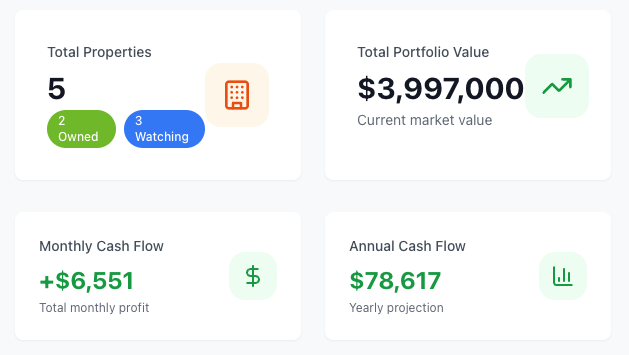
Consolidated monitoring of all your properties helps you see how each unit is performing. Using advanced dashboards, you can identify:
- Which property sees the highest consistent rent revenue
- Where maintenance costs are spiraling
- Which neighborhood is providing the best overall return on investment
This broad view makes it simpler to shuffle resources or plan targeted improvements. You might decide to roll renovation profits from one home into the next, or move on from a property that no longer meets your risk tolerance.
Mitigating risk with AI
Fluctuations in interest rates, local job markets, or property taxes can pose risks to your investments. AI can analyze patterns and predict how these changes might affect your cash flow. The algorithm might recommend:
- Selling an underperforming asset before its value declines further
- Refinancing a mortgage to cut interest expenses
- Holding a property longer if it sees an upward trend
You can discover more techniques for allocating your assets wisely by exploring ai real estate investment tools. Even if you decide to keep some decision-making steps manual, a data-backed approach helps you match your long-term objectives to tangible milestones.
Common questions and concerns
Because AI is still an emerging technology for many real estate investors, it comes with uncertainties. You may wonder about privacy, reliability, or how your older tenants will react. Let us explore a few of those worries:
Privacy and data handling
Machine learning tools aggregate a lot of data, such as personal information, background checks, and market analytics. You can protect yourself by partnering with AI platforms that use encrypted databases and comply with relevant regulations around data privacy. If you handle tenant information responsibly, you reduce the risk of violations, lawsuits, or negative publicity.
Bias in tenant screening
If an algorithm is not trained carefully, it can adopt biases from historical datasets. This might lead to unfair screening based on superficial factors. Combat this risk by reading up on a platform’s methodology. Many providers share how they filter or weigh applicant factors. You can also combine AI scoring with a personal review of each case to prevent rejecting qualified tenants unjustly.
Integrating legacy systems
Perhaps you already have a management system or a spreadsheet approach that you trust. AI-based platforms often offer integrations or detailed guides so you can smoothly convert your existing data. You can also opt for a gradual transition, using AI for certain tasks (like ai rental property valuation) while keeping the rest offline initially.
Overreliance on technology
Even the smartest AI deals with probabilities, not guarantees. The best practice is to blend AI’s speed and capacity for data analysis with your understanding of local markets and tenant relationships. Continuous learning—both for you and your software—ensures you stay flexible in changing market conditions.
Future outlook and trends
Keep an eye on how AI continues to evolve. Tech companies frequently update their offerings, delivering new features that may become standard in a few years. Here are some trends you might see rolling out:
- More granular rental market predictions that factor in micro-neighborhood details.
- Virtual reality (VR) and AI synergy, allowing prospective tenants to tour and apply for units without setting foot on the property.
- Self-maintaining properties, where AI-connected sensors order supplies and schedule repairs automatically.
- Enhanced synergy across multiple investment platforms, offering one hub for analytics, transaction processing, and property management.
As this technology expands, you will have more advanced methods to identify potential investments, set ideal rents, and foster strong tenant satisfaction. That means less time lost on typical landlord headaches and more time forging a long-lasting, profitable portfolio.
Quick recap and next steps
- Embrace AI tools to reduce your manual workload. Consider platforms for predictive analytics, tenant screening, and rent pricing.
- Streamline your operations with software that automates day-to-day tasks like maintenance requests, payment reminders, and occupancy tracking.
- Use AI-driven data analytics to identify the best places to invest, monitor local economics, and mitigate property-related risks.
- Stay aware of potential downsides, such as tenant screening biases, privacy issues, and overreliance on software-generated predictions. Balance AI insights with your market expertise.
- Explore value-add features like advanced dashboards and forecasting tools to scale your portfolio with confidence. Check out ai property portfolio management or ai property management software for in-depth solutions.
Your path to a resilient real estate business hinges on making informed decisions. AI-powered rental property management gives you a sharper perspective. With the right tools, you can automate cumbersome tasks, get accurate insights into market shifts, and proactively meet your tenants’ needs. As you adopt this technology, remember to maintain oversight. Rely on data to guide you, but continue to invest your time and judgment to bring real-world context to each decision. The end goal is simple: a stable rental income that grows as you leverage AI’s full potential.
Make Smarter Rental Investments & Boost Profits
Use AI to Assess Opportunities
Compare Cap Rates & Cash Flows
Optimize Rental Income
RentalOptimizer.com