

You’ve probably noticed that headlines, op-eds, and even everyday news stories can feel increasingly polarized. Whether you’re a parent guiding teens through social media or a professional trying to parse daily economic updates, it’s easy to get frustrated by sensational angles. That’s where AI tools for media literacy can make a big difference. By quickly revealing the subtle cues behind how information is presented, AI empowers you to spot bias fast and form balanced perspectives. In this ultimate guide, you’ll learn why media bias happens, how the latest AI solutions help, and what you can do right away to evaluate your news sources more effectively.
Understand the impact of bias
Media bias isn’t always blatant. Often, it’s woven into word choice, story framing, and which topics get amplified. Even slight biases can shape your outlook on politics, the economy, or social issues. When left unchecked, they can lead to:
- Misinformed decisions
- Unnecessary division among colleagues and friends
- Overlooking critical details that deserve attention
By recognizing how bias seeps into reporting, you can reduce emotional reactions and stay open-minded. It doesn’t mean you need to become a cynic. Instead, you’re developing a healthy dose of skepticism and a habit of cross-checking stories to ensure you’re not missing the bigger picture.
Spot subtle signals
Bias may appear in ways you wouldn’t expect:
- Repetitive loaded words. Terms like “outrage,” “devastating,” or “game-changer” can inflate the seriousness of a story.
- Exaggerated visuals. Images designed to provoke extreme emotions can skew how you interpret facts.
- Selective quoting. If speakers from only one side of an issue are highlighted, you might not get the full story.
Mitigate negative outcomes
The effects of media bias can be surprisingly broad. Not only does it affect perception, it can also undermine trust in institutions, create conflict in communities, or cause confusion in your personal and professional life. By being aware of these outcomes, you’re already taking the first step toward safeguarding your perspective.
Check the Bias of any News Article
 Powered by AI
Use AI for analysis
You might wonder how technology, particularly AI, can possibly track down bias across countless articles and news outlets. Modern AI solutions work by scanning text for patterns, keywords, sentiment, and more. They do this at a speed that would be impossible for you to replicate. In seconds, you can get a snapshot of how an article leans politically, how emotive the language is, and whether the coverage is balanced.
Three ways AI can help
- Keyword detection. AI bots can highlight phrases that signal opinion versus fact.
- Pattern recognition. These tools identify how a source consistently frames certain issues.
- Data-backed insights. Instead of relying on intuition alone, you get measurable indicators of bias.
When you use AI as a starting point for your research, you’ll quickly see potential spin tactics at work. Then you can decide how to factor those insights into your own understanding.
Explore BiasBreaker tool
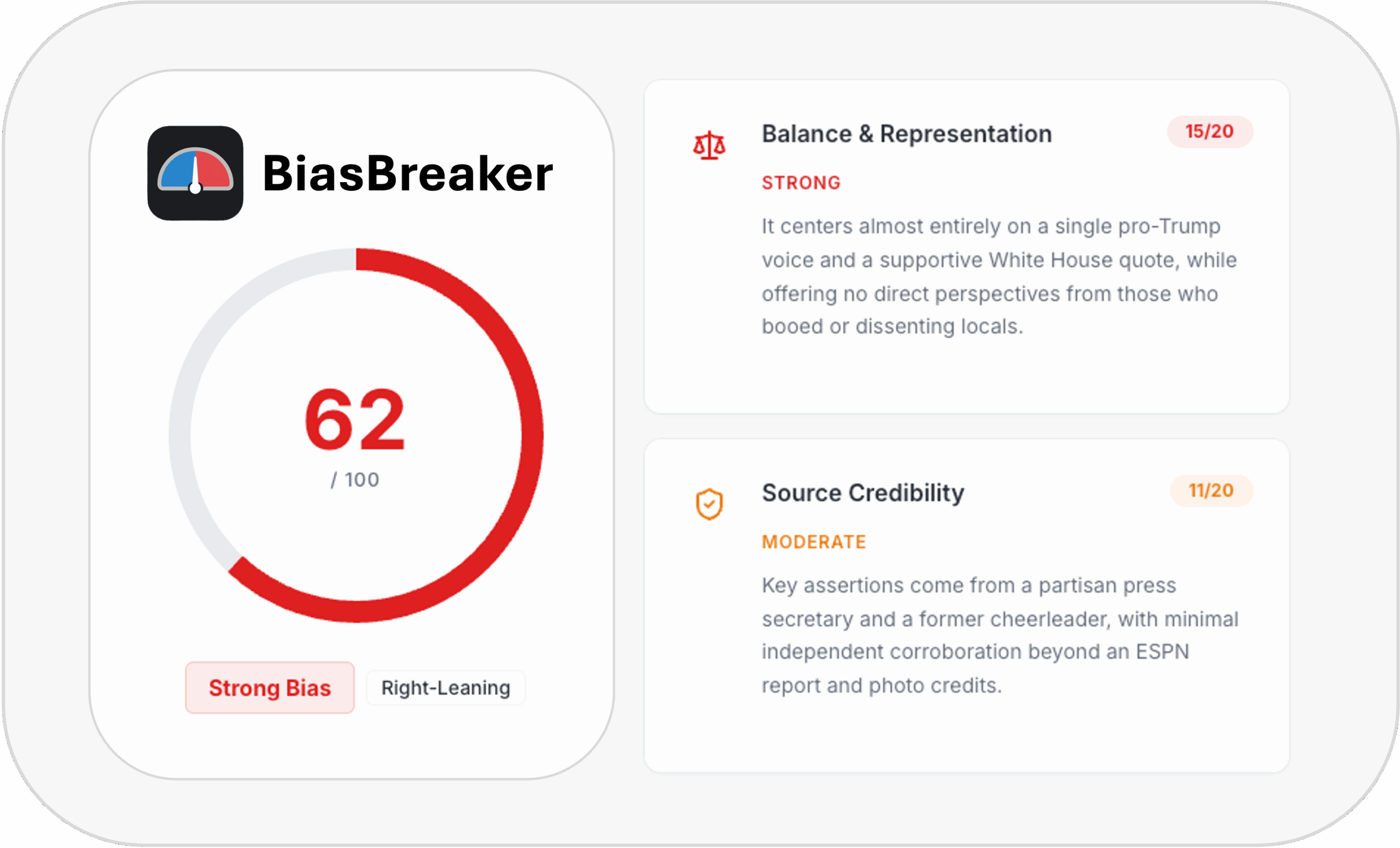
One powerful AI-driven application to consider is BiasBreaker. Primarily focused on text analysis, BiasBreaker identifies the angles an article might be pushing—so you can step back and review its claims more objectively.
How BiasBreaker works
- Scans language tone. BiasBreaker analyzes whether the text is neutral, negative, or positive, then flags possible slanting or sensationalism.
- Categorizes coverage. It checks if multiple viewpoints are referenced, revealing whether the piece prioritizes certain perspectives.
- Suggests exploration. After analysis, you receive clues about which areas require closer scrutiny, encouraging you to read further.
In day-to-day use, you can paste text from an article into BiasBreaker or point it to short passages. Within moments, you’ll see color-coded indicators of potential bias. This makes it simpler to decide when you might need further research or additional sources.
Why it matters
By pulling back the curtain on word choice and tone, a tool like BiasBreaker shines a light on hidden biases. It doesn’t tell you how to think. Instead, it helps you become a more intentional reader, giving you a clearer sense of the message behind the headlines.
Try Bridger platform
Another innovative way to refine your media literacy is by looking for the middle ground between opposing viewpoints. You’re probably used to seeing arguments from two extremes, but it’s surprising how rarely we see the commonalities. Bridger is a tool designed to uncover assumptions in two different opinions, then highlight potential areas of agreement you can explore.
See both sides
Bridger operates under a simple principle: every viewpoint has some underlying beliefs, facts, and experiences behind it. By uncovering these foundations, the platform aims to:
- Identify overlapping concerns. You might discover that two seemingly conflicting positions share the same core values.
- Reveal deeper motivations. Rather than focusing on disagreements, learn about why sides hold these stances.
- Encourage constructive dialogue. Use the uncovered middle ground to spark more nuanced conversations.
Foster respectful discussion
Think of Bridger as a conversation facilitator. Even if you disagree with a colleague or you’re dealing with family members who hold different political views, Bridger helps you see the starting points for empathy. This goes a long way in reducing tension, building trust, and cultivating a more informed approach to news and debate.
Build consistent habits
Using AI to evaluate article bias is a great strategy, but it’s most impactful when combined with steady routines. The more you practice mindful reading, the faster you’ll catch potential slants. Whether you’re scanning a quick news update or diving into an in-depth piece, these habits help:
Practical tips for daily use
- Set a reading limit. Consuming endless news without reflection can amplify bias. Instead, choose a few reputable sources each day.
- Check new stories regularly with AI. Run interesting articles through BiasBreaker or Bridger for quick insights.
- Share your findings. Discuss your analysis with friends or coworkers. This process of comparing notes can refine your bias detection skills and help others learn too.
Reflect before reacting
It’s easy to get caught up in social media debates. Instead, pause when you encounter an especially provocative story. Ask yourself:
- Did I compare multiple outlets before concluding?
- Am I reacting based on facts or emotional trigger words?
By slowing down and taking this moment of reflection, you actively protect yourself from sensational reporting.
Balance your sources
Even the best AI tool can’t replace the value of seeking out well-rounded news. You don’t need to give up your favorite outlets, but you do want to add diversity to your media diet. This could mean reading internationally, following regional publications when relevant, or simply exploring platforms with different editorial priorities.
Cross-reference for clarity
Take advantage of the global nature of online news. If a major domestic outlet covers a high-profile event, see how a foreign newspaper frames the same story. Note the language differences and angles. You might spot:
- A more neutral tone from a source less emotionally invested in your region.
- Additional context in foreign coverage that local outlets skip.
Test your own biases
Personal bias often interplays with media bias. If you read an article that strongly conflicts with your existing beliefs, it can be easy to dismiss it outright. Yet sometimes, that reaction signals a chance to investigate further:
- Why does the article’s viewpoint feel so off to you?
- Can you find any verifiable data behind the claims?
- Are you properly differentiating between opinion and fact statements?
Consciously checking your own reactions turns you into a more objective news consumer. AI-driven tools will highlight the language, but it’s up to you to acknowledge your personal filters.
Examine real-world scenarios
To get comfortable with AI in media literacy, you might want to practice on everyday news. From a political debate transcript to a weekly economic forecast, pick an article that interests you and run it through your preferred platform.
Step-by-step example
- Locate a recent piece. Choose something from an outlet you regularly read.
- Run it through BiasBreaker. Look at the color-coded indicators for language tone and viewpoint distribution. Which paragraphs seem slanted?
- Compare with Bridger. If there’s a stark opposing viewpoint, see how Bridger frames the points in conflict. Where do they overlap?
- Form your own assessment. Take what the tools reveal, then finalize your standpoint.
Those combined insights can save you from rash conclusions. Gradually, you’ll learn how to pick apart information and identify the facts more accurately.
Strengthen media literacy at work
Media literacy isn’t just for following politics or local news. It can play a huge role in your workplace. If you manage a team, you might need to interpret industry reports, business evaluations, or even press releases. Bias in these materials can influence major decisions.
Encourage team discussions
To foster a culture of informed decision-making:
- Share AI analyses in meetings. For instance, present a summary of how an industry white paper frames potential risks.
- Invite different viewpoints. Ask each team member to check an article for bias. Compare notes, and see if the group aligns.
- Offer training. Consider hosting a short workshop on using BiasBreaker or Bridger. Employees can use these tools to cross-examine content related to sales forecasts, strategic plans, or competitor analyses.
You’ll find that your organization benefits from deeper, more well-rounded discussions instead of reactive decision-making.
Help young learners
If you’re a parent or educator, the stakes might feel even higher when guiding children or teens toward responsible information consumption. Young people frequently encounter social media updates, trending videos, and articles that can be extremely biased, clickbait-heavy, or both.
Encourage critical thinking
Explain that not everything online is inherently true or false. Share easy steps:
- Check who wrote it. Is it a trusted journalist, a random user, or a marketing staffer?
- Identify loaded words. Ask if the language feels more emotional than factual.
- Use AI tools. Show them how to paste a snippet into BiasBreaker and interpret the results.
In classrooms, you can assign short tasks where students analyze articles on current events and compare results. This practical exercise encourages them to ask the right questions before accepting someone else’s version of the story.
Embrace a mindful approach
Ultimately, media literacy is about seeking clarity and truth in a noisy environment. AI tools for media literacy give you a head start, but your mindset remains key. Approaching each article with curiosity and healthy skepticism keeps you grounded. Treat AI insights as a gateway to deeper investigation, not the final word.
Making it part of your routine
- Set a consistent “verification time.” Reserve a few minutes each day to run your top stories through an AI checker.
- Talk about what you learn. Sharing your experiences can encourage others to look more critically at their news sources.
- Keep exploring. Tools like BiasBreaker and Bridger will continue to evolve. Stay updated on new features and media literacy trends.
By combining these strategies, you’ll naturally sharpen your bias detection skills and enjoy a more balanced perspective on current events.
Empower yourself for balanced news
In an era of 24/7 headlines and instant social media commentary, cutting through the noise isn’t always simple. Yet when you harness AI to evaluate article bias and refine your media literacy, you’re making a conscious choice to stay informed without being misled by hype or spin. Tools like BiasBreaker and Bridger can serve as reliable allies, quickly flagging potential areas of concern and guiding you toward a middle ground.
Keep in mind that no tool is infallible. You are the ultimate curator of what you consume. By pairing AI-driven insights with diverse sources and a willingness to question your own assumptions, you’ll be on your way to developing a healthier, more nuanced perspective in both your personal and professional life. Your ability to spot bias fast can become a lifelong skill, ensuring you’re never swayed by sensationalism when what you really want is the truth.
Check the Bias of any News Article